


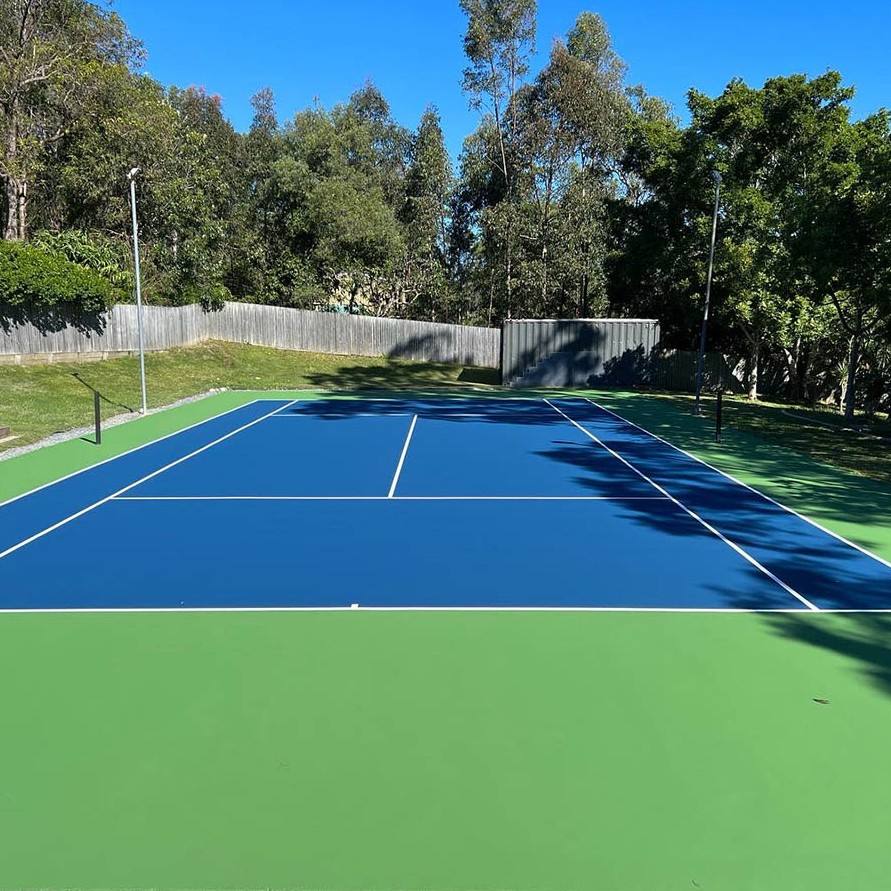
Outdoor basketball courts are exposed to much more demanding conditions than indoor sports facilities. Continuous sunlight, rain, temperature changes, heavy foot traffic, and repeated high-impact movements can gradually affect the performance and appearance of a basketball court. For this reason, choosing the right surface material is one of the most important decisions when constructing or renovating an outdoor basketball court.
Among modern sports flooring solutions, silicone PU has become an increasingly popular option for outdoor basketball courts. It combines elasticity, durability, weather resistance, and playing comfort, making it suitable for schools, communities, sports centers, training facilities, and public recreational areas.
This article explains what silicone PU is, why it is suitable for basketball flooring outdoor applications, how an outdoor basketball court flooring system is structured, and what factors should be considered before selecting a sports surface.
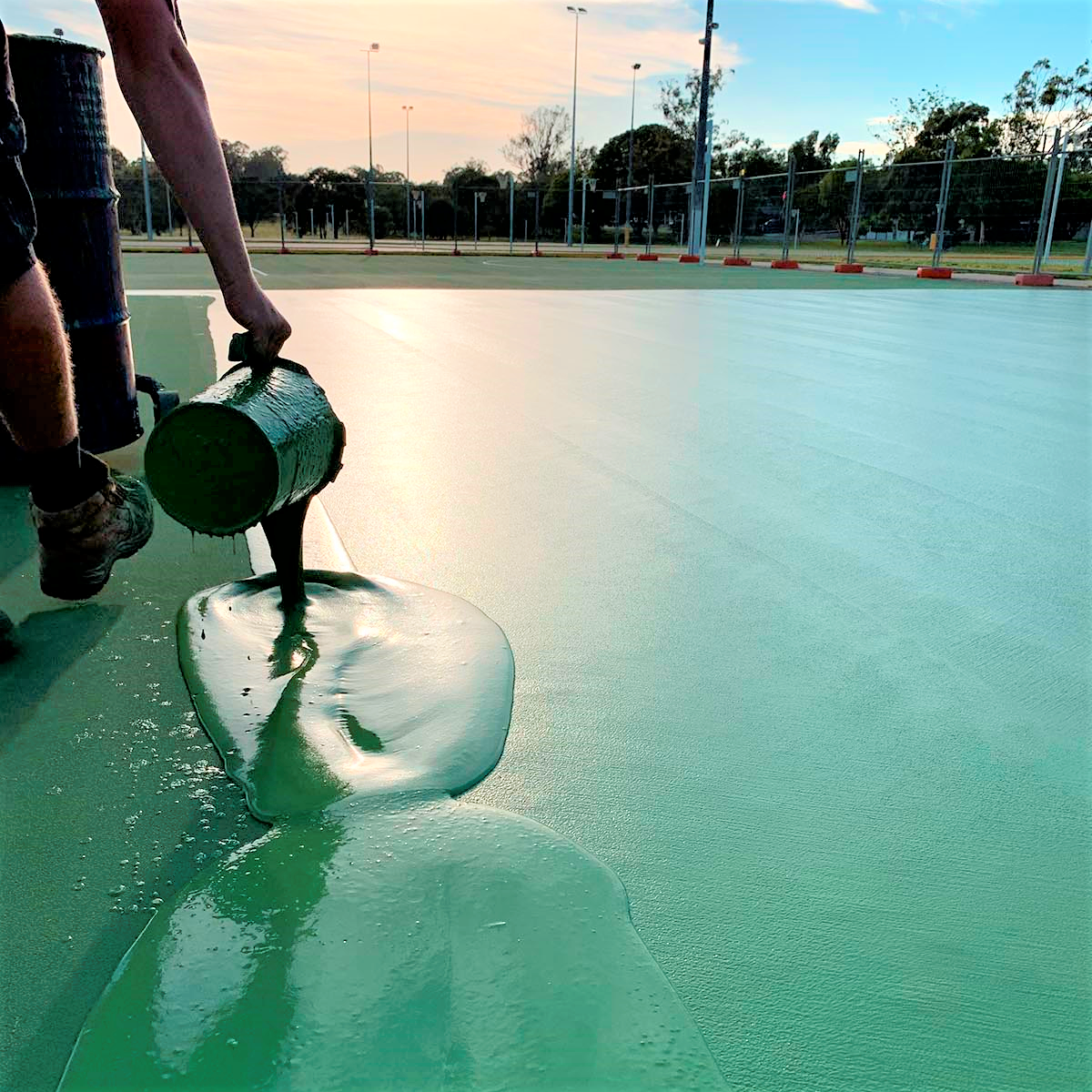
Silicone PU is a type of polyurethane-based sports flooring system designed for athletic surfaces. The term generally refers to a sports flooring system that combines polyurethane materials with silicone-modified components or silicone-based technologies to provide a flexible and durable playing surface.
Unlike traditional hard concrete or basic acrylic surfaces, silicone PU flooring is designed with elasticity and sports performance in mind. The surface can provide a controlled degree of shock absorption while maintaining sufficient stability for basketball movements.
A typical silicone PU sports flooring system may include several layers, such as:
Primer layer
Waterproof or sealing layer
Elastic cushion layer
Reinforcement or intermediate layer
Silicone PU surface layer
Anti-slip texture layer
The exact structure depends on the product formulation, court requirements, local climate, substrate condition, and desired performance.
For professional projects, the flooring system should be selected as a complete solution rather than choosing individual coatings independently. Compatibility between different layers is important for long-term adhesion, elasticity, durability, and surface performance.
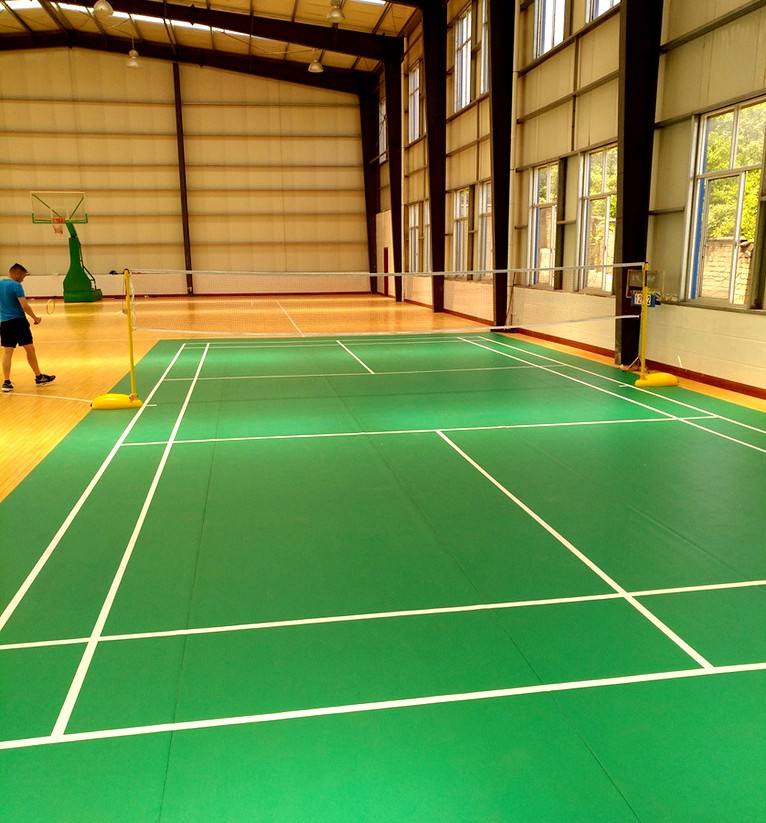
Basketball involves frequent jumping, sudden stops, acceleration, direction changes, and repeated impacts. Therefore, an outdoor basketball court needs more than an attractive color. The surface must provide a suitable balance between traction, elasticity, durability, and player comfort.
One of the main advantages of silicone PU flooring is its elastic structure.
When players jump, land, sprint, or suddenly change direction, a properly designed sports flooring system can help reduce the hardness of the surface compared with untreated concrete. This can contribute to a more comfortable playing experience and reduce the direct impact transmitted through the feet and legs.
For schools and community basketball courts that may be used frequently by different age groups, appropriate surface elasticity is particularly valuable.
Basketball players need reliable traction when accelerating, stopping, and changing direction.
An outdoor basketball flooring system should therefore provide an appropriate anti-slip surface without creating excessive friction. Silicone PU systems can be formulated with textured surface characteristics to help provide stable traction under normal playing conditions.
However, anti-slip performance depends on the complete formulation, surface texture, installation quality, weather conditions, and maintenance. A sports flooring system should therefore be selected according to the intended environment rather than relying only on a product name.
Outdoor basketball courts are directly exposed to environmental conditions.
A suitable basketball flooring outdoor solution needs to withstand:
UV exposure
Rain and moisture
Temperature fluctuations
Outdoor humidity
Repeated thermal expansion and contraction
Daily foot traffic
Sports equipment and maintenance activities
Silicone PU sports flooring can be designed for outdoor applications with weather-resistant properties, helping the court maintain its functional performance and appearance over an extended service period.
 There are several common choices for outdoor basketball courts, including concrete, acrylic systems, rubber surfaces, and polyurethane-based systems.
Concrete is relatively hard and durable, but an untreated concrete surface generally provides limited shock absorption. Cracks and surface deterioration can also become concerns if the substrate is not properly designed and maintained.
Acrylic court systems are widely used for outdoor sports facilities and can provide a hard, stable playing surface. However, they generally offer less elasticity than elastic polyurethane-based systems.
Silicone PU flooring focuses more strongly on elasticity and player comfort while still providing a stable surface for sports activities.
The most suitable choice depends on factors such as:
| Factor | Importance |
|---|---|
| Climate | Determines weather and moisture requirements |
| Court usage | Influences durability requirements |
| Player level | Determines performance expectations |
| Budget | Affects material and construction options |
| Substrate | Determines suitable flooring structure |
| Maintenance | Influences long-term operating cost |
| Surface performance | Affects traction and playing comfort |
For projects where player comfort, elasticity, and outdoor durability are priorities, silicone PU can be an attractive option.

The performance of a sports court depends not only on the material itself but also on substrate preparation and installation.
Before installation, the concrete or other substrate should be inspected carefully.
Important factors include:
Surface strength
Flatness
Moisture condition
Cracks
Expansion joints
Contamination
Drainage
Existing coatings
If the substrate has serious defects, simply applying a new surface coating will not solve the underlying problem.
The substrate should be cleaned and prepared according to the flooring manufacturer's requirements.
Dust, oil, loose particles, old coatings, and other contaminants can affect adhesion. Cracks and damaged areas should also be repaired before applying the sports flooring system.
The primer helps improve adhesion between the substrate and subsequent flooring layers.
The appropriate primer should be selected according to the substrate type and the silicone PU system.
The elastic layer is one of the key components of a silicone PU sports flooring system.
It contributes to the cushioning and flexibility of the court. The thickness and formulation should be selected according to project requirements.
After the underlying layers have been properly cured and prepared, the silicone PU surface layer is applied.
The final surface should provide the desired combination of:
Color
Texture
Traction
Durability
Sports performance
Basketball court lines are then marked according to the required court dimensions and sports regulations.
Accurate line marking is essential for both recreational and professional use.

Choosing an outdoor basketball flooring system should not be based only on price.
Climate is one of the most important considerations.
In areas with strong sunlight, the flooring system should have suitable UV and weather resistance. In regions with frequent rainfall, drainage and moisture management become especially important.
A high-quality sports coating cannot compensate for a poorly prepared substrate.
Before purchasing the flooring material, the project owner or contractor should evaluate the existing concrete surface and determine whether repairs, leveling, moisture treatment, or other preparation work is required.
Different basketball courts have different performance requirements.
Community courts may require a practical balance between durability and comfort, while training facilities or higher-level sports venues may have more demanding performance expectations.
The surface needs enough traction for basketball movements while avoiding excessive roughness.
The final texture should be evaluated according to the manufacturer's technical specifications and the actual playing environment.
Color is not only an aesthetic consideration.
A well-designed basketball court can improve visibility, create a more attractive sports environment, and contribute to the overall identity of a school, club, community, or sports facility.
Silicone PU systems are commonly available in a variety of colors, allowing project owners to create customized court designs.

Even high-quality outdoor sports flooring requires regular maintenance.
A basic maintenance program may include:
Dust, leaves, mud, and other debris should be removed regularly. Accumulated dirt can affect surface appearance and potentially influence traction.
Outdoor basketball courts should have an effective drainage system. Standing water can increase the risk of surface deterioration and create unsafe playing conditions.
The court should be inspected periodically for:
Cracks
Peeling
Blisters
Surface wear
Drainage problems
Damaged line markings
Small problems should be addressed before they develop into larger repair requirements.
Strong chemicals or unsuitable cleaning agents may damage the surface. Cleaning products should be compatible with the specific sports flooring system.
 The service life of an outdoor basketball flooring system varies considerably.
There is no single lifespan that applies to every court because performance depends on:
Material quality
Installation quality
Substrate condition
Climate
UV exposure
Frequency of use
Maintenance
Drainage
Cleaning practices
A properly designed and professionally installed silicone PU system can provide long-term service when the substrate, material system, installation process, and maintenance program are all properly managed.
Therefore, buyers should not evaluate a sports flooring material solely by asking, "How many years will it last?"
A better approach is to evaluate the complete system and ask about technical specifications, recommended application conditions, installation procedures, maintenance requirements, and warranty terms.

Silicone PU can be a suitable choice when a project requires a combination of elasticity, outdoor durability, traction, and comfortable sports performance.
It can be considered for:
School basketball courts
Community basketball courts
Outdoor training courts
Sports centers
Residential recreational facilities
Municipal sports facilities
Multi-purpose outdoor courts
Basketball training facilities
For projects where cost is the only consideration, other flooring systems may also be worth evaluating.
However, when long-term sports performance and user experience are important, the overall value of a flooring system should be considered rather than simply comparing the initial material price.
The quality of an outdoor basketball court depends on more than the raw material.
A reliable silicone PU manufacturer should be able to provide information about:
Product composition
Technical specifications
Recommended application thickness
Installation procedures
Surface preparation
Curing requirements
Weather resistance
Slip resistance
Packaging
Storage conditions
Technical support
For international projects, communication and technical support are also important.
A professional supplier should understand that different countries may have different climates, construction practices, substrate conditions, and project requirements.
For this reason, buyers should evaluate both the silicone PU material and the manufacturer's ability to provide a complete sports flooring solution.
Outdoor basketball courts require a surface that can withstand demanding environmental and sports conditions while providing a comfortable and stable playing experience.
Silicone PU is an advanced sports flooring option that can combine elasticity, durability, weather resistance, traction, and visual customization. When properly designed and installed, it can be used for a wide range of outdoor basketball applications.
When selecting basketball flooring outdoor, buyers should look beyond the initial price and consider the complete flooring system, including substrate preparation, material compatibility, elasticity, slip resistance, weather resistance, drainage, installation quality, and maintenance.
Ultimately, the best basketball court surface is not simply the cheapest material or the hardest surface. It is the system that provides the right balance between sports performance, durability, safety, comfort, appearance, and long-term value.
For contractors, sports facility developers, distributors, and project owners, choosing an experienced silicone PU sports flooring manufacturer can help ensure that the material system is matched to the actual requirements of the project.


