

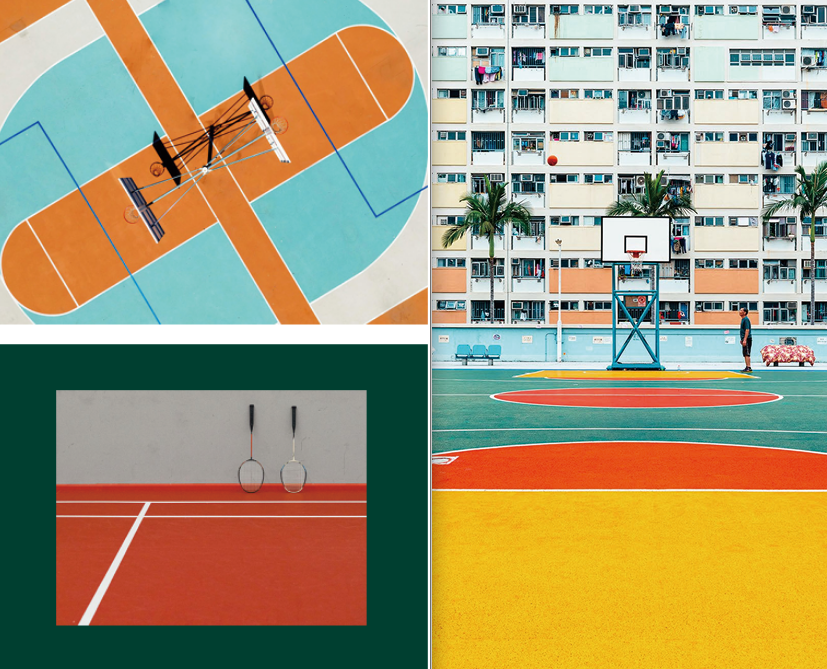
A sports court topcoat is the final protective and functional layer applied to a sports flooring system.
It plays an important role in determining the appearance, surface texture, traction, durability, and overall performance of basketball courts, tennis courts, badminton courts, and other sports surfaces.
Unlike ordinary floor paint, a professional sports court topcoat is specially designed to withstand repeated foot traffic, friction, impact, outdoor exposure, and regular maintenance.
For outdoor sports facilities, selecting the right topcoat is essential for creating a surface that combines attractive appearance with reliable sports performance.

A sports court topcoat is a specially formulated coating applied to the uppermost layer of a sports flooring system.
Depending on the flooring structure, the topcoat may be applied over an elastic layer, cushioning layer, acrylic layer, polyurethane layer, or other prepared surface.
The main purpose of the topcoat is to provide a durable surface with the required color, texture, traction, and protection.
A high-quality sports court topcoat should work together with the underlying layers rather than being considered as an independent paint product.
The complete flooring system may include:
Primer
Waterproofing layer
Elastic or cushioning layer
Reinforcement layer
Surface coating
Sports court topcoat
Line marking paint
The exact structure depends on the type of court, substrate, climate, and performance requirements.
The topcoat is the part of the sports flooring system that players directly interact with.
It therefore has a significant influence on the playing experience.
The topcoat helps protect the underlying flooring layers from daily wear, abrasion, moisture, and environmental exposure.
Without adequate surface protection, the underlying layers may deteriorate more quickly.
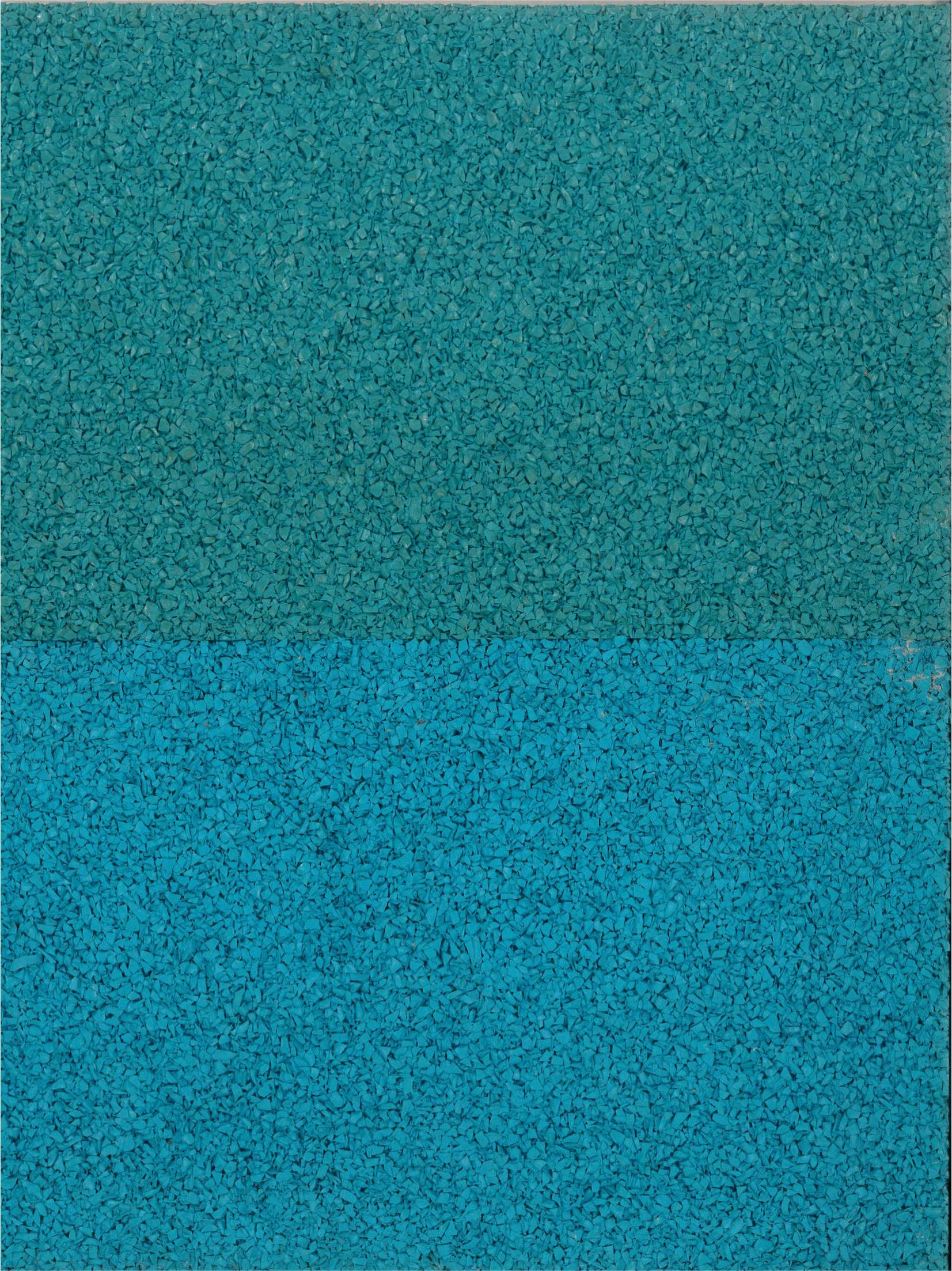
Sports courts are often designed with bright and distinctive colors.
A high-quality topcoat can provide consistent color coverage and help create a professional appearance.
Different colors can also be used to separate playing areas, create visual contrast, and improve the overall appearance of a sports facility.
Players need sufficient traction when accelerating, stopping, jumping, and changing direction.
The surface texture of a sports court topcoat can be designed to provide appropriate slip resistance under normal playing conditions.
However, excessive roughness should also be avoided because it may negatively affect player comfort and surface usability.
Outdoor courts are exposed to sunlight, rain, temperature fluctuations, dust, and frequent use.
A suitable sports court topcoat should provide good resistance to abrasion and environmental conditions to help maintain the appearance and performance of the surface.
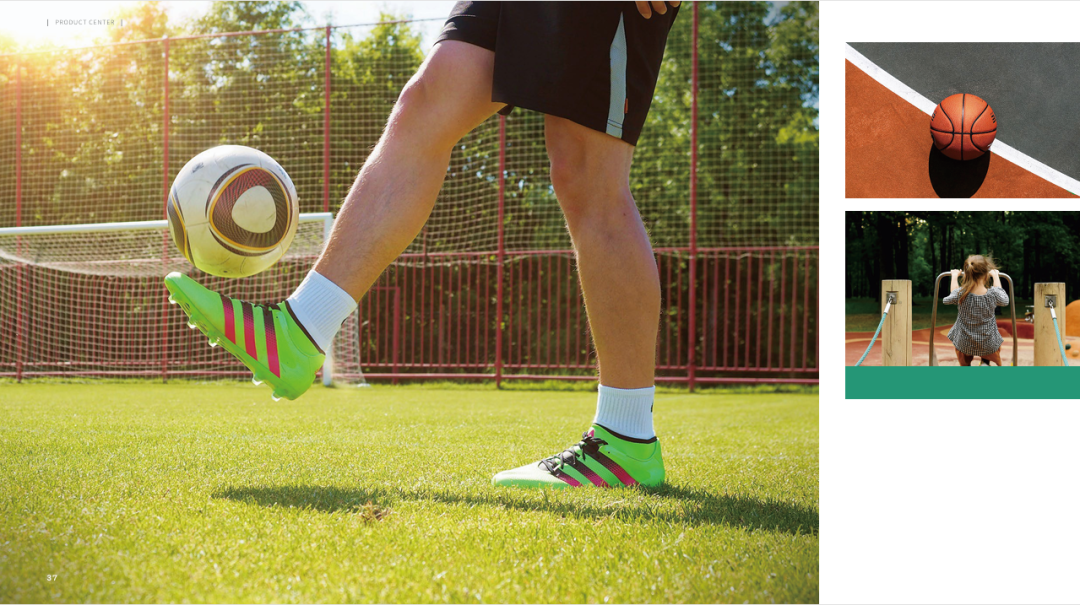
Sports court topcoats are used in a wide range of sports flooring projects.
Basketball courts require a balance between traction, durability, and smooth ball movement.
A suitable topcoat can help create a uniform surface with consistent texture and color.
For outdoor basketball courts, the coating should also be designed to withstand UV exposure and changing weather conditions.
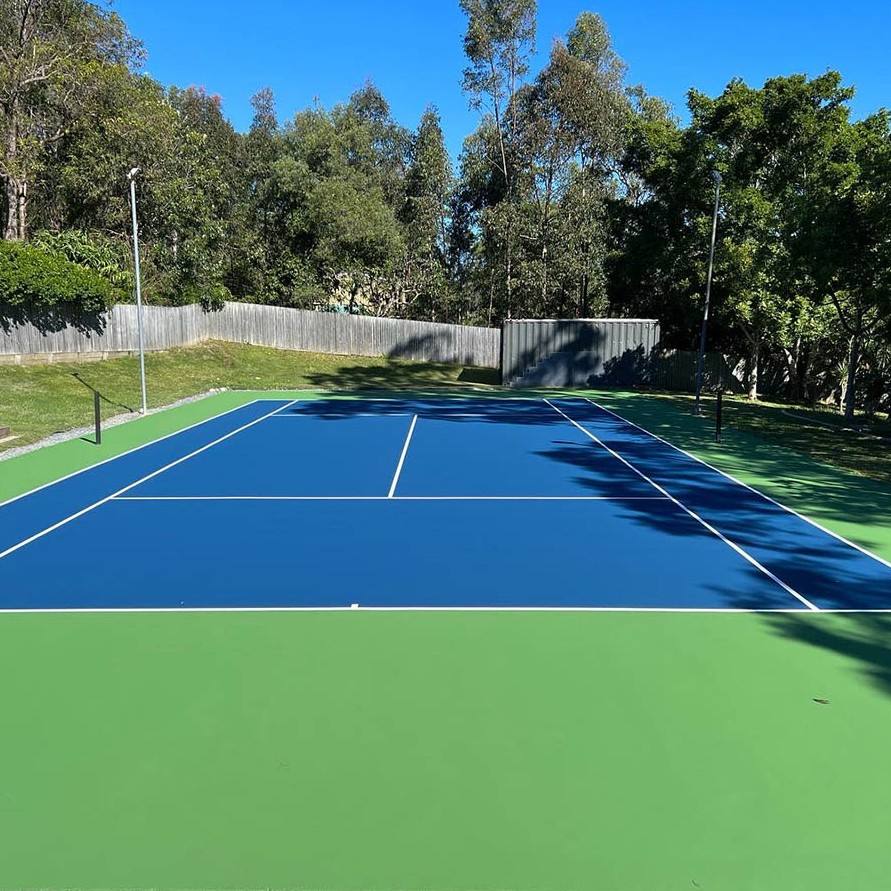
Tennis court surfaces require appropriate traction and controlled ball bounce.
The topcoat can provide the required surface texture while protecting the underlying court system.
Different colors are often used for the playing area and surrounding zones.
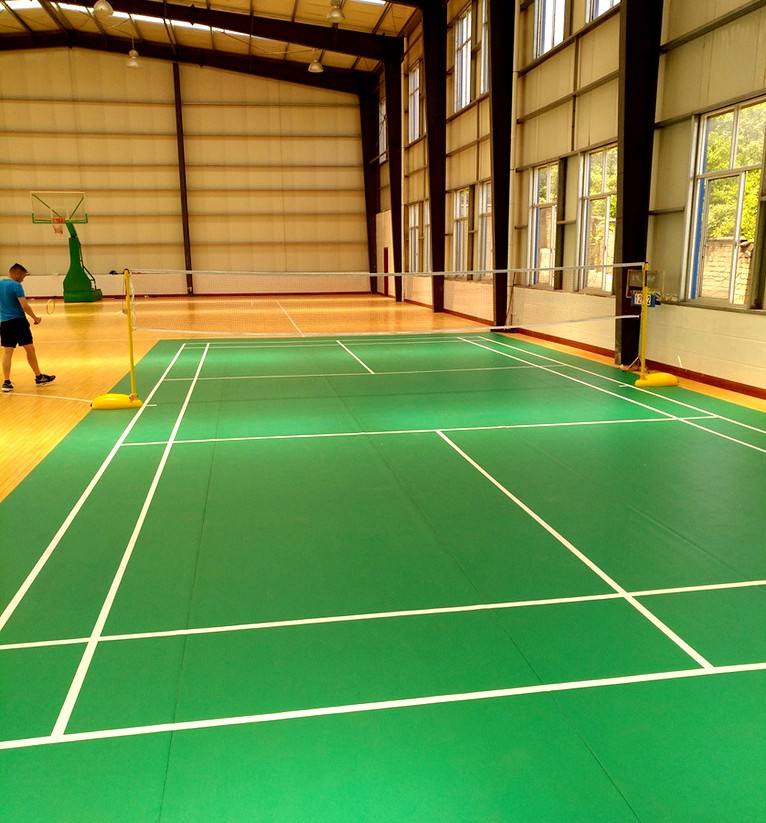
Badminton requires a surface that provides stability and suitable movement characteristics.
Depending on the flooring system, a topcoat may be used to improve surface protection, appearance, and durability.
Many schools, communities, and recreational facilities use courts for multiple sports.
A durable sports court topcoat can help create a practical surface suitable for basketball, tennis, badminton, volleyball, and other recreational activities.
When selecting a topcoat, several technical properties should be considered.
Outdoor sports surfaces receive prolonged sunlight exposure.
UV-resistant coatings can help reduce fading and surface deterioration caused by ultraviolet radiation.
This is particularly important for outdoor basketball courts and tennis courts in regions with strong sunlight.
A sports court topcoat should be suitable for the local climate.
Resistance to rain, humidity, temperature changes, and other environmental conditions can contribute to longer service performance.
Sports courts experience repeated friction from shoes and sports activities.
Good wear resistance helps the surface maintain its texture and appearance during long-term use.
The coating should provide suitable traction for the intended sport.
The ideal level of slip resistance depends on the court type, surface texture, climate, and application method.
A professional sports facility needs a consistent and attractive appearance.
Good color stability helps maintain the visual quality of the court during outdoor exposure and regular use.

Sports court topcoat should not be considered the same as ordinary decorative floor paint.
Ordinary floor paint may focus mainly on color and basic surface protection.
Sports court coatings, on the other hand, are developed around specific sports requirements.
They may need to provide:
Controlled surface texture
Suitable traction
Abrasion resistance
Weather resistance
Color stability
Compatibility with elastic flooring systems
Long-term adhesion
Resistance to repeated sports activities
Using an unsuitable decorative coating on a professional sports surface may result in premature wear, peeling, cracking, or inadequate surface performance.
Therefore, the topcoat should be selected as part of the complete sports flooring system.
Indoor and outdoor courts have different requirements.
Outdoor courts require greater attention to UV resistance, rain resistance, temperature changes, and drainage.
Indoor courts may focus more on wear resistance, surface texture, and indoor environmental conditions.
Basketball, tennis, badminton, and multi-purpose courts may require different surface characteristics.
The coating should therefore be selected according to the intended sport.
Before applying the topcoat, the underlying surface must be properly prepared.
Dust, oil, moisture, cracks, loose materials, or incompatible coatings can affect adhesion and final performance.
The correct application thickness is important.
Applying too little material may result in insufficient coverage and durability, while excessive application may affect drying, texture, and overall performance.
Contractors should always follow the manufacturer's technical recommendations.
Professional installation is essential for achieving consistent results.
The substrate should first be cleaned and prepared.
Any cracks, uneven areas, or surface defects should be repaired before coating.
The previous flooring layers must be fully cured and compatible with the topcoat.
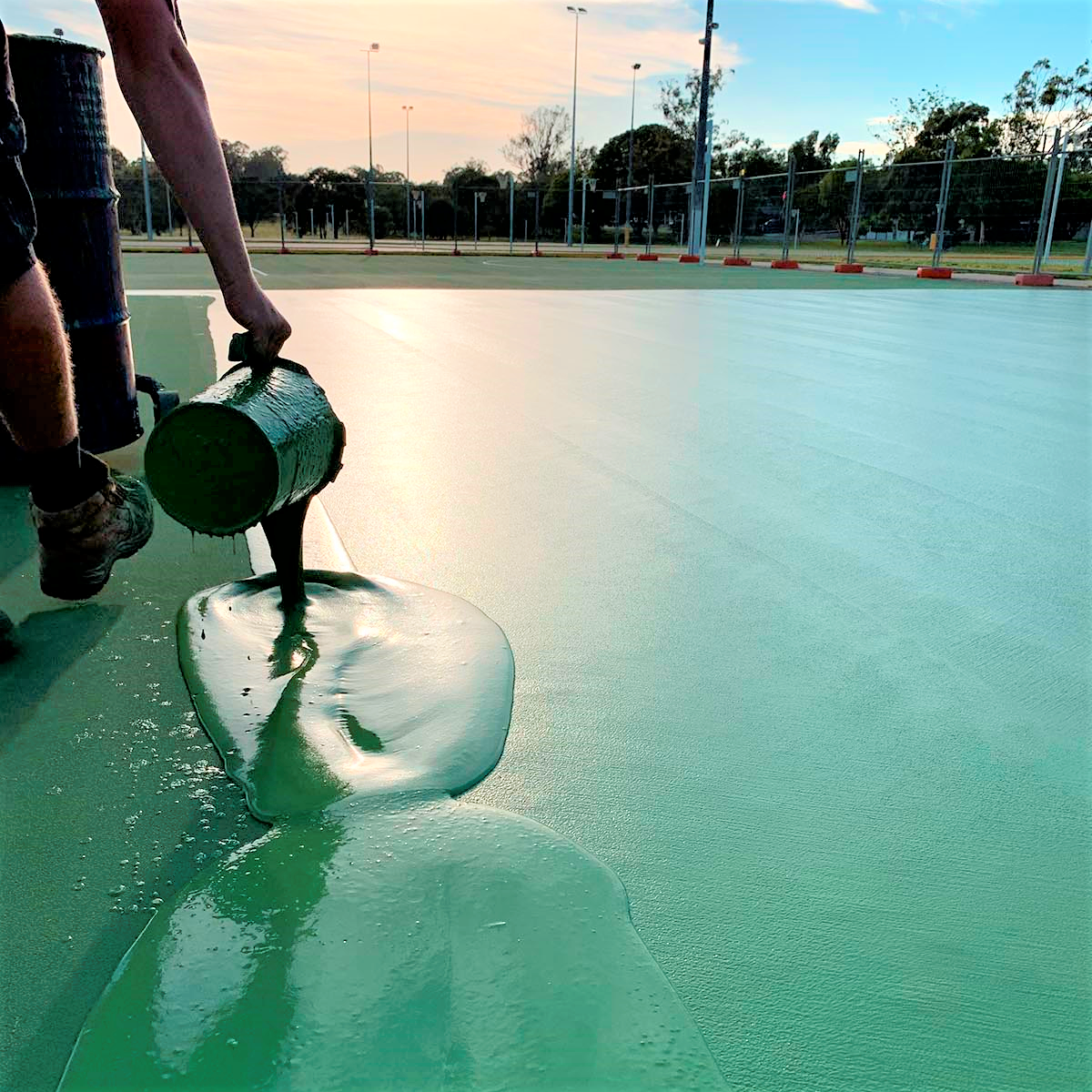
The coating should then be mixed and applied according to the manufacturer's recommended procedures.
Temperature and humidity should also be considered during construction.
After application, sufficient curing time should be allowed before opening the court for use.
Premature use may damage the surface and reduce the expected service life.
Regular maintenance can help extend the service life of a sports court.
Courts should be cleaned regularly to remove dust, leaves, mud, and other contaminants.
Drainage systems should also be checked periodically, especially for outdoor courts.
The surface should be inspected for:
Peeling
Cracking
Fading
Surface wear
Blistering
Damaged line markings
Small defects should be repaired as soon as possible.
Using unsuitable cleaning chemicals or abrasive equipment should also be avoided because they may damage the topcoat.
For large commercial or international projects, selecting a reliable manufacturer is just as important as selecting the right coating.
A professional sports court topcoat manufacturer should be able to provide:
Technical specifications
Application instructions
Recommended thickness
Drying and curing information
Surface preparation requirements
Color options
Packaging information
Storage recommendations
Technical data sheets
Technical support
For outdoor projects, buyers should also ask about UV resistance, weather resistance, wear resistance, and compatibility with the existing sports flooring system.
A sports court topcoat is much more than a decorative layer.
It is an important functional component of a complete sports flooring system and directly affects surface appearance, traction, durability, weather resistance, and player experience.
For basketball courts, tennis courts, badminton courts, and multi-purpose sports facilities, the right topcoat should be selected according to the court type, indoor or outdoor environment, substrate condition, expected usage, and local climate.
A high-quality topcoat combined with proper substrate preparation, professional installation, and regular maintenance can help create a durable and attractive sports surface.
For contractors, distributors, and sports facility developers, choosing a professional sports court coating manufacturer and a complete compatible flooring system is an effective way to achieve reliable long-term performance.

