

Views: 0 Author: Site Editor Publish Time: 2026-11-11 Origin: Site
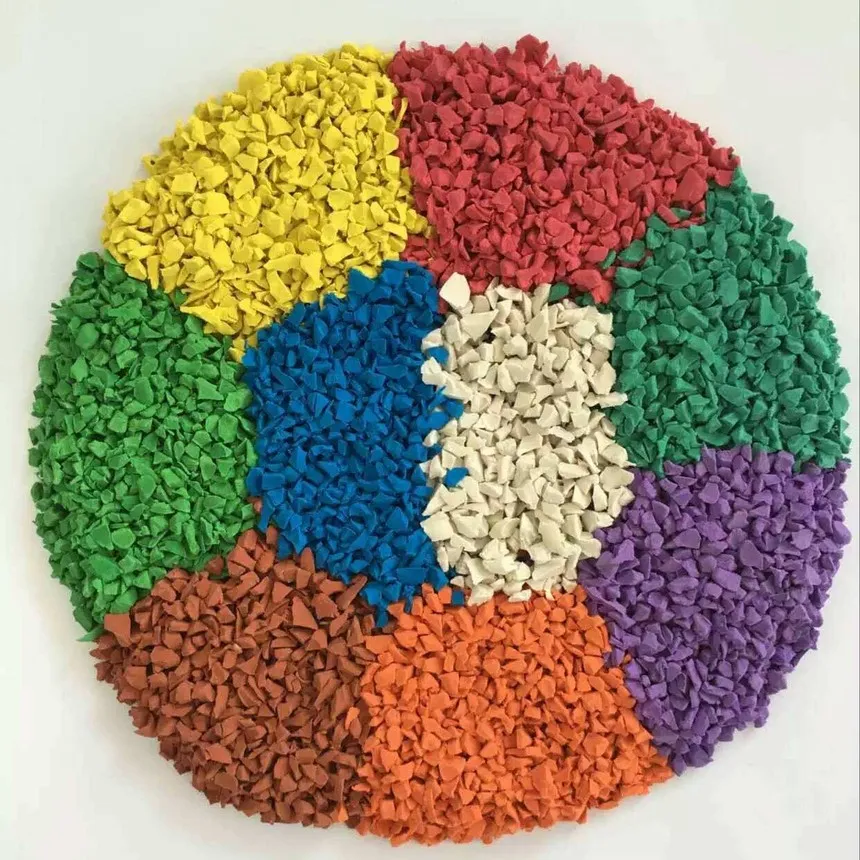
EPDM rubber granules are widely used in playground flooring, running tracks, sports surfaces, and outdoor recreational areas. To create a stable and seamless rubber surface, these granules are usually combined with a suitable polyurethane adhesive known as PU Binder.
PU Binder for EPDM rubber granules plays an important role in connecting individual rubber particles and maintaining the structure of the finished surface.
For contractors, distributors, and material buyers, understanding how PU Binder works is essential when sourcing materials for rubber flooring projects.
In this guide, we will introduce the basic functions, common types, applications, purchasing considerations, and supplier selection tips for PU Binder.
PU Binder, also called polyurethane binder or PU adhesive, is a polyurethane-based bonding material used in rubber flooring applications.
It is designed to bind EPDM rubber granules together, forming a flexible and connected surface after the installation and curing process.
In a typical EPDM wet-pour flooring system, the adhesive is mixed with rubber granules before the mixture is spread and compacted onto a prepared base.
The main functions of PU Binder include:
Particle bonding: Connects individual EPDM rubber granules.
Structural stability: Helps maintain the shape and integrity of the rubber surface.
Flexibility: Supports the flexible characteristics of rubber flooring.
Surface formation: Helps create a continuous, seamless rubber surface.
Application versatility: Can be used in different rubber flooring systems depending on the adhesive formulation.
The performance of the finished flooring depends on several factors, including the quality of the EPDM granules, binder formulation, mixing procedure, substrate preparation, and construction conditions.
PU Binder works by forming adhesive connections between rubber particles.
During the installation process, EPDM granules are mixed with the appropriate amount of polyurethane binder. The mixture is then applied to the prepared surface and finished according to the construction requirements.
A typical wet-pour installation process includes the following steps:
Select EPDM granules according to the required particle size, color, and application.
The granules should be clean and suitable for mixing with the selected binder.
Measure the required amount of PU Binder according to the manufacturer's recommended mixing ratio.
The correct amount of adhesive is important for achieving consistent bonding between particles.
Mix the EPDM rubber granules and PU Binder evenly until the particles are properly coated.
Uniform mixing helps reduce areas with insufficient adhesive or excessive binder.
Spread the mixture over the prepared base and complete the surface according to the project specifications.
Allow the installed surface to cure under the recommended environmental conditions.
The curing time depends on the binder formulation, temperature, humidity, and other construction factors.
Following the correct installation procedure helps achieve a more consistent rubber flooring surface.
PU Binder products are available in different formulations. Two common categories used in rubber flooring applications are single-component and two-component polyurethane binders.
Single-component PU Binder is supplied as one product and is commonly used in EPDM rubber surface layer applications.
It generally reacts with moisture during the curing process.
Key characteristics buyers should consider include:
Ready-to-use formulation
Application and mixing requirements
Moisture sensitivity
Working time
Curing conditions
Compatibility with EPDM rubber granules
This type of binder is commonly selected for applications where a single-component adhesive system is required.
Two-component PU Binder consists of two separate components that must be mixed before use.
The components react after mixing, and the working time and curing characteristics depend on the specific formulation.
Some EPDM rubber flooring systems use two-component polyurethane adhesive in the base layer.
Buyers should confirm the correct component ratio, mixing procedure, and application requirements with the manufacturer.
Important: Single-component and two-component PU binders have different formulations and curing mechanisms. They should not be substituted for each other without confirming product compatibility.
PU Binder is used in various rubber flooring applications where EPDM granules need to be bonded together.
EPDM rubber granules combined with PU Binder are widely used in colorful playground flooring.
Different granule colors can be combined to create decorative patterns, activity zones, and recreational surfaces.
EPDM rubber granules are also used in certain running track surface systems.
The binder helps connect the rubber particles and form the required surface structure.
Community sports areas, school activity zones, and outdoor recreational spaces can use rubber flooring systems made with EPDM granules and polyurethane binder.
Rubber surfaces are also used in selected public spaces, walking areas, and recreational facilities.
The appropriate binder should always be selected according to the specific flooring system and environmental conditions.
The amount of PU Binder required depends on several factors:
EPDM rubber granule size
Rubber material characteristics
Required surface structure
Application layer
Binder formulation
Manufacturer's recommended mixing ratio
For one common EPDM rubber flooring application, the EPDM granules-to-PU Binder ratio is 5:1.
For example, a mixture using 25 kg of EPDM rubber granules would require 5 kg of PU Binder at this ratio.
However, this is an application-specific reference, not a universal standard for every adhesive or flooring system.
Using an incorrect mixing ratio may cause bonding problems, excessive adhesive consumption, or inconsistent surface results.
Before purchasing materials in bulk, buyers should request the recommended mixing ratio from their PU Binder supplier and conduct a small-scale application test when necessary.
Choosing a suitable PU Binder is only one part of achieving a reliable rubber flooring system.
Several additional factors can influence the final result.
EPDM granules should meet the material requirements of the intended application.
Particle size, cleanliness, and material consistency can influence mixing and surface formation.
The binder should be specifically suitable for the rubber material being used.
Buyers should confirm compatibility with EPDM granules rather than assuming that all polyurethane adhesives are interchangeable.
Temperature and humidity can influence polyurethane adhesive curing.
Construction should follow the manufacturer's recommended environmental conditions.
Uneven mixing may lead to inconsistent adhesive distribution.
Proper mixing equipment and procedures help improve material consistency.
The installation base should be properly prepared according to the flooring system requirements.
An unsuitable substrate condition may affect the bonding and stability of the finished surface.
For international buyers, selecting the right product requires more than comparing prices.
Before placing an order, consider the following purchasing factors.
| Purchasing Factor | What to Confirm |
|---|---|
| Product type | Single-component or two-component PU Binder |
| Application | EPDM surface layer or base layer |
| Compatibility | Suitable for the intended EPDM granules |
| Mixing ratio | Manufacturer's recommended ratio |
| Curing conditions | Temperature, humidity, and curing requirements |
| Technical documents | TDS, SDS, and available test reports |
| Packaging | Available drum sizes and packaging options |
| Supply capacity | Whether the supplier can support your order quantity |
| Export service | International shipping and export experience |
It is also advisable to request samples and technical documentation before committing to a large-volume purchase.
A professional supplier should be able to explain product characteristics and recommend a suitable binder based on the buyer's application.
For contractors and distributors purchasing materials for EPDM flooring projects, sourcing both rubber granules and PU Binder from the same manufacturer can offer practical advantages.
Purchasing both materials from one supplier can simplify communication about product compatibility and application requirements.
Buyers can coordinate product specifications, packaging, order quantities, and delivery schedules through one supplier.
A manufacturer familiar with both EPDM granules and PU Binder may be better positioned to provide relevant material recommendations.
Combining material orders may simplify purchasing and logistics planning, depending on order quantities and shipping arrangements.
However, buyers should still evaluate the quality and suitability of each product individually.
Finding a dependable PU Binder manufacturer is important for distributors, contractors, and international material buyers.
Here are several factors to consider when evaluating suppliers.
Look for manufacturers with experience in polyurethane adhesives and sports flooring materials.
A supplier offering EPDM rubber granules, PU Binder, and related sports flooring materials may provide a more convenient sourcing experience.
Check whether the manufacturer can meet your expected purchasing volume and delivery schedule.
Ask about the manufacturer's quality control procedures and available product testing documentation.
For distributors and brand owners, packaging customization and OEM services may be important purchasing considerations.
A responsive supplier should provide clear product information and answer questions about material selection, compatibility, and application.
Choosing a manufacturer based on product suitability, consistency, and service can support long-term purchasing relationships.
PU Binder for EPDM rubber granules is an essential material in many wet-pour rubber flooring systems.
It helps connect rubber particles, supports the structure of the finished surface, and contributes to the overall installation quality.
Before purchasing PU Binder, buyers should understand the differences between adhesive formulations, confirm compatibility with EPDM granules, check the recommended mixing ratio, and evaluate the supplier's technical capabilities.
For contractors, distributors, and project material buyers, choosing a suitable PU Binder manufacturer is an important step toward efficient material sourcing and reliable flooring installation.
Looking for EPDM rubber granules and PU Binder from one supplier?
Baoli Technology specializes in sports flooring materials, supplying EPDM rubber granules and polyurethane binder for playground and sports surface applications.
Contact Baoli Technology to discuss your material requirements, product specifications, and bulk purchasing needs.


