

Views: 0 Author: Site Editor Publish Time: 2026-10-23 Origin: Site
Procuring the right sports track surface material is a high-stakes decision for any facility manager or athletic director. It involves balancing significant capital investment with the long-term need for safety, performance, and durability. Errors during the selection process often lead to premature surface failure, which causes facility downtime and unexpected maintenance costs. At the heart of these modern synthetic surfaces lie EPDM rubber granules, which serve as the critical wear-and-weather layer. Understanding the technical nuances of these materials is essential for ensuring your investment lasts. This article provides an objective, technical framework to help you evaluate and shortlist materials based on physical properties, system compatibility, and verifiable performance data. By focusing on these key metrics, you can make an informed decision that meets both your budgetary requirements and the high-performance demands of your athletes.
Polymer content is a baseline, not the whole story: Real-world durability depends on the balance of actual EPDM polymer (typically 20-25%) and the quality of the compounding agents.
Size dictates performance and cost: Granule size directly impacts shock absorption, surface texture, and polyurethane (PU) binder consumption during installation.
Testing certifications mitigate risk: Verifiable ASBA or World Athletics compliance separates premium EPDM track surfacing from low-grade commodities.
UV resistance is measurable: Authentic color stable rubber granules rely on specific UV-stabilizer additives, which should be verified via accelerated weathering test reports.
Selecting the right top-layer material is arguably the most important decision in your project. You must first distinguish between various rubber types. SBR, or recycled tire crumb, serves as a standard for shock-absorbing base layers. However, it lacks the necessary UV resistance and aesthetic flexibility required for exposed top surfaces. Using SBR for a top layer is a common mistake that leads to rapid degradation.
Thermoplastic Vulcanizate (TPV) stands as the primary competitor to EPDM. While TPV offers excellent color retention, EPDM remains the industry gold standard. It provides superior elasticity and a proven, decades-long history of success. Furthermore, it remains more cost-effective for large-scale projects than specialized TPV alternatives.
Decision-makers should view EPDM rubber granules for running tracks as the optimal choice. It balances budget, weather resistance, and biomechanical requirements effectively. The table below summarizes how these materials compare across key performance categories.
Material Performance Comparison Table
| Feature | SBR Rubber | TPV Granules | EPDM Granules |
|---|---|---|---|
| UV Resistance | Low | High | High |
| Elasticity | Moderate | High | High |
| Cost-Efficiency | High | Moderate | Optimal |
| Longevity | Medium | High | High |
You might believe that higher polymer content is always better, but this is a common misconception. For running tracks, an optimal polymer content sits between 20% and 25%. If the content is too high, the surface becomes excessively soft. Conversely, lower percentages cause the material to harden and crack under stress.
UV resistant EPDM granules require advanced chemical engineering to survive harsh sunlight. The curing process matters significantly here. Peroxide-cured granules generally outperform sulfur-cured alternatives in outdoor environments. You should always request QUV accelerated weathering test data from your supplier. This data proves the claims of long-term color stability before you sign a contract.
Density also plays a vital role in your final project cost. Lower density granules provide more volume per kilogram. This allows you to cover a larger surface area with less total tonnage. Consequently, you save on both material procurement and freight expenses. Always verify the specific gravity on the technical data sheet to ensure you are not over-purchasing material.
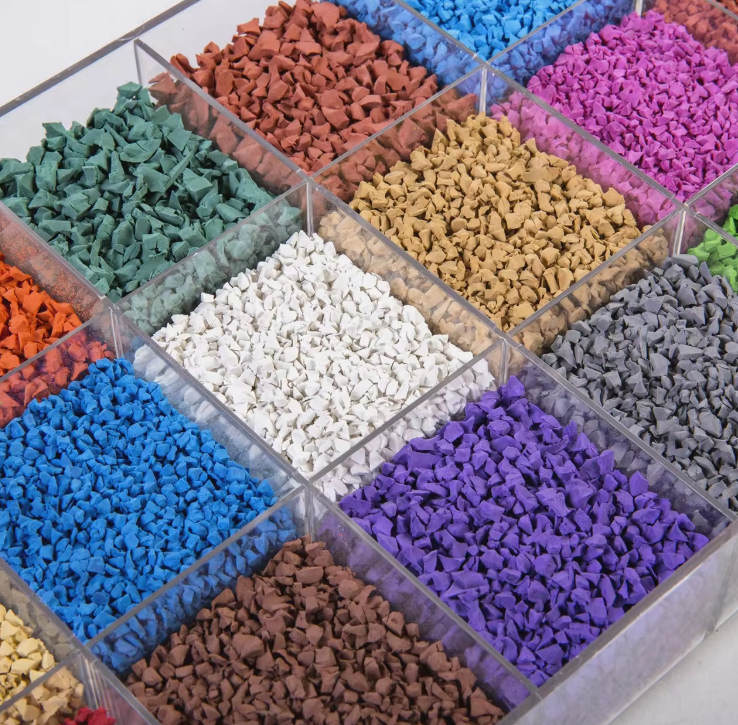
The physical size of your granules determines the texture and performance of the finished track. For spray-coat systems, use granules in the 0.5mm to 1.5mm range. These fine particles blend efficiently with liquid polyurethane to create a textured, economical, and permeable surface. They are ideal for high schools and recreational facilities where budget constraints are tight.
For more demanding sandwich or full-pour systems, you need larger granules. Standard sizes typically range from 1.0mm to 3.0mm or 1.0mm to 4.0mm. These larger particles provide better wear resistance in high-traffic competitive environments.
Be wary of binder consumption during the installation process. Poorly graded running track rubber granules contain inconsistent shapes and sizes. These materials often absorb excessive polyurethane binder. This unexpected consumption inflates your costs and threatens to compromise the system's structural integrity. Ensure your supplier guarantees a tight, consistent particle distribution to avoid these financial pitfalls.
Performance on the track must match global expectations. World Athletics guidelines define the requirements for force reduction and vertical deformation. These metrics ensure athlete safety and consistent energy return across the entire surface. If your sports track surface material fails these tests, your facility may not gain certification for competitive events.
Beyond performance, you must prioritize health and safety. Always confirm that your granules meet international standards like EN 71-3 or REACH compliance. These regulations ensure that the material is free from heavy metals and toxic phthalates. Furthermore, ensure your product meets regional DIN standards regarding fire retardancy for outdoor use. Safety is a non-negotiable aspect of any modern athletic construction project.
Batch consistency remains a primary risk during the procurement process. If you order materials in separate production runs, you may notice distinct color variations across the track. To avoid this, always order the entire top-layer volume as a single batch.
Environmental factors during installation also heavily influence the final result. High humidity or extreme temperatures can alter the curing time of the polyurethane binder. Coordinate with your installation team to ensure they possess the experience to adjust for local weather conditions. A smooth installation process is just as important as the quality of the raw materials.
Follow these steps to conduct thorough due diligence:
Request physical samples to perform simple, onsite elasticity and tensile strength tests.
Demand comprehensive Technical Data Sheets (TDS) and Material Safety Data Sheets (MSDS) before commitment.
Request contact information for previous clients who have used these materials in your specific climate zone.
Successful procurement relies on granule size, polymer content, verifiable UV resistance, and overall system compatibility. These core decision criteria ensure your track remains safe and durable for years to come. Prioritizing material quality at the start prevents the financial burden of premature resurfacing. We recommend consulting with certified track builders to review your specific requirements before final purchase. Ask for lab reports for your shortlisted materials to confirm that your EPDM rubber granules meet all safety and performance standards. Taking these proactive steps will protect your investment and serve your athletes well.
A: A high-quality EPDM surface typically lasts between 10 and 15 years. This assumes the project used professional-grade materials, proper installation techniques, and routine maintenance practices, such as annual cleaning and minor surface repairs.
A: The price gap reflects the quality of the ingredients. Premium brands use high-grade polymers and expensive, long-lasting pigments. Low-cost brands often cut costs by using excessive calcium carbonate fillers, which compromise elasticity and cause the surface to fade or crack prematurely.
A: Yes, this is often called "re-topping." However, you must first address any structural failures in the base. If the old surface is crumbling, adding new material will not fix the underlying issue. Always perform a thorough inspection and ensure the new binder is chemically compatible with the existing surface before proceeding.


