

Views: 0 Author: Site Editor Publish Time: 2025-12-11 Origin: Site
Unveiling the Secrets of Plastic Running Tracks: Multiple Types to Meet Diverse Needs
In modern track and field stadiums, synthetic running tracks serve as crucial infrastructure, impacting not only athletes' training effectiveness but also directly affecting competition results and sports safety. With advancements in technology and material innovation, the types of synthetic running tracks have become increasingly diverse, each with its own unique characteristics to meet different occasions and needs. This article will take you on a journey through the main types of synthetic running tracks, from basic to advanced, progressively exploring the diverse world of synthetic running tracks.
I. Basics: Traditional Cast-in-Place Plastic Running Track
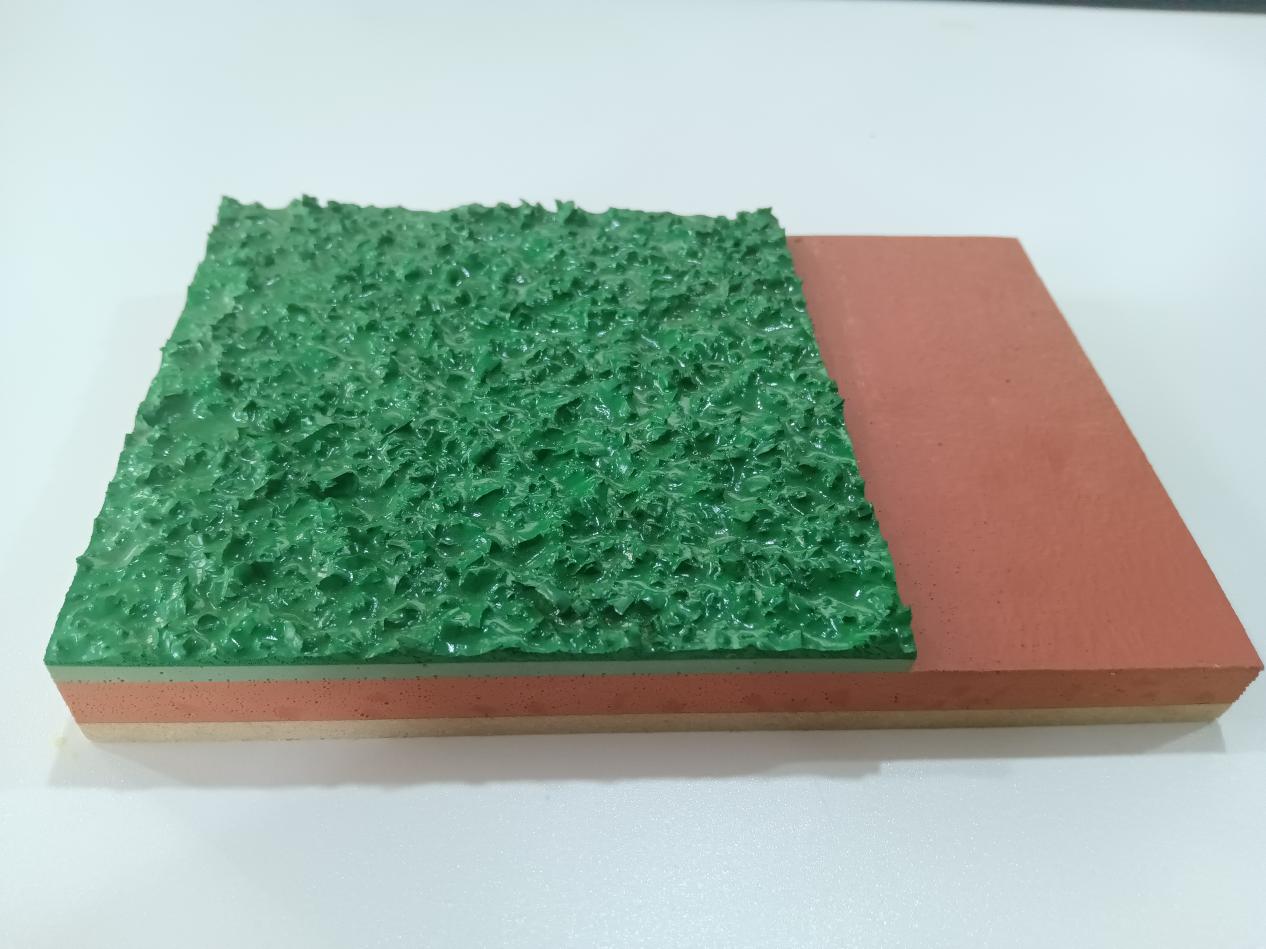
1. All-plastic running track
All-plastic running tracks are a type of synthetic running track material made of pure PU (polyurethane). They have a granular structure and excellent physical elasticity and wear resistance. Instead of using EPDM granules, the surface layer is made of pure PU adhesive laid on-site, forming a smooth, self-textured surface. This type of track can withstand various extreme weather conditions, such as prolonged sunlight, rainy seasons, and freezing weather. Therefore, it is commonly used in university campuses and general athletic fields, and is especially suitable for professional athletic events and high school and university athletic fields with high-intensity sports.
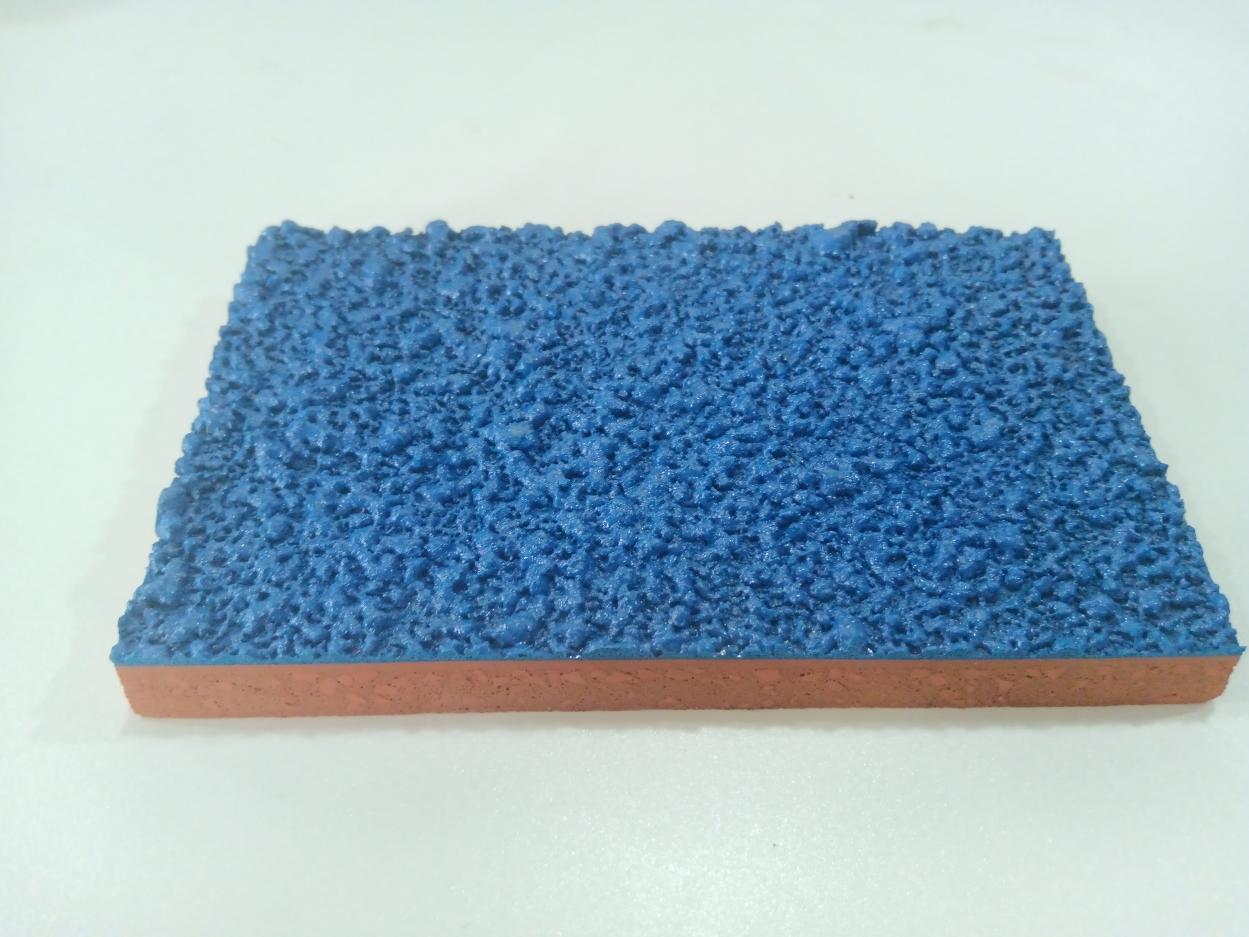
2. Hybrid type synthetic running track
Hybrid synthetic running tracks combine the advantages of PU and rubber granules. The elastic layer incorporates a certain proportion of EPDM granules, which are thoroughly mixed with PU adhesive before being laid on-site. The surface layer is made by spraying a mixture of EPDM granules and PU adhesive to form a granulated surface. This type of track is suitable for all-weather use, has extremely high wear resistance, and is relatively inexpensive, offering excellent value for money. It is suitable for competitions at all levels, school teaching and training grounds, and is especially suitable for track and field facilities in junior high schools, high schools, universities, and professional sports stadiums.
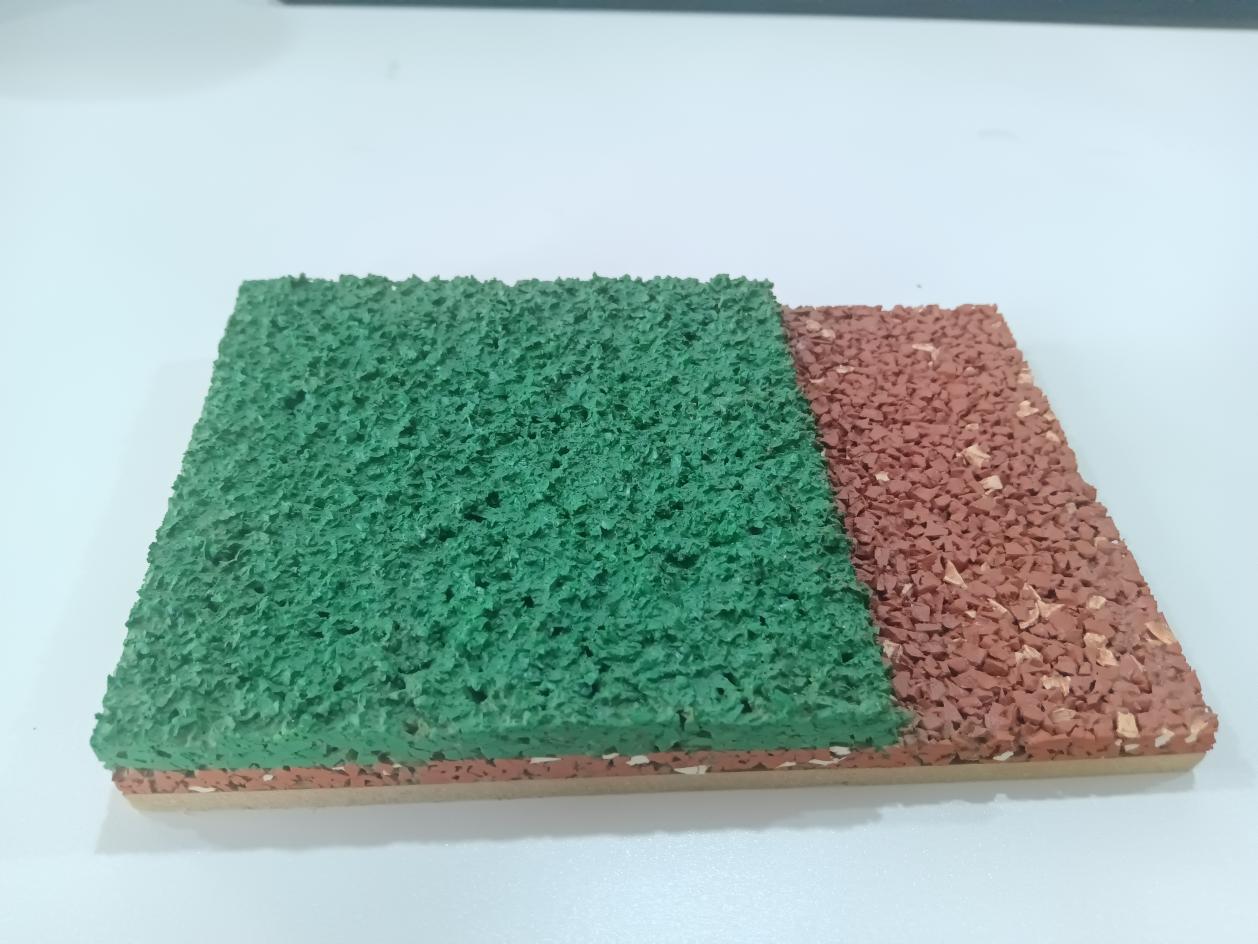
3. Permeable synthetic running track
Permeable synthetic running tracks consist of a base layer of environmentally friendly black granules bonded with plastic, and a surface layer made of a mixture of polyurethane granules and plastic slurry. They are permeable and breathable, suitable for all-weather use, and have a lifespan of over 6 years. Permeable synthetic running tracks are widely favored for their cost-effectiveness, especially in primary, secondary, and tertiary schools and fitness parks across China. They reduce foundation costs and prevent bubbling, providing athletes with a safe and comfortable running environment.
II. Advanced Section: Prefabricated and Composite Plastic Running Tracks
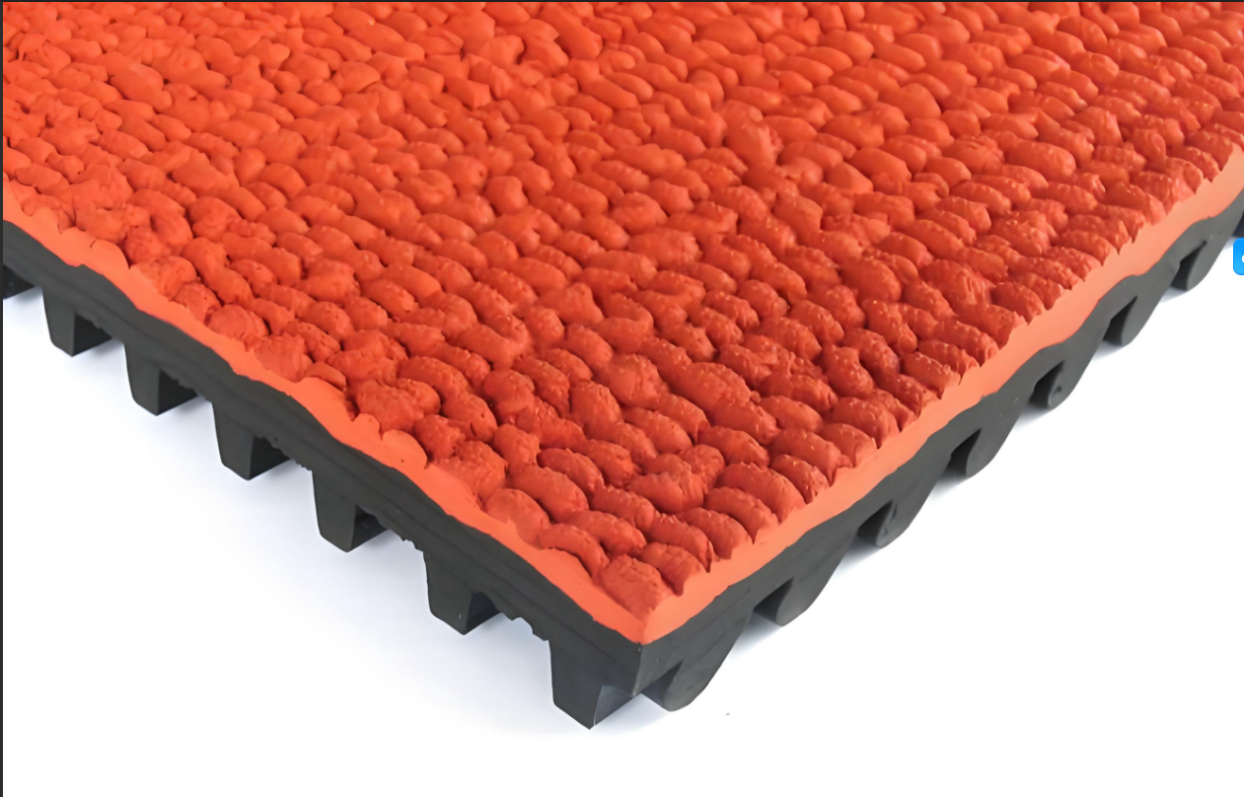
1. Precast synthetic running track
Precast synthetic running tracks are a type of roll-material track, characterized by safety, environmental friendliness, vibrant colors, and easy installation. Its structure includes a wear-resistant and flexible surface layer, a pressure-absorbing bottom layer, and an adhesive layer between the track and the foundation. The shock-absorbing bottom layer of precast synthetic running tracks has a solid, flat structure, exhibiting excellent wear resistance, weather resistance, spike resistance, and impact resistance. This type of track is commonly used in professional sports venues, such as athletic tracks and football fields for international competitions. In addition, precast synthetic running tracks also include GDPU lightweight, seamless, semi-precast roll-material tracks. These tracks stand out for their environmental friendliness, lightness, resilience, weather resistance, and long lifespan (up to 10 years or more), making them an ideal choice for newly constructed sports venues.
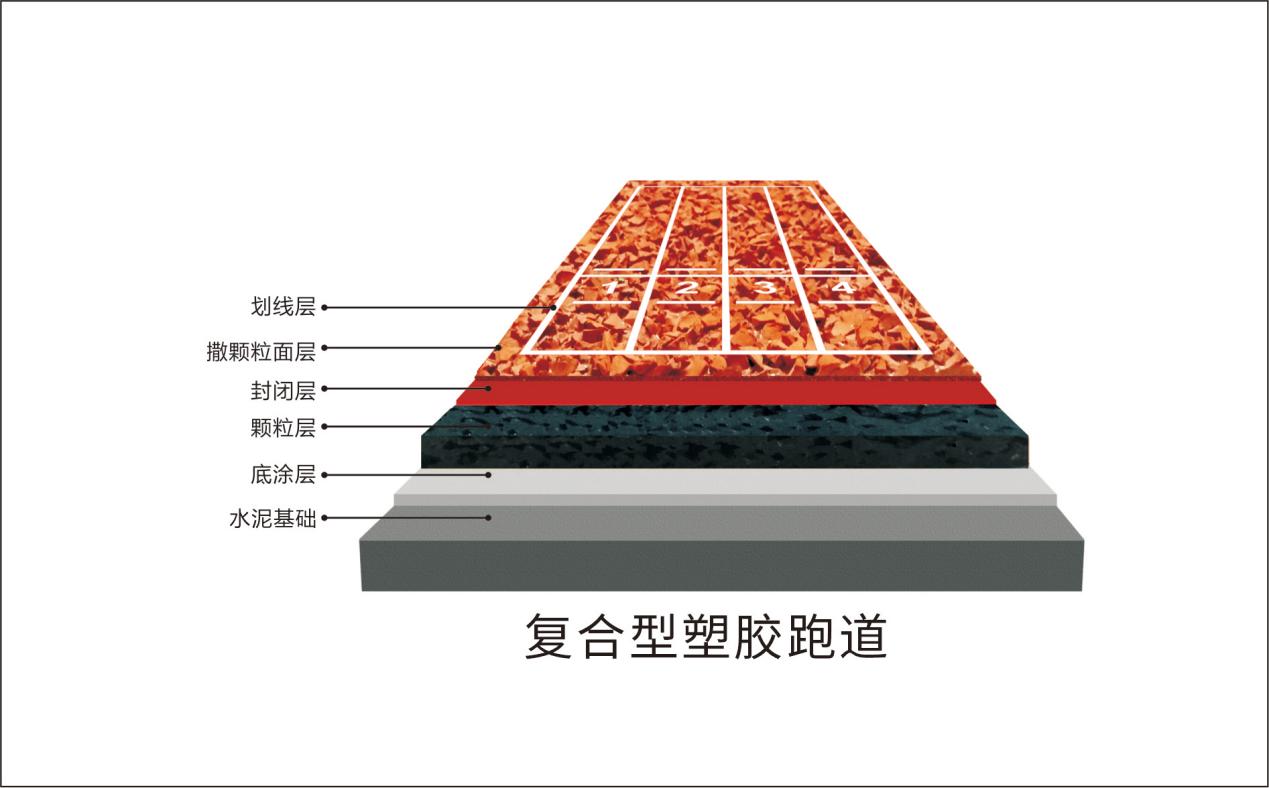
2. Composite plastic running track
Composite synthetic running tracks combine the advantages of traditional and permeable tracks, featuring a strong elastic layer and a cushioning layer that are wear-resistant and UV-resistant. Its appearance is identical to mixed-type synthetic running tracks, and its properties are basically the same except for tensile strength. Composite synthetic running tracks are relatively inexpensive, making them suitable for areas with milder climates, such as schools, military units, and businesses. They have a short construction period, reducing construction costs, and do not experience particle shedding during use.
III. Advanced Section: Special Applications and Environmental Trends
1. EPDM rubber running track
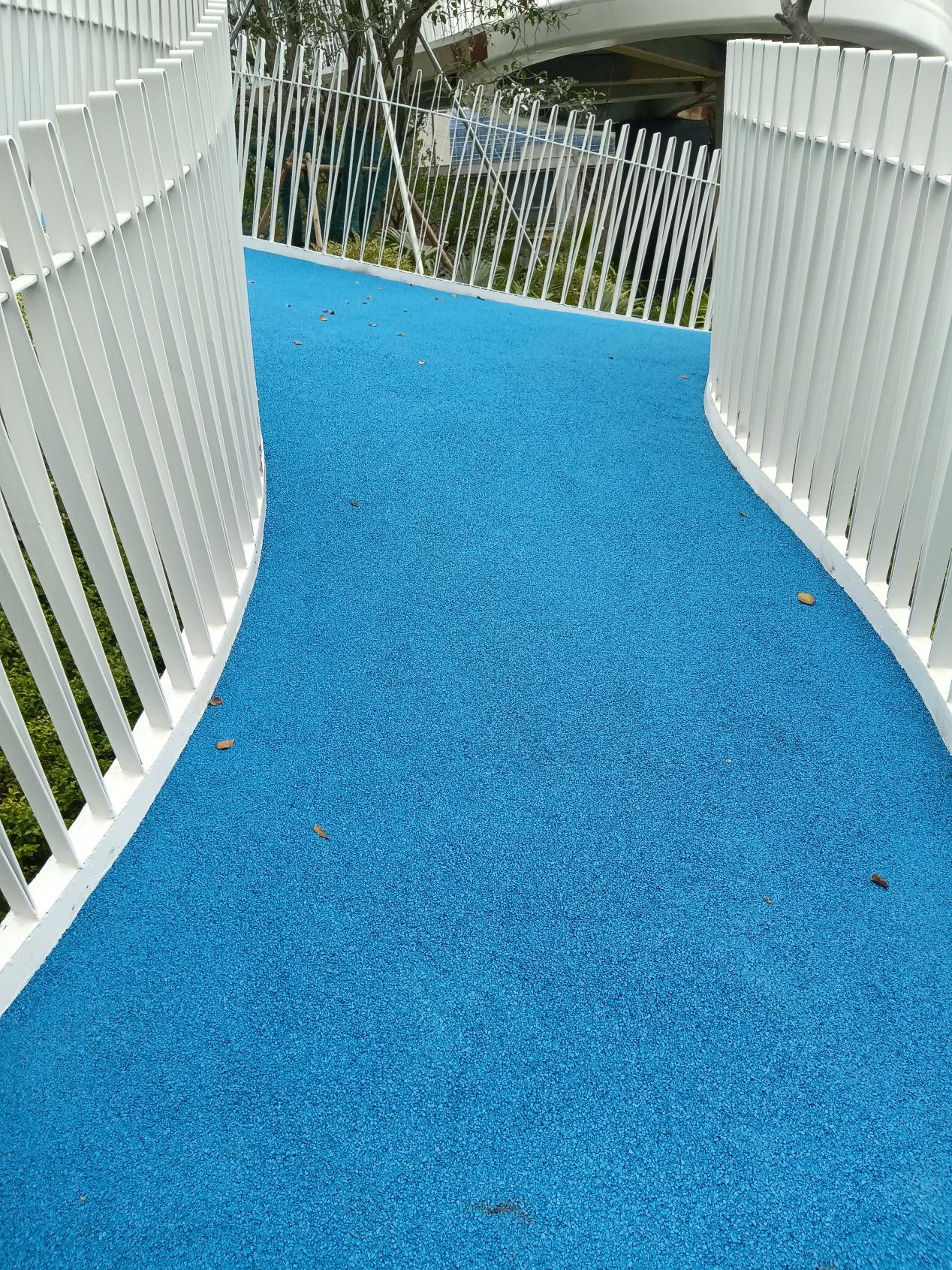
EPDM rubber running tracks are primarily constructed using environmentally friendly EPDM rubber granules and adhesives. They come in vibrant colors and are suitable for patterned installations in kindergartens, fitness park trails, and children's playgrounds. These tracks provide children with a safe and comfortable play space while simultaneously meeting both aesthetic and practical needs.
2. Environmental Protection and Sustainable Development
With increasing environmental awareness, the environmental friendliness of synthetic running tracks has become an important consideration. Modern synthetic running track materials increasingly emphasize environmental performance, such as the use of low-VOC (volatile organic compound) materials and recyclable materials. In addition, some new materials, such as GDPU lightweight interlocking roll seamless semi-prefabricated running tracks, have become an important direction for the future development of synthetic running tracks due to their environmental protection, lightness, elasticity, weather resistance, and long lifespan.
IV. Summary and Outlook
As an important facility for modern track and field, synthetic running tracks come in various types, each with its own characteristics. From basic all-plastic, mixed, and permeable tracks, to advanced precast and composite tracks, and even EPDM rubber tracks for special applications, each type has its unique advantages and applications. With advancements in technology and innovation in materials, future synthetic running tracks will be more environmentally friendly, durable, and safe, providing athletes with a better athletic experience.
When choosing a synthetic running track, you should consider your actual needs and the conditions of the site. Whether it's a professional sports competition venue or a training and competition venue for amateur sports such as schools and fitness parks, you can find a suitable type of synthetic running track. Let's look forward to more surprises and possibilities that synthetic running tracks will bring in the future!
Contact:
Simon Yin
WhatsApp: +86-13336122586
WeChat: +86-19032209551


