

Views: 0 Author: Site Editor Publish Time: 2026-10-30 Origin: Site
Choosing the correct pigment system represents one of the most critical decisions in industrial coating formulation. Selecting an incompatible or incorrectly specified product often triggers immediate failure, ranging from poor substrate adhesion and rapid color fading to catastrophic compliance issues. You must navigate the complex landscape of environmental regulations, specifically VOC mandates, while ensuring the coating retains the durability required for your specific application. Balancing these performance-critical factors requires more than just checking a price tag; it demands a deep understanding of chemical compatibility. This article provides a comprehensive, technical framework for evaluating water based vs oil based color paste systems. You will learn how to align your specific substrate needs, environmental constraints, and durability expectations with the right chemistry to ensure long-term coating integrity and project success.
Substrate dictates formulation: Water-based pastes excel on porous, moisture-tolerant surfaces, while oil-based pastes provide superior adhesion on dense, non-porous, or chemically exposed substrates.
Compliance vs. Cure Time: Water-based options mitigate VOC compliance risks and offer rapid recoat times, whereas oil-based systems require longer curing but deliver extreme moisture and abrasion resistance.
Dispersion quality drives yield: High-quality pigment dispersion directly impacts tinting strength, meaning a more expensive, better-milled pigment concentrate often reduces overall volume requirements.
Application specific: High-traffic, outdoor, or flexible surfaces (like using color paste for sports flooring) require specialized formulations that balance UV stability with elastomeric compatibility.
Formulation errors frequently stem from a misunderstanding of how a pigment paste interacts with your base resin. Mismatched components often lead to flocculation, where particles clump together, causing uneven color distribution or streaks. You may also encounter binder separation, where the coating fails to form a continuous, protective film. Defining clear success criteria prevents these costly mistakes. You must assess four key metrics before selecting any product:
Environmental conditions during application (temperature and humidity).
Expected lifecycle of the finished coating.
Regulatory constraints regarding air quality and VOC emissions.
Overall project requirements for mechanical durability and chemical resistance.
Avoid the common trap of relying on "universal" colorants. While they offer convenience, universal systems often force you to compromise on critical performance characteristics. They rarely achieve the same level of chemical harmony as a dedicated water based color paste or oil based color paste system. By choosing specialized components, you ensure the colorant integrates perfectly into your proprietary base, maintaining the film’s integrity and color consistency.
Water-based formulations have become the industry standard for meeting strict environmental and indoor air quality benchmarks. Because they contain fewer volatile organic compounds, they significantly reduce your environmental footprint during site application. Beyond compliance, you benefit from non-flammable storage and safer handling protocols, which often lower insurance costs and workplace hazards. Rapid drying times remain a major operational advantage. You can apply multiple coats in a single day, which dramatically accelerates project timelines. However, these systems have technical trade-offs you must manage:
They are susceptible to freezing during transport in colder climates.
High water content can cause grain-raising on natural wood substrates.
You must manage pH levels carefully to prevent viscosity drops or bacterial contamination.
These formulations work best for architectural coatings, indoor decorative finishes, and commercial projects where low odor and fast turnaround are top priorities. Always verify that your chosen pigment concentrate maintains proper tinting strength when diluted, as consistency is paramount for reliable results.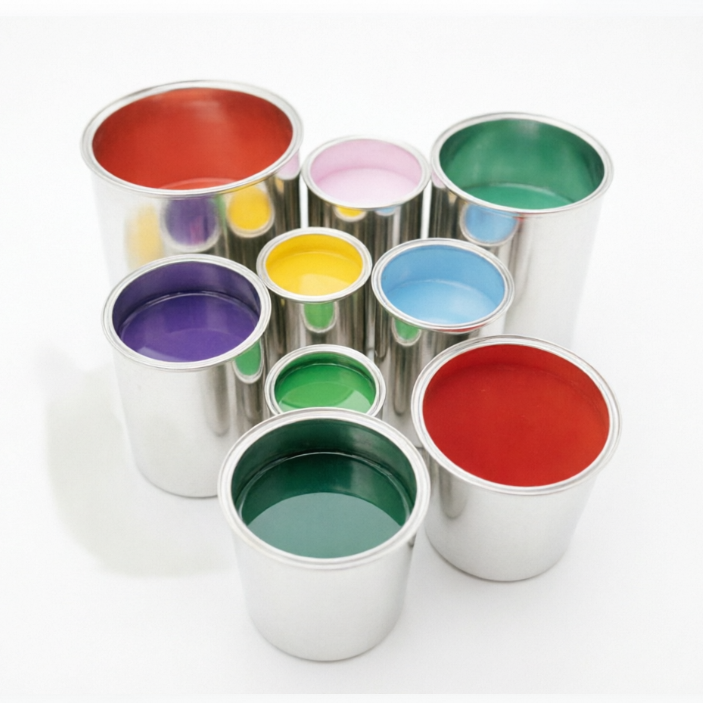
Oil-based systems remain the gold standard for projects demanding extreme durability. They provide unmatched penetration into difficult, non-porous surfaces, ensuring the coating bonds securely even in challenging environments. If your project involves standing water, harsh chemicals, or heavy industrial machinery, this chemistry typically outperforms water-based alternatives. The longer "open time" of oil-based systems is a significant practical benefit for applicators. You gain more time for leveling the coating, which helps achieve a professional, streak-free finish. Nevertheless, you must account for these technical realities:
They often contain high VOC levels, requiring compliance checks in restricted regions.
Strong odors often necessitate robust ventilation during the curing phase.
Standard formulations may yellow over time when exposed to intense UV radiation.
For industrial flooring, marine coatings, or exterior metal, oil based color paste is usually the logical choice. Its chemical composition allows it to withstand abrasive wear that would compromise most water-borne resins.
When evaluating a pigment dispersion, do not focus exclusively on the cost per unit. True value lies in the tinting strength, which dictates how much paste you need to achieve your target color. A highly concentrated, finely milled pigment can actually save money by reducing the volume of product required per batch. For high-performance projects, specialized requirements are mandatory. For example, when selecting color paste for sports flooring, you must evaluate the product’s ability to remain flexible. Sports surfaces undergo constant impact and thermal expansion. If the colorant is too rigid, it will cause the polyurethane or acrylic base to crack or delaminate. | Feature | Water-Based System | Oil-Based System | | :--- | :--- | :--- | | VOC Content | Very Low | High | | Drying Speed | Fast | Slow | | Adhesion (Non-porous) | Moderate | Excellent | | UV Stability | High (with additives) | Variable | | Ideal Environment | Indoor / Architectural | Industrial / External |
Transitioning to a new formulation involves hidden risks. The "Rub-Out" test is a simple yet vital tool for preventing disasters. By rubbing a small amount of the wet paint on a surface and observing the color change as it dries, you can identify flocculation before you tint a thousand-gallon batch. Viscosity shock is another concern when introducing new components. Some pigments disrupt the thickening agents in your base resin, leading to a sudden, permanent loss of viscosity. Furthermore, be aware of cure inhibition. Specifically, certain carbon blacks can interact with catalysts in two-part epoxy or polyurethane systems, slowing down the cross-linking process and leaving you with a soft, tacky surface. Always run a pilot test on a small, representative scale before moving to full production.
Procurement should begin with a detailed environment audit. You must map out the specific stressors of your site, including temperature shifts, UV exposure, and chemical cleaners. Once you understand these variables, request the Technical Data Sheets (TDS) for potential custom color paste options. Verify the carrier resin compatibility directly against your base. If a supplier cannot guarantee batch-to-batch consistency—measured by Delta E values—you should reconsider the partnership. Demand batch samples to run your own adhesion and weathering tests. Vetting suppliers based on their technical support capabilities is just as important as the chemistry itself. A good partner will help you refine your formulation to meet performance goals without exceeding your budget.
Selecting between water-based and oil-based pigment systems requires careful alignment with your specific project conditions. It is rarely about finding a single superior product; it is about finding the chemical match that will thrive on your substrate. Prioritize dispersion quality and tinting strength to ensure you get the best long-term return on your investment. Start by consulting with professional formulators to review your technical requirements. Always perform rigorous compatibility testing using real-world batch samples before scaling. Verify all environmental compliance documents for your specific region to avoid future regulatory hurdles.
A: No. Water and oil-based systems are chemically incompatible. Mixing them leads to immediate phase separation, coagulation, and total coating failure. They require different surfactant chemistries to remain stable. Never attempt to cross-blend these formulations, as the binder will not be able to form a cohesive, protective film on the surface.
A: Shelf life typically ranges from six to twelve months if stored correctly. Factors like pigment settling, moisture evaporation, and container integrity heavily influence this. You must store these materials in a climate-controlled area, away from direct sunlight and extreme temperatures, to prevent skinning or hard-settling of the pigment.
A: Provide your supplier with a specific Delta E color target and a sample of your base resin. Clearly communicate the end-use environment, required UV resistance, and any curing constraints. The manufacturer will then develop a tailor-made pigment dispersion that ensures chemical compatibility and consistent color development for your specific formulation.
A: Peeling usually results from over-tinting. Every base resin has a maximum loading capacity for pigment paste. If you exceed this limit, you disrupt the binder’s film-forming properties, resulting in a weak, brittle coating that lacks adhesion. Always follow the manufacturer’s recommended let-down ratio to maintain the integrity of the base resin.


