Views: 0 Author: Site Editor Publish Time: 2026-06-17 Origin: Site
Selecting a tennis court coating goes beyond picking a striking color. It represents a major capital investment. This decision directly dictates facility downtime, maintenance schedules, and long-term player safety. Facility managers, contractors, and private owners frequently navigate conflicting manufacturer claims. These claims often blur the truth about material durability and surface performance. Making the wrong structural choice causes severe problems down the line. You might face premature surface cracking. You could experience dangerous dead spots. Non-compliant ball bounce can quickly ruin competitive matches. These surface failures frustrate players and drain facility resources. This guide delivers a vendor-neutral evaluation framework. It helps you navigate these complex procurement decisions effectively. You will learn how to accurately assess site-specific environmental variables. We will explore different material technologies in depth. We also examine critical site preparation requirements. You can then finalize your procurement decision confidently.
Player Demographics Dictate Material: High-frequency play and aging demographics strongly favor cushioned systems over standard hard courts to reduce joint fatigue.
TCO > Upfront Cost: Evaluating coating systems requires looking beyond the initial bid to calculate the 10-year Total Cost of Ownership (TCO), including resurfacing cycles.
Sub-Base Compatibility is Critical: Even premium materials fail without proper substrate preparation, moisture vapor mitigation, and structural stability.
Compliance Matters: Reputable systems must align with International Tennis Federation (ITF) Court Pace Classifications for standardized playability.
Every successful court installation begins by establishing clear operational goals. You cannot select the right material without understanding how your facility operates daily. Different user groups require vastly different performance metrics from a playing surface.
You must first isolate the main goal behind your facility investment. Facility objectives generally fall into three distinct categories:
Maximizing Utilization: Commercial facilities need courts ready for play in various weather conditions. These venues prioritize fast drying times and extreme durability.
Tournament Compliance: Competitive venues must meet stringent international guidelines. These courts require highly predictable ball bounce and verifiable pace ratings.
Premium Comfort: Country clubs and private residences usually prioritize user experience. They favor systems offering significant shock absorption to protect aging joints.
Your local climate relentlessly attacks outdoor playing surfaces. You must evaluate these environmental factors before choosing a product.
Daily UV Index: High ultraviolet exposure degrades inferior pigments quickly. It causes vibrant colors to fade and weakens the binder resins.
Freeze-Thaw Cycles: Cold climates cause subsurface moisture to freeze and expand. This expansion exerts immense upward pressure on rigid coatings.
Ambient Humidity: Constant dampness encourages mold growth. It also severely complicates the chemical curing process during installation.
Indoor courts face fundamentally different degradation patterns. They avoid harsh UV rays but often struggle with indoor moisture transmission. Indoor installations also require strict attention to volatile organic compounds (VOCs) during application.
You should differentiate your target audience carefully. Competitive juniors typically favor fast, predictable hard courts. They want surfaces facilitating quick baseline rallies. Conversely, club-level adults often require high shock absorption. Older players need forgiving surfaces to prevent knee and lower back fatigue.
Best Practice: Always survey your membership or target demographic before drafting material specifications. Matching the surface to the player profile guarantees higher facility retention rates.
The industry primarily divides hard court surfaces into two categories. You have traditional rigid acrylics and advanced cushioned systems. Each technology serves specific facility needs and budget constraints.
Standard acrylic systems dominate public parks and high school facilities globally. They consist of multiple layers of acrylic resin mixed with silica sand.
Pros: Acrylics remain highly cost-effective upfront. Contractors widely understand the installation process. Installers can easily customize the court pace by adjusting the sand ratio.
Cons: These surfaces provide zero shock absorption. They remain highly prone to reflective cracking from the sub-base beneath them. Standard acrylics also exhibit faster wear in extreme climates.
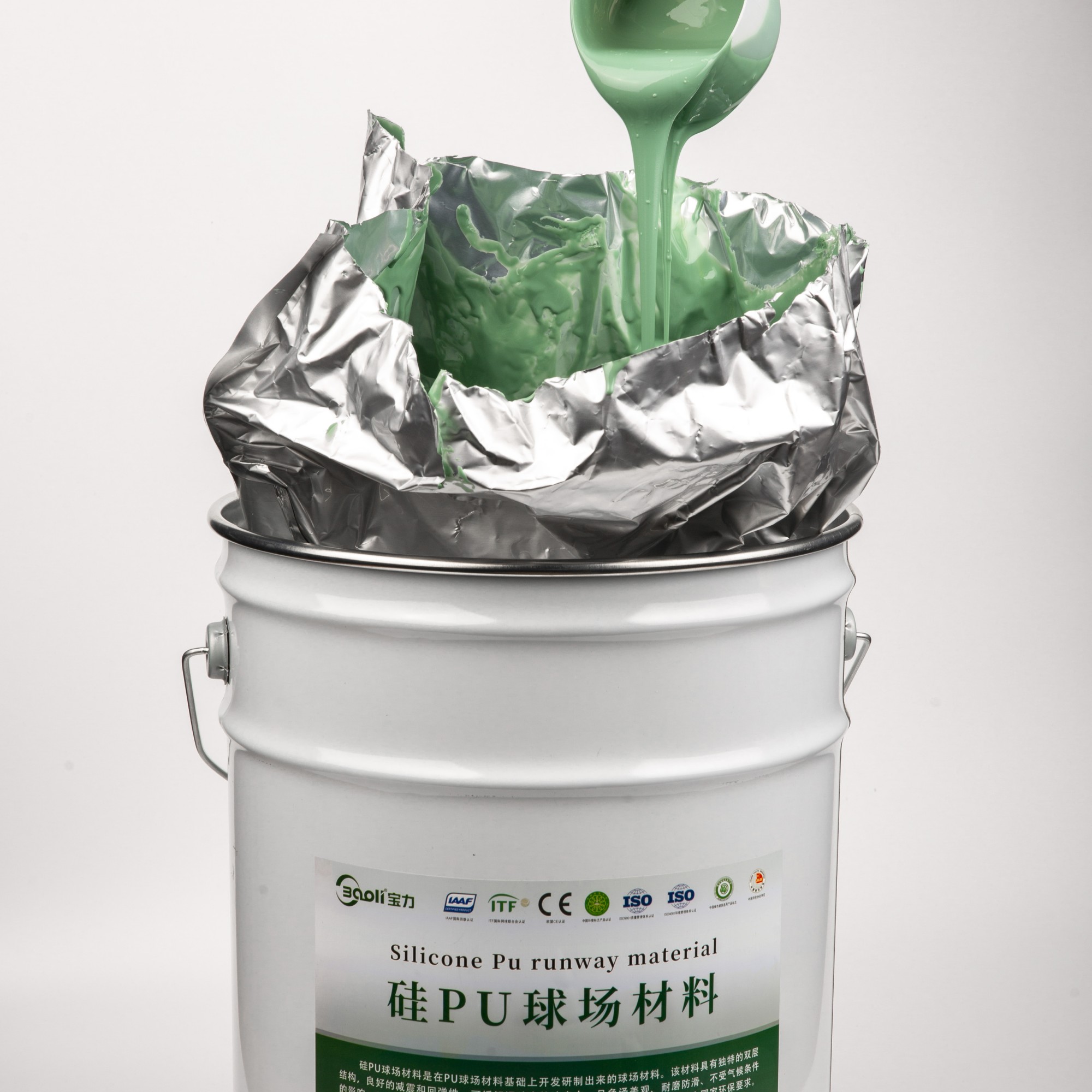
Facility owners increasingly turn to hybrid technologies for premium installations. A Silicone Polyurethane court coating represents a major leap in surface engineering.
Mechanism: SPU functions as a sophisticated multi-layer system. It combines a resilient polyurethane cushion layer at the base. Installers then apply a durable, weather-resistant silicone-modified topcoat over the cushion.
Performance Edge: This system offers superior kinetic energy return. It provides excellent joint protection for players. Crucially, it avoids the "spongy" dead-ball effect often found in inferior rubberized mats. The silicone topcoat resists dirt retention and fading exceptionally well.
Ideal Use Case: You will find SPU systems in high-end clubs and premium home courts. They suit facilities prioritizing long-term structural integrity. These venues value player comfort over securing the lowest initial bid.
Feature | Standard Acrylic | Silicone Polyurethane (SPU) |
|---|---|---|
Shock Absorption | None (0-2%) | High (15-25%) |
Initial Investment | Low to Moderate | Premium |
Crack Resistance | Poor (Reflects sub-base cracks) | Excellent (Bridges minor cracks) |
Player Fatigue | High risk for joint strain | Significantly reduced strain |
You cannot judge a tennis court purely by its visual appeal. Professional playability requires strict adherence to international testing standards. The International Tennis Federation (ITF) provides the benchmark for all reputable coating systems.
The pace of a court dictates the speed of the game. Installers manipulate coatings to achieve specific ratings. They alter the silica sand mesh sizes within the final topcoat layers. Larger sand particles create more friction, slowing the ball. Finer sand allows the ball to skid faster.
The ITF classifies court pace into five distinct categories:
Category 1 (Slow): Heavy sand mixture. Ideal for baseline grinders.
Category 2 (Medium-Slow): Moderate friction. Common in training facilities.
Category 3 (Medium): Balanced speed. The standard for most recreational play.
Category 4 (Medium-Fast): Finer textures. Favors aggressive serve-and-volley tactics.
Category 5 (Fast): Minimal friction. Rarely used outside specific indoor tournaments.
Player safety depends entirely on predictable surface friction. You must balance the need for player traction with sliding capabilities. Too much grip causes sudden stops, leading to severe ankle and knee injuries. Too little grip creates a dangerous slipping hazard. Modern hard-court play often requires players to slide into their shots. High-quality systems precisely calibrate this friction coefficient.
A tennis ball must bounce consistently across every square inch of the court. We emphasize the necessity of a monolithic, seamless pour during installation. Seamless application prevents dead spots entirely. Dead spots remain a common issue in poorly installed modular tiles or low-grade cushioned courts. Even a slight variation in layer thickness alters the acoustic response and rebound height.
Common Mistake: Facility managers often hire inexperienced painters rather than certified court builders. Standard painters rarely understand how to distribute sand evenly. This oversight ruins ball rebound uniformity.
Evaluating coating systems requires understanding the long-term financial and physical commitments. You must look far beyond the initial contractor bid. Every surface demands a distinct maintenance routine to survive its intended lifespan.
We must acknowledge the initial investment transparently. Premium cushioned systems require a significantly higher upfront investment compared to basic acrylics. Liquid-applied polyurethane layers demand specialized mixing equipment. They also require highly skilled labor for proper leveling. You are paying for advanced polymer chemistry and superior joint protection.
You need to map out the realistic five-to-ten-year maintenance schedule. Basic acrylics generally require complete resurfacing every three to five years. They wear down under heavy foot traffic and UV exposure. Conversely, premium SPU systems often stretch this lifecycle considerably. The elastic nature of polyurethane resists minor sub-base micro-cracking. This resilience delays the need for expensive structural repairs.
Hard coatings offer distinct advantages regarding routine labor. Contrast the simple sweeping and washing requirements of hard coatings against alternative surfaces. Artificial turf requires intensive weekly grooming to redistribute infill. Clay courts demand daily watering, rolling, and line sweeping. Standard and cushioned resin systems merely need occasional power washing to remove debris and prevent mildew buildup. This low daily upkeep saves massive amounts of facility labor hours annually.
Even the most expensive polymers fail miserably on a poorly prepared foundation. Coatings are truly only as good as the asphalt or concrete beneath them. You must strictly control the site preparation phase.
New foundations require adequate time to release internal moisture and stabilizing oils. You must enforce a minimum 30-day cure time for new asphalt. Concrete requires a strict 28-day curing period. Applying surfacing materials prematurely traps migrating oils or moisture. This trapped material chemically attacks the primer coat, ensuring widespread failure.
Moisture vapor transmission poses a severe risk to any court overlay. We must highlight the catastrophic risk of blistering and delamination. This failure occurs if contractors omit vapor barriers during concrete sub-base construction. Groundwater constantly pushes upward through porous concrete. When this moisture hits an impermeable synthetic coating, it creates massive hydrostatic pressure. This pressure literally rips the coating off the concrete. Always conduct a calcium chloride test before application.
Chemical curing demands highly specific atmospheric conditions. You must outline strict temperature and humidity parameters for your installation team. Polyurethane and acrylic pours require ambient temperatures consistently above 50°F (10°C). Humidity must remain moderate. If temperatures drop unexpectedly, the cross-linking chemical reaction stops. If rain hits an uncured acrylic layer, it washes the pigment away entirely. Strict adherence to weather windows prevents catastrophic system failure.
Best Practice: Always include a weather-delay clause in your contractor agreement. Never pressure an installer to pour resin under threatening skies just to meet a deadline.
The right coating system successfully balances your upfront budget with player biomechanics. It also must withstand your specific geographic climate realities. Achieving this balance ensures your facility thrives for decades.
Use clear shortlisting logic during your procurement phase. You should rule out standard acrylics immediately if player joint health is a primary concern. Conversely, rule out premium cushioned systems if your existing sub-base is structurally compromised beyond repair. Applying expensive materials over failing asphalt wastes money.
Your immediate next step requires precise data collection. We advise stakeholders to commission a professional site audit immediately. Have an engineer conduct core testing on your current asphalt or concrete. You must understand your foundation's health before requesting any material bids.
A: These systems boast an impressive structural lifespan of 8 to 12 years under normal conditions. The thick polyurethane cushion layer remains resilient for over a decade. Only the very thin silicone-acrylic wear layer requires periodic refreshing every 5 to 7 years. This makes long-term maintenance highly efficient.
A: We strongly warn against simple "band-aid" overlays. You cannot pour new cushion over active structural cracks. You must address the foundation first. This requires applying fiberglass membrane repair systems over isolated cracks. If the court exhibits severe alligator cracking, you need full asphalt milling and repaving before applying cushioned layers.
A: No, formulations differ significantly based on the environment. Outdoor court coatings include heavy UV stabilizers to prevent severe sun fading. Indoor courts omit these expensive UV additives. Instead, indoor formulations prioritize lower-VOC emissions and advanced odor-management chemistry to maintain safe indoor air quality during installation.
A: Temperature dictates the entire chemical cross-linking process. Installers require sustained ambient temperatures above 50°F (10°C) and rising. If temperatures fall too low, the resins remain in a liquid state indefinitely. High temperatures accelerate drying too rapidly, causing application streaks. Proper weather windows are non-negotiable for system integrity.