

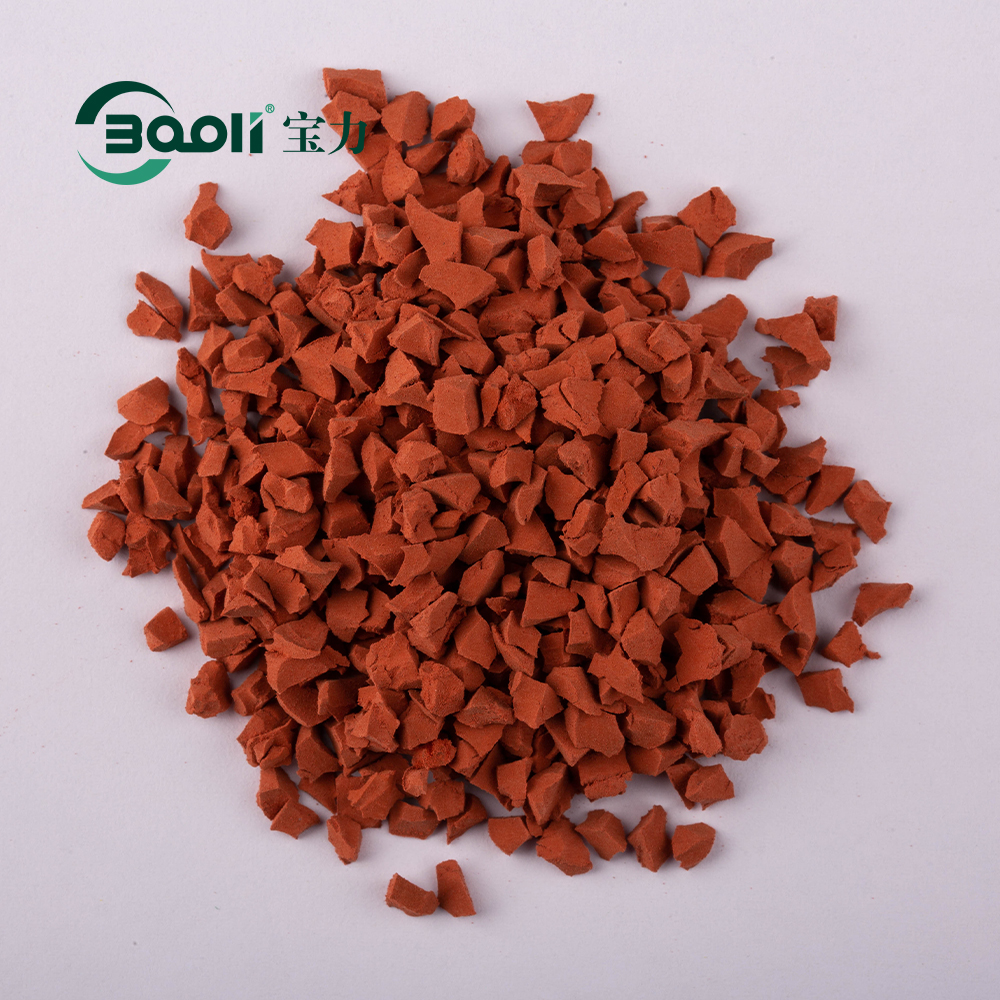
EPDM and SBR rubber granules are two common materials used for sports surfaces, running tracks, playground flooring, gym floors, and other impact-absorbing applications. Although they may look similar, they have significant differences in material composition, weather resistance, color stability, performance, and application.
For contractors, distributors, sports facility developers, and project owners, understanding the difference between EPDM and SBR rubber granules is important when selecting the right material for a project.
This article explains the main differences between EPDM and SBR rubber granules and provides practical guidance on how to choose between them.
EPDM stands for Ethylene Propylene Diene Monomer. EPDM rubber is a synthetic rubber known for its excellent resistance to weathering, UV radiation, ozone, heat, and moisture.
EPDM rubber granules are commonly used as the colored surface layer of sports flooring and playground surfaces. They can be produced in a wide range of colors, making them suitable for projects where both performance and appearance are important.
Typical applications include:
Running tracks
Children's playgrounds
Outdoor sports courts
Walking paths
Fitness areas
School playgrounds
Recreational facilities
Rubber safety flooring
One of the biggest advantages of EPDM rubber granules is their ability to maintain performance and color under outdoor conditions.
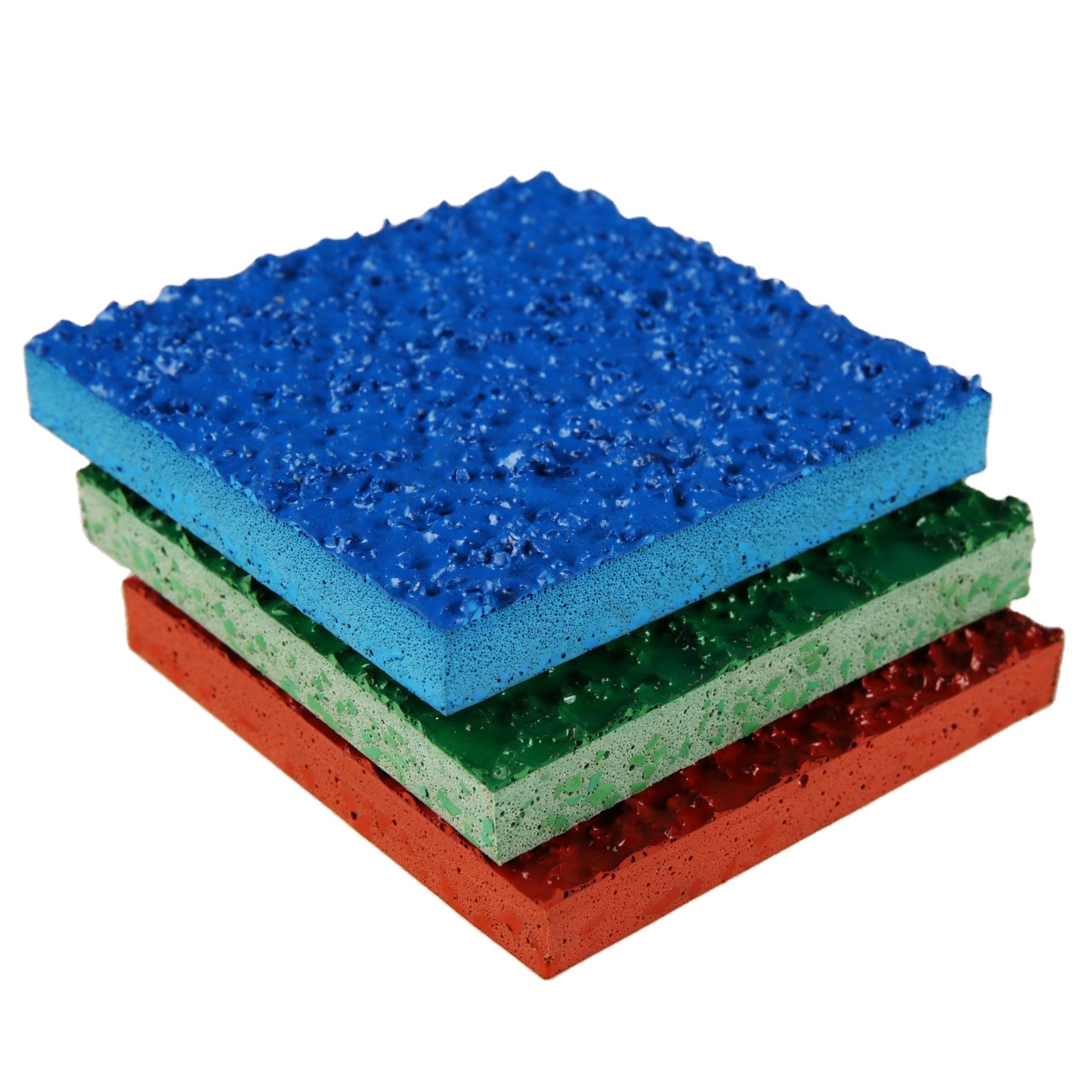
SBR stands for Styrene-Butadiene Rubber. SBR is another synthetic rubber that is widely used in sports flooring and impact-absorbing surfaces.
SBR rubber granules are often manufactured from recycled rubber materials, such as used tires. They are commonly used as an economical base material in sports surfaces and rubber flooring systems.
Typical applications include:
Running track base layers
Shock-absorbing playground systems
Gym flooring
Fitness areas
Sports flooring
Rubber mats
Impact-absorbing surfaces
SBR is often selected when cost efficiency and cushioning performance are the primary considerations.
The most important differences between EPDM and SBR rubber granules can be seen in their raw materials, outdoor durability, color options, UV resistance, and price.
EPDM is a purpose-designed synthetic rubber made from ethylene, propylene, and diene components.
SBR is based on styrene and butadiene and is also widely available as recycled rubber granules.
The source and manufacturing process can affect the final material properties, particle consistency, color, and application suitability.
For projects requiring a consistent colored surface, EPDM is generally the more suitable option.
UV resistance is especially important for outdoor sports facilities.
EPDM rubber has excellent resistance to sunlight, ozone, rain, and temperature changes. This makes EPDM rubber granules suitable for outdoor running tracks, playgrounds, and sports surfaces.
SBR can also be used outdoors, but its long-term resistance to UV exposure and weathering is generally lower than that of EPDM.
For projects exposed to strong sunlight and changing weather conditions, EPDM is usually preferred for the exposed surface layer.
Color is one of the most visible differences between EPDM and SBR.
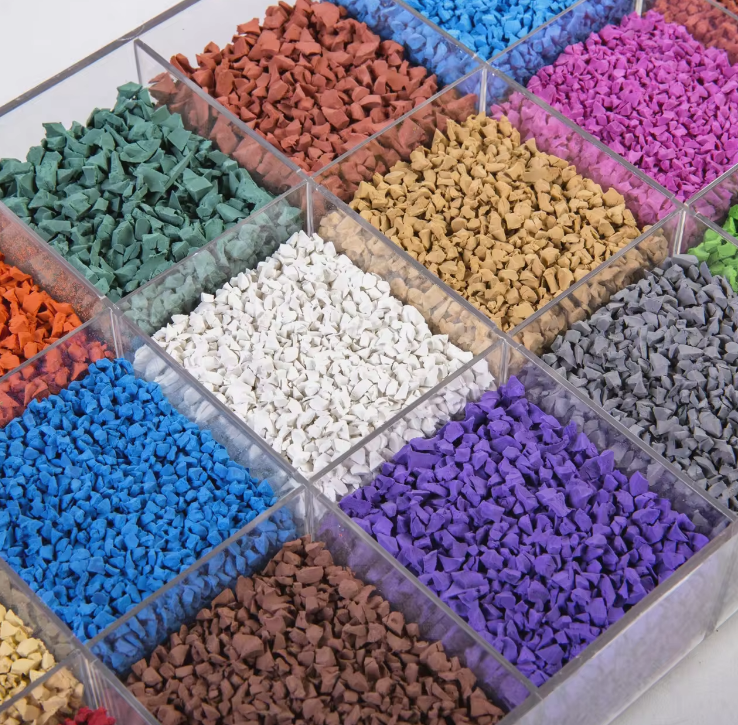
EPDM rubber granules are available in many colors, including red, green, blue, yellow, orange, and custom colors. Their strong color stability makes them popular for decorative sports flooring and playgrounds.
SBR granules are commonly black because recycled SBR is often produced from rubber products that already contain carbon black.
Colored SBR is possible, but it generally does not offer the same range and long-term color performance as high-quality colored EPDM.
Therefore, if appearance is an important part of the project, EPDM rubber granules are usually the better choice.
Both EPDM and SBR can provide elasticity and impact absorption.
SBR is widely used in base layers because it provides good cushioning at a relatively economical cost.
EPDM also provides good elasticity and resilience and is frequently used as the visible surface layer.
In a complete sports flooring system, the two materials can sometimes be used together.
For example, SBR can be used in the lower layer to provide economical shock absorption, while EPDM rubber granules can be used in the top layer to provide better appearance, weather resistance, and surface durability.
EPDM is designed for demanding outdoor environments and has strong resistance to weathering, ozone, UV radiation, and temperature fluctuations.
SBR has good mechanical properties and can provide reliable performance in many applications. However, the durability of SBR products can vary significantly depending on whether they are virgin or recycled materials and how they are manufactured.
When purchasing rubber granules, buyers should therefore consider not only the rubber type but also particle quality, cleanliness, density, hardness, and manufacturing consistency.
Price is another important difference.
SBR rubber granules are generally more economical than EPDM, particularly when recycled SBR is used.
EPDM typically costs more because of its material properties, color options, and outdoor durability.
For large projects with strict budget requirements, SBR can be a cost-effective solution for base layers or impact-absorbing applications.
For projects where long-term appearance and outdoor performance are important, the higher cost of EPDM may provide better overall value.
Yes.
In many sports flooring systems, EPDM and SBR can be used together.
A common structure is to use SBR rubber granules in the lower layer and EPDM rubber granules in the top layer.
The SBR layer provides:
Cost-effective cushioning
Elasticity
Impact absorption
A stable base
The EPDM surface layer provides:
Better color appearance
UV resistance
Weather resistance
Attractive surface design
Long-term outdoor performance
This combination can help balance project cost and surface performance.
However, the appropriate material ratio and layer thickness should be determined according to the specific project, installation system, substrate, and performance requirements.
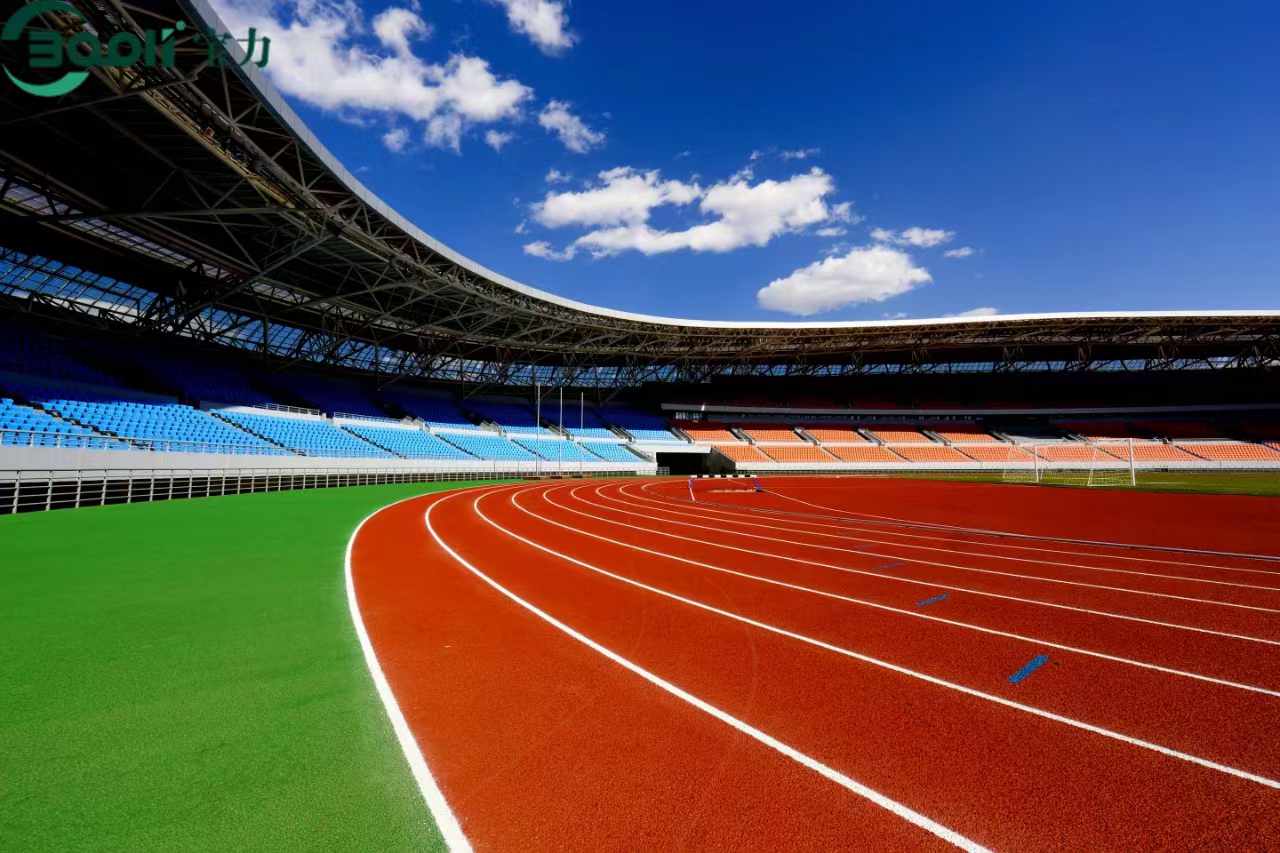
Running tracks are one of the most common applications for both materials.
SBR can be used in the base layer because of its cushioning performance and relatively low cost.
EPDM is often used in the surface layer because running tracks are exposed to sunlight, rain, temperature changes, and continuous foot traffic.
For a premium outdoor running track, a system combining an SBR base layer with an EPDM surface layer can provide a practical balance between performance, appearance, and project cost.
However, the final structure should always follow the requirements of the specific sports flooring system and installation method.
For children's playgrounds, material selection is particularly important because the flooring needs to provide impact absorption and a comfortable surface.
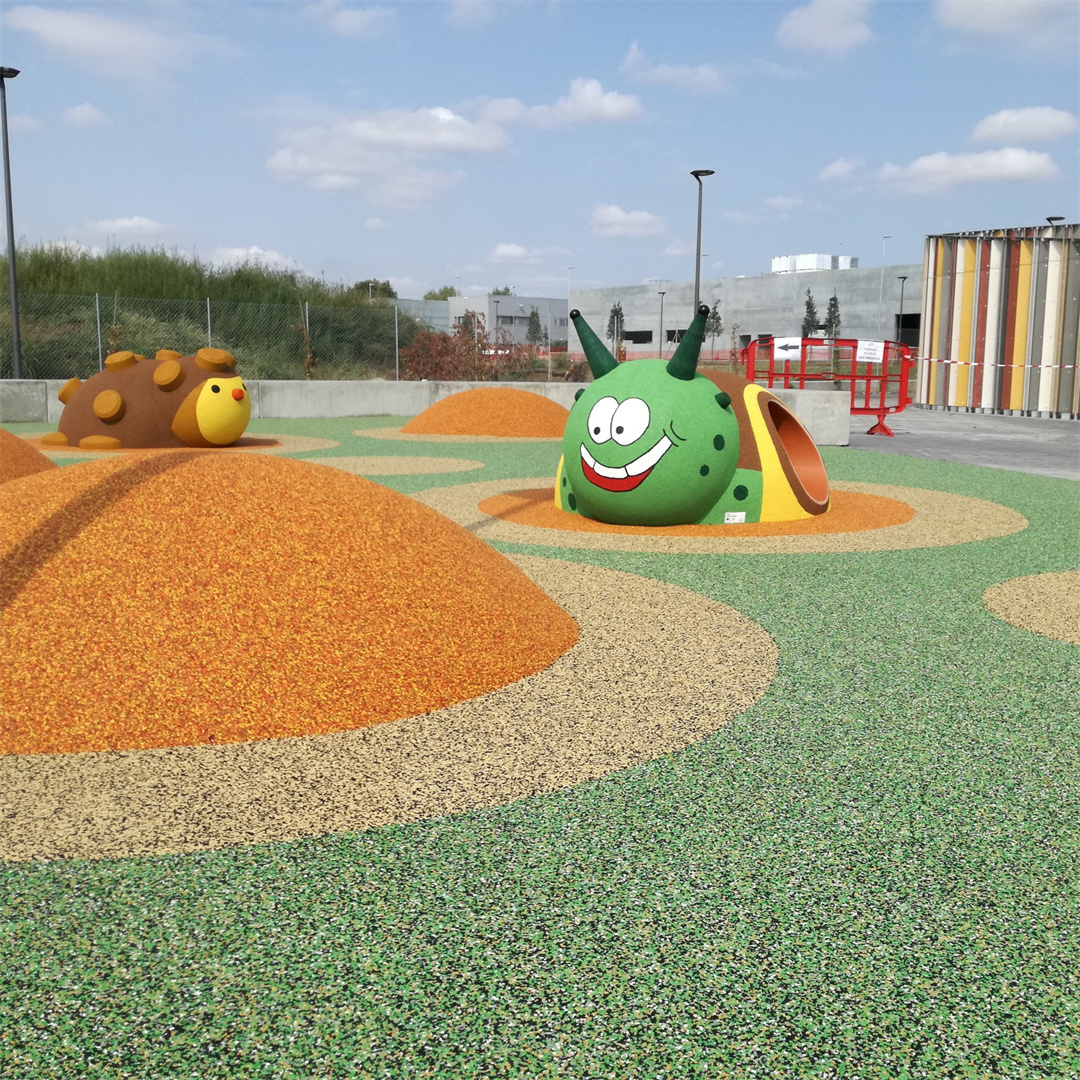
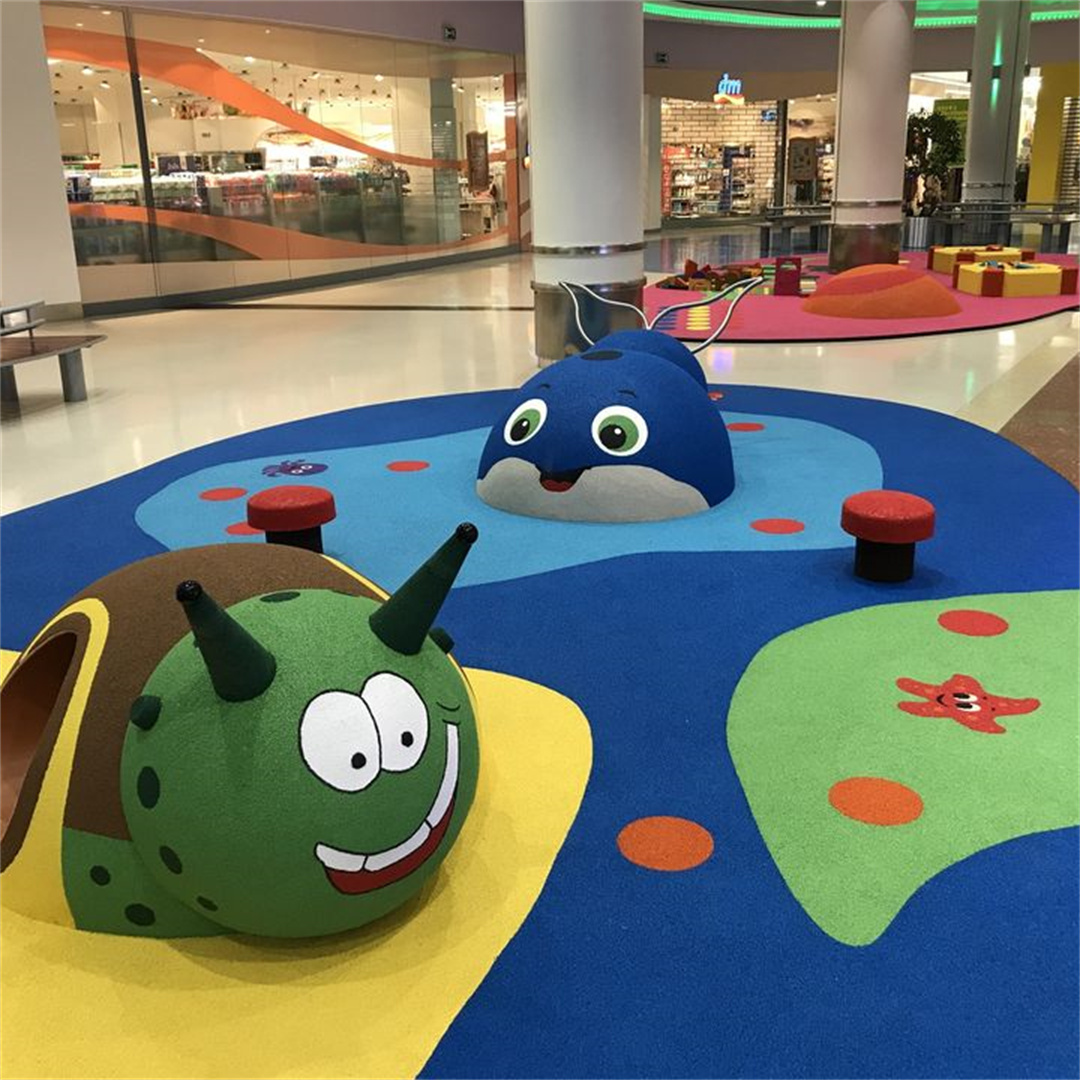
EPDM is widely used for playground surfaces because it is available in bright colors and can create patterns, graphics, and customized designs.
SBR can also be used as an impact-absorbing base layer.
For example, a playground system may use SBR in the lower layer and colored EPDM rubber granules in the upper layer.
This approach can provide cushioning while maintaining a colorful and attractive appearance.
The right choice depends on your project requirements.
Choose EPDM rubber granules when you need:
Excellent outdoor weather resistance
Better UV resistance
Long-term color stability
Multiple color options
Attractive playground designs
Premium sports flooring
Outdoor running track surfaces
Choose SBR rubber granules when you need:
A more economical solution
Good impact absorption
A cushioning base layer
Large-volume material for sports flooring
Cost-effective rubber flooring
For many professional projects, using both materials in different layers can be an effective solution.
Choosing the right rubber type is only the first step. Product quality is equally important.
Before purchasing EPDM or SBR rubber granules, buyers should check:
Particle Size
Common particle sizes include 1–2 mm, 1–3 mm, 1–4 mm, 2–4 mm, and 3–5 mm. The correct size depends on the flooring system and installation requirements.
Particle Shape
Consistent particle shape and size can help improve mixing, spreading, and surface appearance.
Color
For colored EPDM, check whether the supplier can provide stable and consistent colors between batches.
Cleanliness
The granules should be relatively clean and free from excessive dust, foreign materials, or contaminants.
Density
Density affects material consumption and project calculations. Always ask the supplier for technical data before calculating the required quantity.
Compatibility With PU Binder
Rubber granules are normally combined with polyurethane binder in many sports flooring systems. Make sure the granules and PU binder are compatible with the intended installation method.
Quality Consistency
For large projects, batch-to-batch consistency is especially important. Ask suppliers about production control, testing, packaging, and sample approval before placing a large order.
There is no universal answer.
EPDM and SBR are designed for different priorities.
If your project requires color, UV resistance, weather resistance, and premium outdoor performance, EPDM rubber granules are generally the better choice.
If the main priorities are cost efficiency, cushioning, and base-layer performance, SBR can be a practical option.
For many running tracks and playground systems, combining SBR and EPDM can offer a balanced solution.
The most important factor is to select the material according to the complete flooring system rather than comparing the two materials based only on price.
EPDM and SBR rubber granules both play important roles in sports flooring, running tracks, playgrounds, gyms, and recreational facilities.
EPDM is known for its excellent UV and weather resistance, color stability, and wide range of applications. SBR is valued for its cushioning performance and cost efficiency.
For outdoor projects where appearance and long-term weather resistance are important, EPDM rubber granules are often a strong choice. For economical shock-absorbing layers, SBR can provide an effective solution.
For contractors, distributors, and project developers, the best approach is to evaluate particle size, density, color, cleanliness, binder compatibility, installation system, and total project requirements before making a purchasing decision.
Choosing the right rubber granules can help improve surface performance, appearance, durability, and overall project value.


