

Views: 0 Author: Site Editor Publish Time: 2026-10-21 Origin: Site
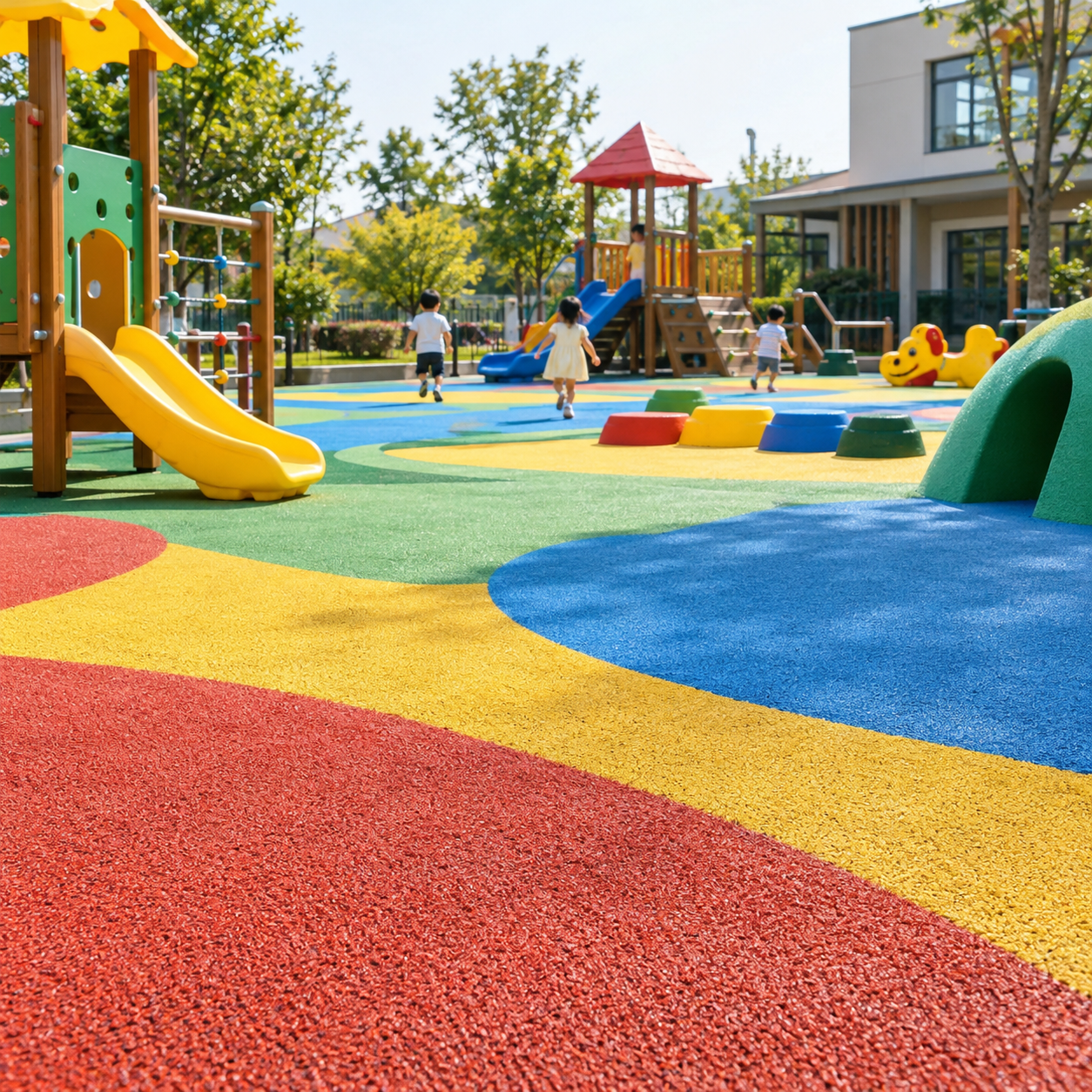
Rubber playground flooring is a popular choice for schools, daycare centers, public parks, residential play areas, and commercial playground projects. It provides a cushioned surface, supports colorful playground designs, and can be installed in different configurations to meet project requirements.
But how much does rubber playground flooring cost per square foot?
In the United States, professionally installed rubber playground flooring can cost approximately $5–$25 per square foot, depending on the flooring type, thickness, site preparation, and installation requirements. Poured-in-place rubber flooring often falls toward the higher end of this range, particularly when the project requires thicker cushioning layers or custom designs. Actual prices vary by location and project specifications.
For contractors, distributors, and playground developers, understanding the cost of rubber playground flooring means looking beyond the surface price. Material selection, polyurethane binder consumption, labor, transportation, and installation conditions all influence the final budget.
This guide explains the main cost factors and how to estimate expenses for a rubber playground project.
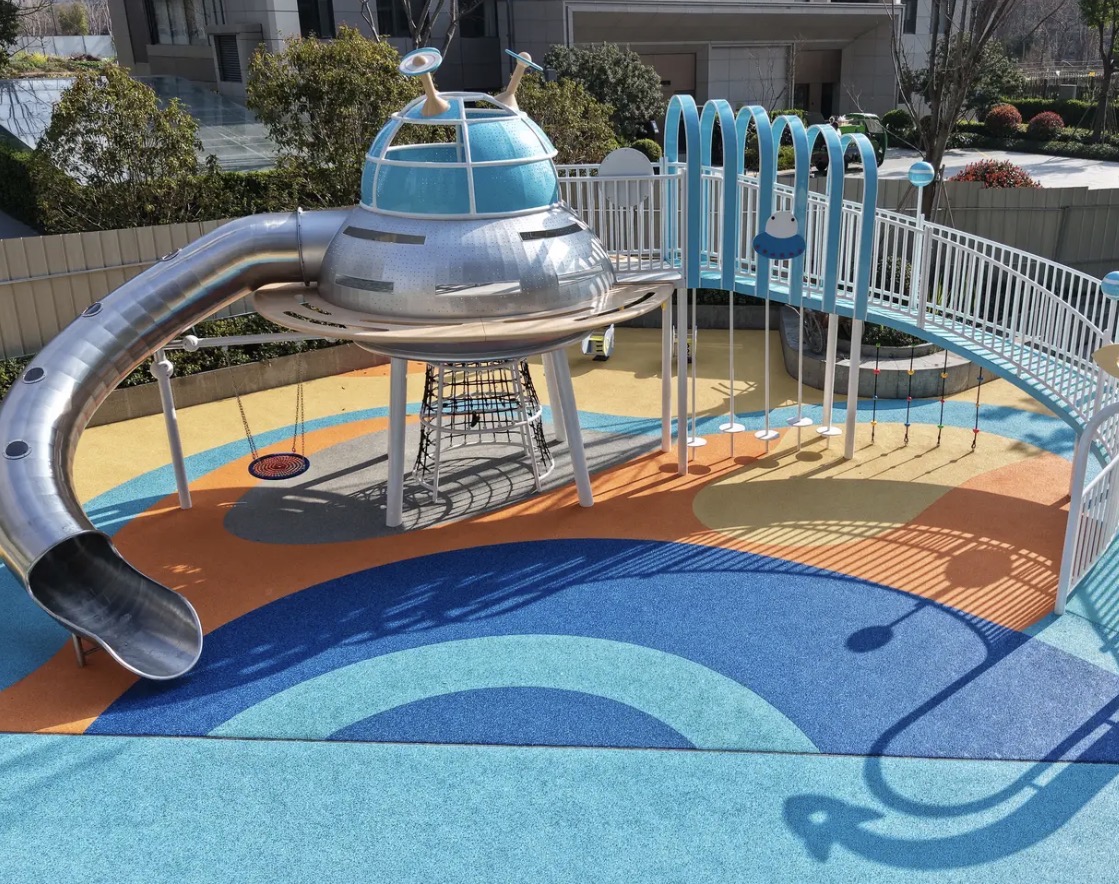
The cost of rubber playground flooring varies according to the material and installation method. The following ranges are approximate US-market budgeting estimates, not fixed quotations.
| Playground flooring type | Estimated installed cost per sq. ft. |
|---|---|
| Rubber mulch | $6–$12 |
| Rubber rolls or mats | $5–$10 |
| Interlocking rubber tiles | $10–$16 |
| Poured-in-place rubber flooring | $12–$25+ |
These estimates reflect commonly reported pricing ranges for different rubber surfacing systems. Actual costs depend on the supplier, local labor rates, product specifications, and site conditions.
For example, a poured-in-place rubber playground surface typically combines rubber granules with a polyurethane binder. Some systems use recycled SBR rubber in the cushioning layer and colored EPDM granules in the top layer.
The final cost depends on the design and specifications of the complete flooring system, rather than the price of rubber granules alone.
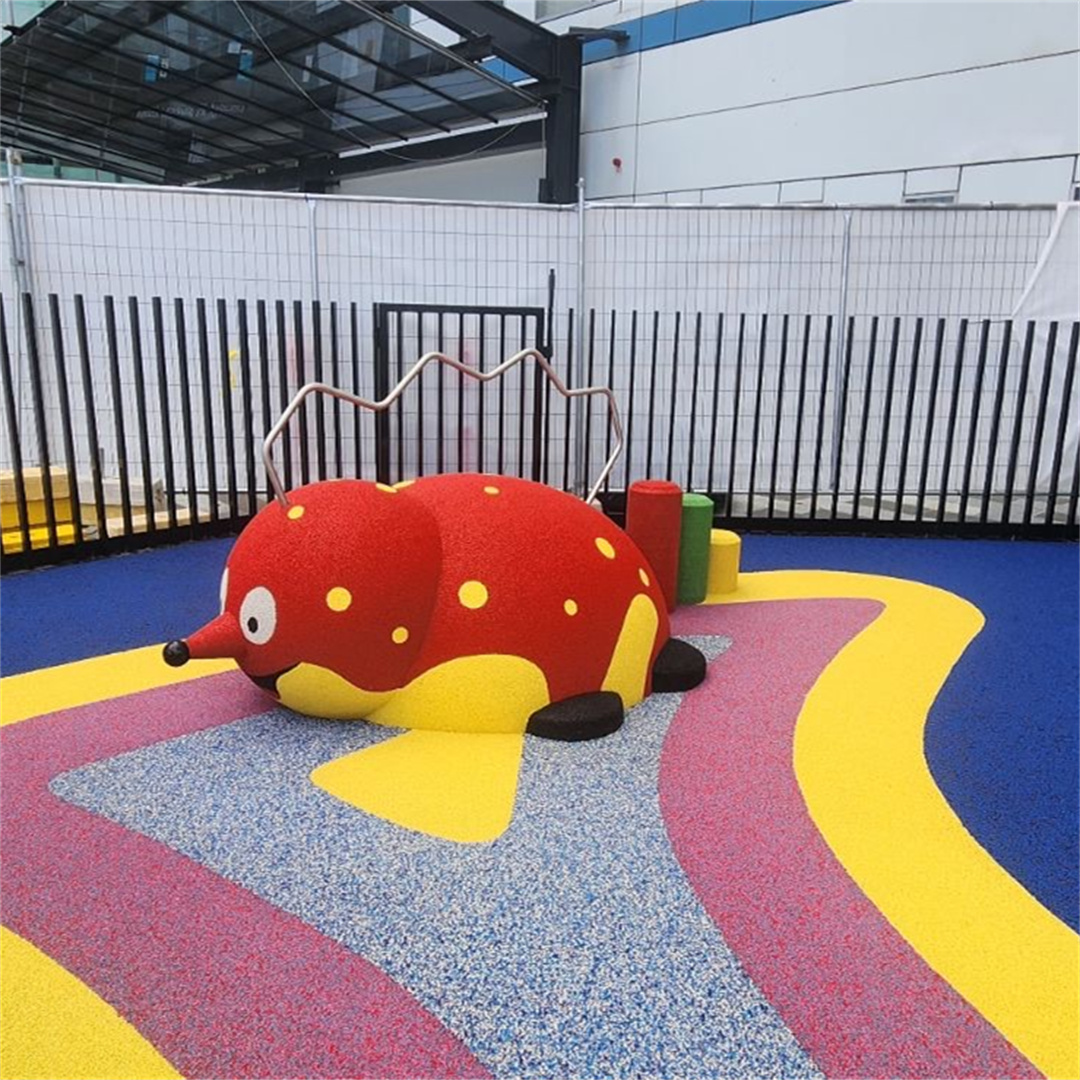
Several factors determine the cost per square foot of rubber playground flooring.
Different materials have different purchase prices, installation requirements, and maintenance needs.
EPDM rubber granules: Colored rubber granules commonly used for decorative and wear layers in playgrounds.
SBR rubber granules: Recycled rubber granules often used in cushioning layers to help control material costs.
Polyurethane binder: An adhesive that binds rubber granules together in poured-in-place applications.
Rubber tiles and mats: Prefabricated products that can simplify installation but have different joint, replacement, and performance characteristics.
Loose rubber mulch: A loose-fill option that does not require the same installation process as a bonded rubber surface.
When comparing material quotations, check whether the price includes rubber granules, binder, delivery, and any additional components required for the selected system.
Thickness is one of the most important factors affecting the cost of poured-in-place rubber playground flooring.
A thicker system generally requires more rubber granules and binder per square foot. This increases material consumption and may also affect labor and installation time.
However, playground flooring thickness should not be selected on price alone. The required system must be appropriate for the playground equipment's critical fall height and applicable safety requirements.
Before requesting a quotation, confirm the required thickness, layer structure, and supporting safety test data.
The total playground area directly affects the quantity of materials required.
Larger projects may benefit from lower unit costs because fixed expenses, such as equipment mobilization and delivery arrangements, can be spread across more square feet. Small projects may have higher per-square-foot costs because contractors still need to cover minimum labor and setup charges.
For example, a 2,000-square-foot playground generally requires more material than a 500-square-foot area, but its unit price will not necessarily be four times higher or lower. Installation conditions and system specifications also matter.
Poured-in-place rubber flooring requires appropriate surface preparation, accurate mixing, spreading, and finishing.
Installation expenses may include:
Preparing and leveling the substrate
Mixing rubber granules with polyurethane binder
Installing the cushioning and wear layers
Finishing edges and transitions
Cleaning equipment and managing installation waste
Projects with complicated shapes, multiple colors, restricted access, or difficult weather conditions may require additional labor.
The condition of the existing substrate can significantly affect the total project budget.
A stable, properly prepared base may require only limited preparation. Uneven ground, poor drainage, damaged concrete, or the removal of existing flooring can add substantial costs.
Ask contractors to identify base preparation and drainage work separately in their quotations. This makes it easier to compare bids and understand the actual cost of the rubber surfacing system.
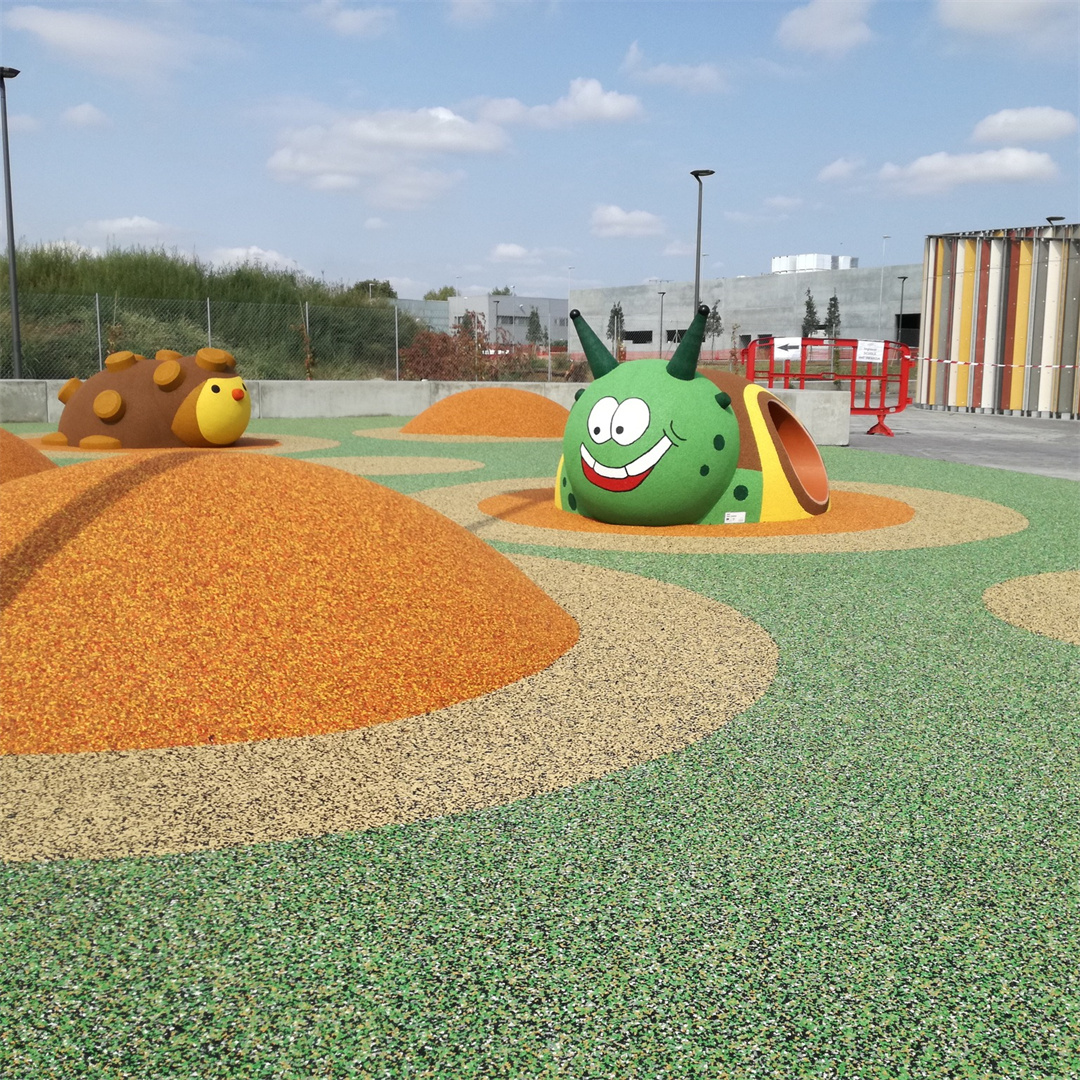
One of the most common budgeting mistakes is confusing the cost of rubber playground flooring materials with the total installed cost.
For poured-in-place rubber surfacing, the main cost categories may include the following:
| Cost category | What it may include |
|---|---|
| Rubber granules | EPDM granules, SBR granules, or both |
| Polyurethane binder | Adhesive for bonding the rubber granules |
| Additional materials | Primers, edge materials, or other system components where specified |
| Labor | Mixing, paving, finishing, and quality control |
| Equipment | Mixing machines, trowels, and installation tools |
| Site preparation | Leveling, repairs, drainage, and removal of old surfaces |
| Logistics | Freight, unloading, and material handling |
The proportion of each cost category varies by project. A contractor purchasing materials directly from a manufacturer may calculate material costs differently from a homeowner purchasing a fully installed surface from a local installer.
For playground contractors and distributors, purchasing EPDM rubber granules and PU binder separately can make material costs easier to evaluate. However, equipment, labor, wastage, transportation, and other project expenses must still be included when calculating the final installation price.
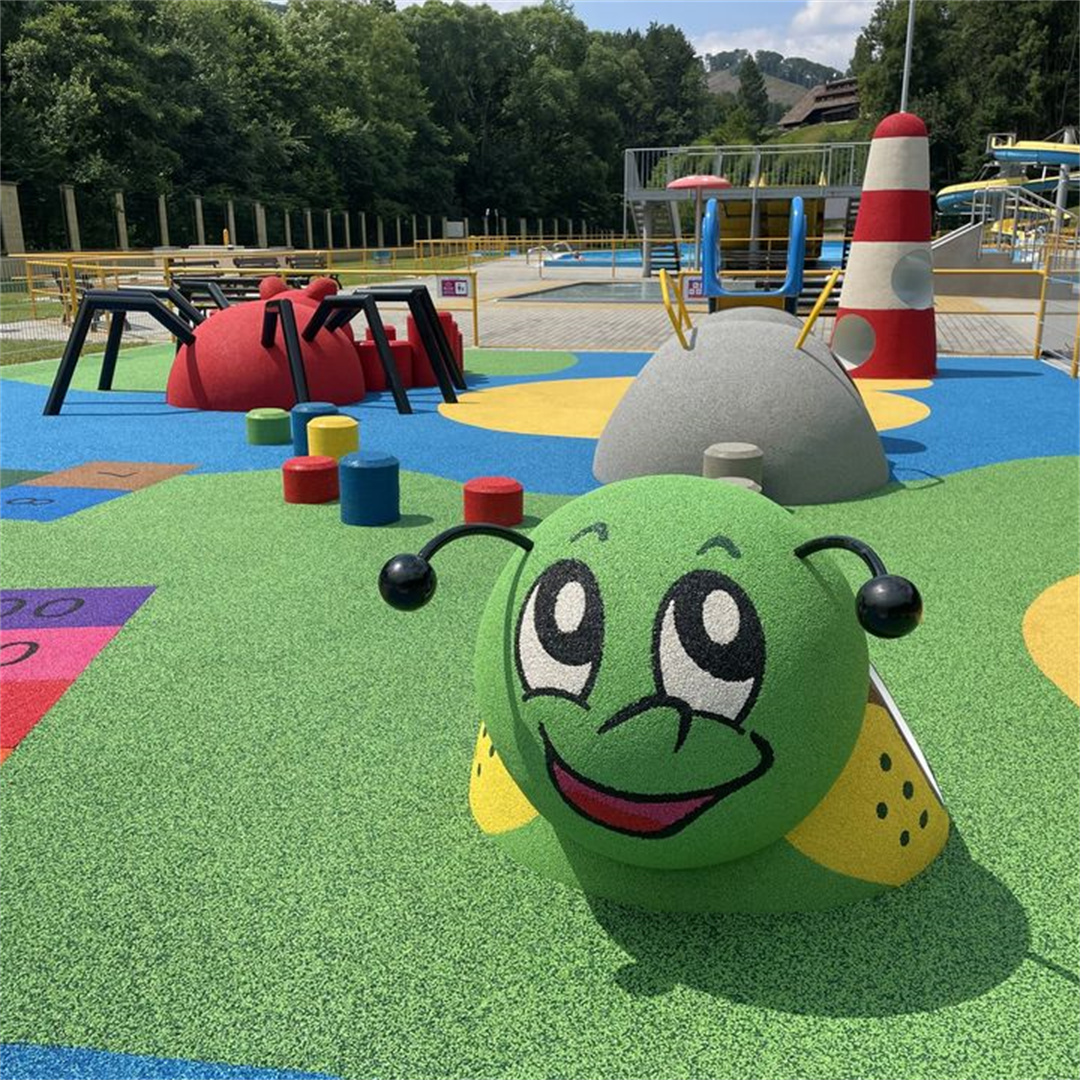
To estimate material requirements, start with the playground area and the specified installation thickness.
Step 1: Calculate the surface area.
For a rectangular playground:
Surface area = Length × Width
For example, a playground measuring 50 feet long and 40 feet wide has an area of:
50 × 40 = 2,000 square feet
Step 2: Convert the area into a volume.
Volume = Surface area × Layer thickness
If the specified layer is 1 inch thick, the theoretical volume is:
2,000 sq. ft. × 1/12 ft. = 166.67 cubic feet
This is the volume of the installed layer, not the amount of loose granules that must be purchased.
Step 3: Estimate the actual material quantities.
The required quantities of EPDM granules, SBR granules, and polyurethane binder depend on the specified system, bulk density, compaction, mixing ratio, and installation losses.
For example, a two-layer playground system may use SBR granules and binder for the cushioning layer, with colored EPDM granules and binder for the wear layer. Each layer should be calculated separately according to its specified thickness and formulation.
Do not assume that every layer uses the same mixing ratio or material consumption rate.
Step 4: Calculate the material budget.
Material cost = EPDM cost + SBR cost + PU binder cost + other required material costs
Add freight, handling, expected installation losses, and applicable taxes where relevant.
For accurate purchasing, request the manufacturer's recommended consumption rate for the specific product and installation method.
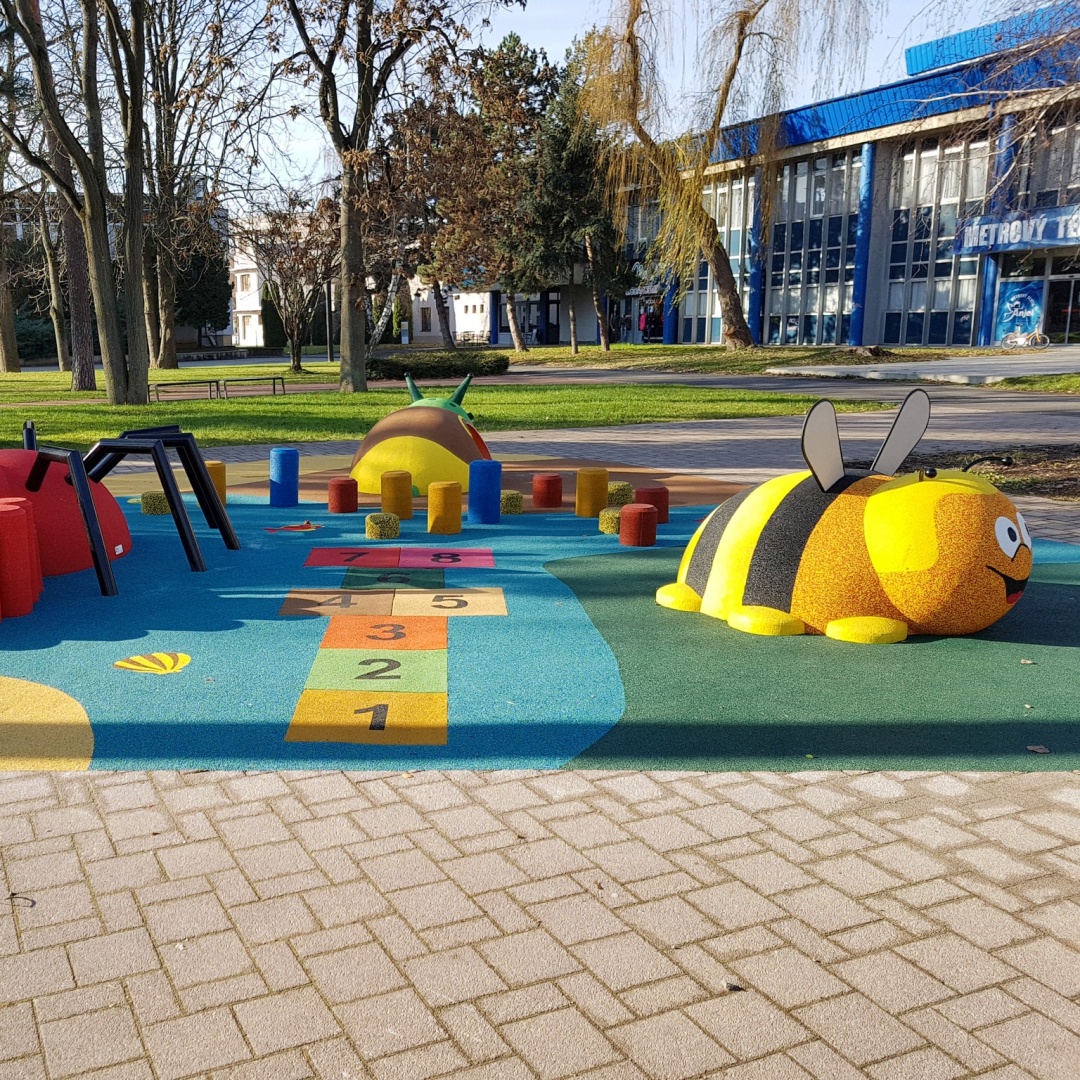
EPDM rubber granules and rubber mulch are both used in playground applications, but they are not interchangeable products.
EPDM granules are commonly used to create colored, bonded playground surfaces. When mixed with a suitable polyurethane binder and installed correctly, they form a continuous surface with customizable colors and patterns.
Rubber mulch is generally a loose-fill material. It may have a lower initial installation cost, but it can require redistribution, replenishment, and maintenance over time.
When evaluating these options, consider more than the initial price.
| Comparison factor | EPDM granule surfacing | Loose rubber mulch |
|---|---|---|
| Installation | Mixed with binder and installed as a bonded surface | Spread as loose fill |
| Appearance | Supports defined colors and decorative patterns | Typically has a loose, textured appearance |
| Surface structure | Continuous when correctly installed | Loose particles that may shift |
| Maintenance | May require localized repairs or resurfacing | May require redistribution or replenishment |
| Best purchasing approach | Calculate granules, binder, labor, and system requirements | Calculate fill volume, delivery, and replenishment needs |
For projects requiring a continuous, colorful playground surface, EPDM granules are often worth evaluating. For projects prioritizing loose-fill surfacing, rubber mulch may be a suitable alternative.
The best choice depends on the playground design, required impact attenuation, accessibility, maintenance plan, and total lifecycle budget.
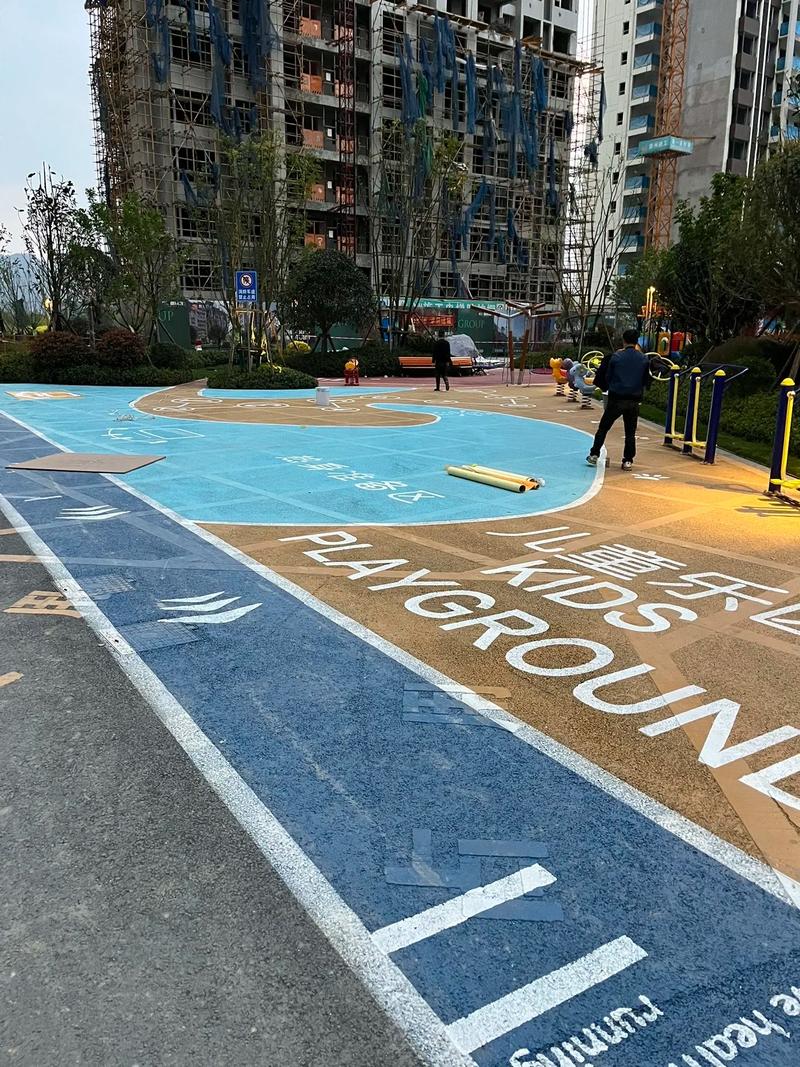
Contractors and project developers can control costs without compromising the specified safety requirements.
Select materials according to the intended application. Using an appropriate combination of cushioning material, EPDM granules, and polyurethane binder can help balance appearance, performance requirements, and material costs.
Overestimating material quantities increases purchasing and storage expenses, while underestimating quantities can cause installation delays.
Confirm the required thickness, coverage rate, and mixing ratio before ordering.
When sourcing EPDM granules and PU binder, compare quotations based on consistent specifications.
Check granule size, color, packaging, binder type, recommended mixing ratio, and consumption rate. A lower price per kilogram does not necessarily mean a lower cost per square foot if the material consumption or installation requirements differ.
For large playground projects, freight can represent a meaningful portion of the material budget. Consolidating compatible material orders and planning deliveries around the installation schedule may help control logistics expenses.
The required thickness should be determined by the applicable safety requirements and the tested flooring system. Reducing thickness simply to lower the initial cost can compromise the intended impact-attenuation performance.
A properly specified system is a better basis for comparing quotations and evaluating long-term value.
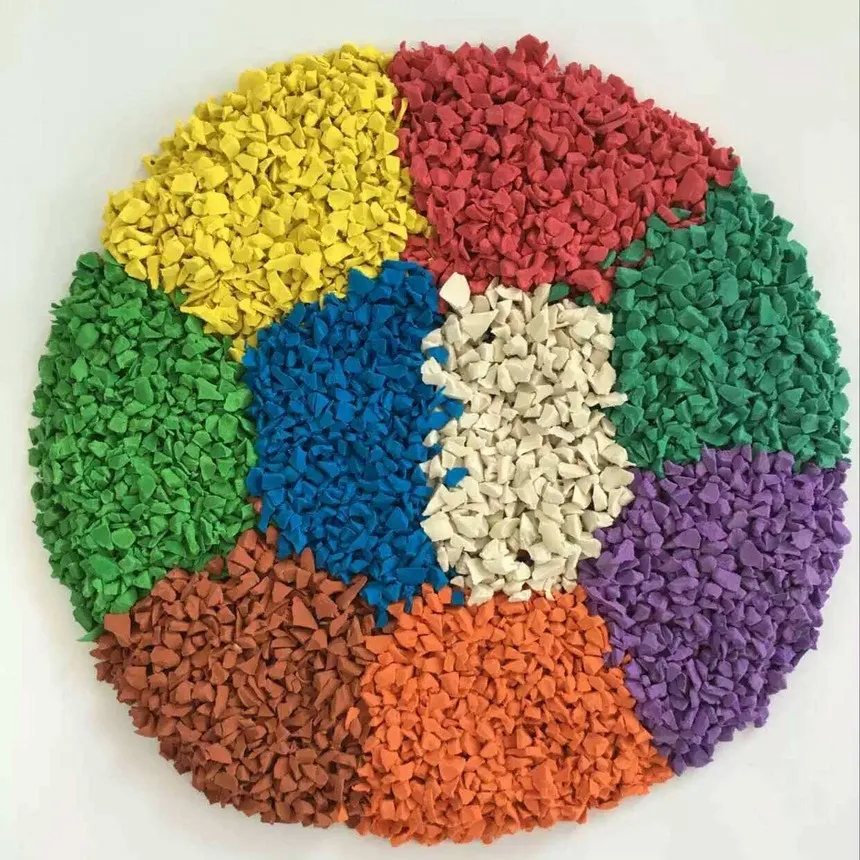
If you are a playground contractor, flooring installer, distributor, or project developer, prepare the following information before requesting a material quotation:
Project area: Total square footage or square meters.
Application: Playground, daycare center, school, park, or another outdoor area.
Layer structure: Cushioning layer, EPDM wear layer, or another specified system.
Required thickness: Thickness of each layer, based on project and safety requirements.
Granule specifications: EPDM or SBR type, particle size, and color.
Binder specifications: Suitable polyurethane binder and the recommended mixing ratio.
Installation conditions: Substrate type, climate, drainage, and installation method.
Delivery requirements: Destination, packaging, and estimated order quantity.
Providing these details helps manufacturers recommend suitable materials and prepare more meaningful quotations.
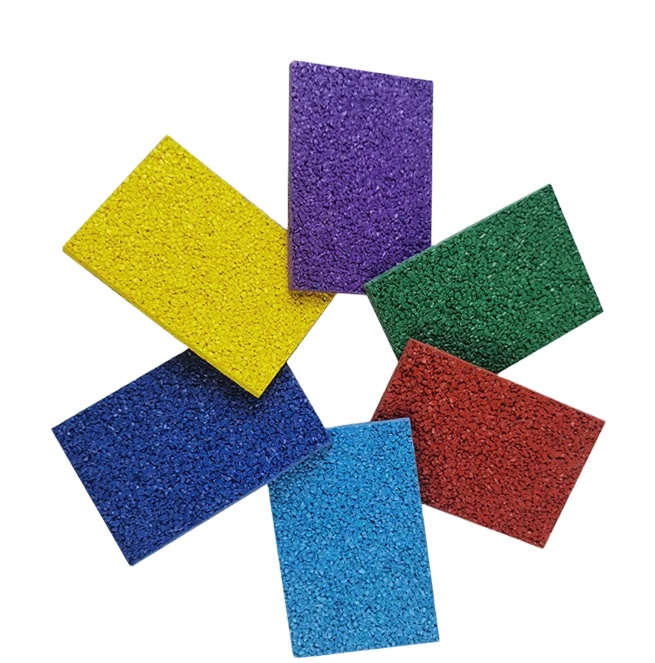
The cost of rubber playground flooring per square foot depends on the flooring type, material specifications, thickness, site preparation, labor, and delivery requirements. Although general installed-price estimates are useful for initial budgeting, the actual cost should be calculated according to the complete flooring system and local project conditions.
For contractors and distributors, understanding the separate costs of EPDM rubber granules, SBR granules, and polyurethane binder is particularly important when estimating material consumption and comparing suppliers.
Baoli Technology supplies EPDM rubber granules and polyurethane binder for sports and playground surfacing applications. If you are planning a playground project, share your required area, granule specifications, layer thickness, and destination to request a material quotation based on your project needs.


