

Views: 0 Author: Site Editor Publish Time: 2026-10-15 Origin: Site
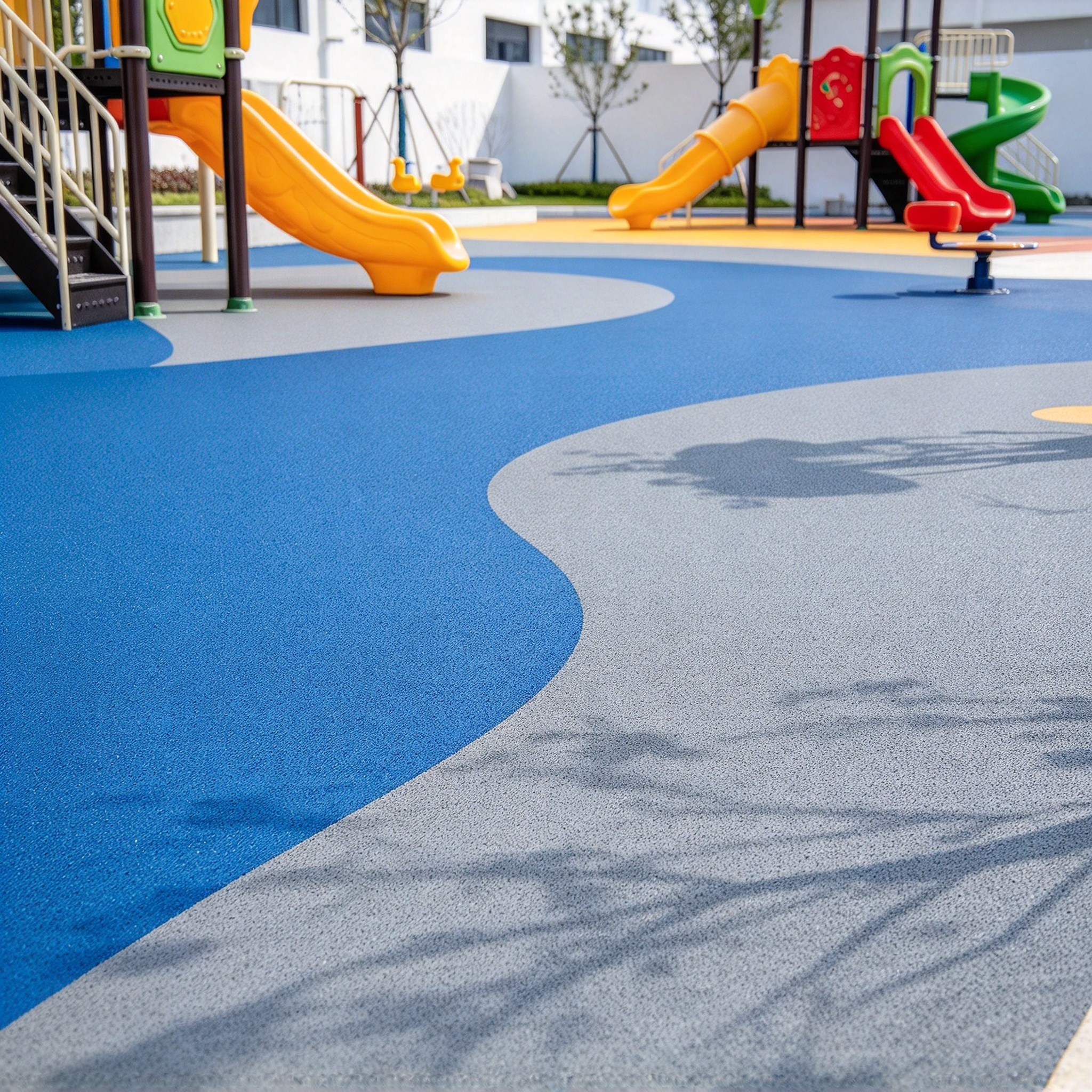
Choosing the right flooring material is an important part of designing a safe, durable, and attractive playground. The surface should provide comfortable underfoot support, help reduce the risk of injuries from falls, withstand outdoor weather conditions, and remain visually appealing after years of use.
EPDM rubber flooring for playgrounds is a popular option for kindergartens, public parks, schools, recreational areas, and commercial play facilities. Made with EPDM rubber granules and a suitable polyurethane (PU) binder, this type of surface can be installed in different colors, patterns, and thicknesses to meet the needs of various playground projects.
For contractors, distributors, and project developers, understanding the benefits, applications, and installation requirements of EPDM playground flooring helps ensure better material selection and more reliable project results.
In this guide, we will explain how EPDM rubber flooring works, where it can be used, how it is installed, and what buyers should consider before purchasing the materials.
EPDM rubber flooring is a surfacing system made with ethylene propylene diene monomer (EPDM) rubber granules. For poured-in-place playground surfaces, the granules are mixed with a compatible polyurethane binder and applied over a properly prepared base.
Once installed and cured, the materials form a continuous rubber surface with a textured finish. Different EPDM granule colors can be combined to create decorative patterns, activity zones, pathways, and custom playground designs.
A typical poured-in-place EPDM playground system may include:
Base layer: A suitable prepared concrete, asphalt, or other approved substrate, depending on the project design.
Elastic layer: A shock-absorbing layer designed according to the required surface performance and playground equipment specifications.
EPDM wearing layer: Colored EPDM granules bonded with a compatible PU binder to provide the visible surface and required wear characteristics.
The exact structure depends on the project, substrate, intended use, drainage conditions, and applicable safety requirements.
It is important to distinguish EPDM rubber granules from finished rubber flooring. EPDM granules and PU binder are raw materials used by professional installers to create a finished surface on-site. They are not the same as prefabricated rubber tiles or ready-made flooring products.
Children frequently run, jump, climb, and play on playground equipment. A properly designed impact-attenuating surface can help reduce the severity of injuries caused by falls.
EPDM playground flooring can be incorporated into a multi-layer system designed to provide appropriate shock absorption. The final performance depends on the complete flooring structure, including its thickness, underlying layer, installation quality, and the critical fall height of the playground equipment.
For this reason, buyers should evaluate the performance of the complete installed system rather than assuming that EPDM granules alone guarantee a particular level of fall protection.
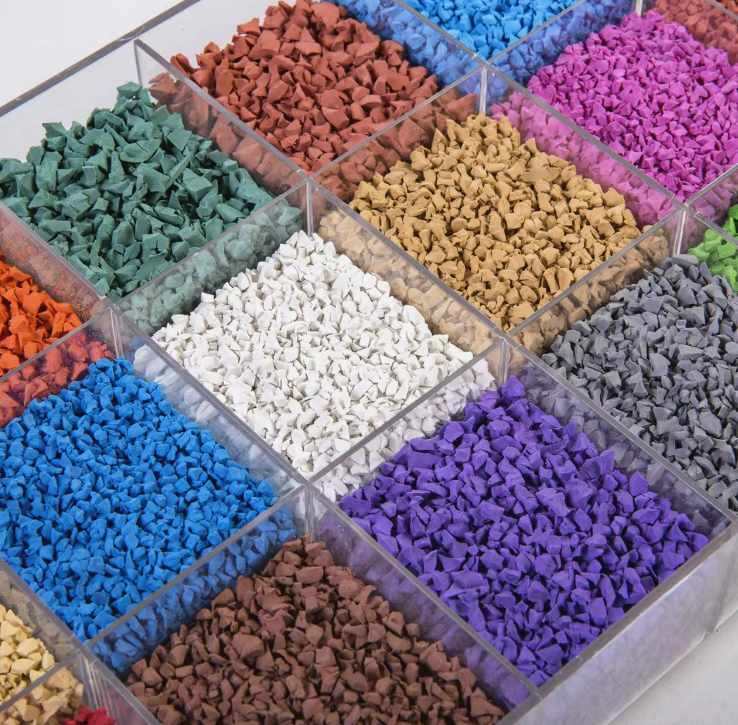
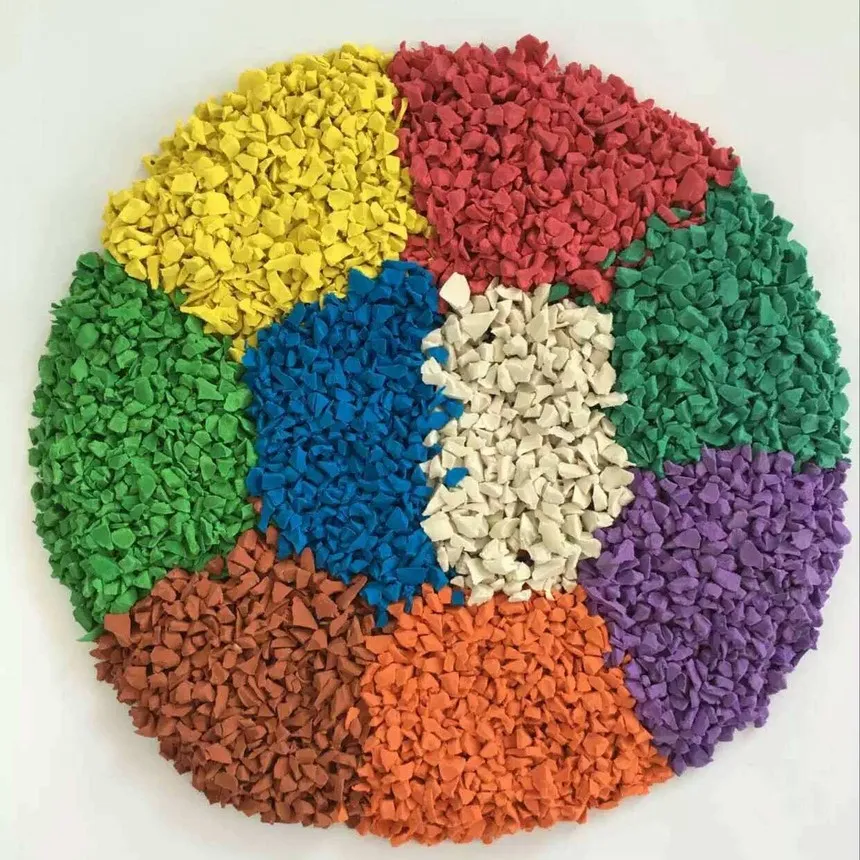
One of the main advantages of EPDM rubber flooring is its wide range of color options. EPDM granules are available in different colors, making it possible to design playground surfaces that are both functional and visually engaging.
Common design applications include:
Bright red, blue, yellow, and green play zones
Colorful geometric patterns
Number and alphabet learning areas
Walking paths and activity markings
Custom logos and themed playground designs
These design possibilities make EPDM rubber flooring suitable for early childhood education facilities, schools, parks, and family recreation centers.
For project contractors, custom color combinations can also help meet the design requirements of architects, landscape designers, and property developers.
Outdoor playground surfaces must withstand sunlight, rain, temperature changes, and regular use. EPDM rubber granules are available in formulations designed for outdoor applications, making them a practical option for many exposed playground environments.
However, outdoor durability depends on more than the granules themselves. The choice of EPDM grade, pigment stability, polyurethane binder, substrate preparation, and installation conditions can all affect the service life of the flooring system.
In areas with strong sunlight or high temperatures, buyers should pay particular attention to UV resistance, heat-related installation requirements, and the compatibility of the binder with the selected EPDM granules.
A properly installed EPDM rubber surface provides a textured finish that can support traction during everyday playground activities.
Compared with many hard surfaces, rubber playground flooring also offers a more resilient feel underfoot. This can make walking, running, and playing more comfortable for children and other users.
Actual slip resistance varies according to the granule grading, binder content, surface finish, wear, and wet conditions. For projects with specific safety requirements, request relevant test data for the proposed flooring system.
Poured-in-place EPDM flooring creates a continuous surface without the individual joints found in many modular flooring systems. This can provide a clean appearance and allow different colored areas to connect smoothly.
Routine maintenance is generally straightforward and may include:
Removing leaves, litter, and loose debris
Cleaning the surface with suitable water pressure
Inspecting high-traffic areas for damage
Checking edges, drainage points, and transitions
Repairing localized damage when necessary
Regular inspection is important because surface wear, contamination, drainage problems, or damage can affect both appearance and usability.
EPDM rubber flooring may offer a practical balance of appearance, functionality, and maintenance requirements when the system is correctly specified and installed.
For commercial playground contractors and facility owners, the total project cost should include more than the purchase price of EPDM granules and PU binder. Labor, substrate preparation, equipment, installation thickness, transport, maintenance, and expected service life should also be considered.
Selecting materials based on project requirements rather than price alone can help reduce the risk of premature surface failure and costly repairs.
EPDM rubber flooring can be used in a wide range of outdoor and selected indoor recreational environments.
Kindergartens and preschools often require colorful flooring that supports different play activities and fits the overall educational environment.
EPDM playground surfaces can be designed with bright colors, simple shapes, numbers, and activity zones. A properly specified impact-attenuating system is particularly important in areas where children use slides, climbing frames, and other elevated equipment.
Public playgrounds experience frequent use by children of different ages. Their flooring must be selected with durability, drainage, accessibility, maintenance, and safety requirements in mind.
EPDM rubber flooring allows local authorities and landscape contractors to create visually distinct play areas while integrating pathways and designated activity zones into the wider park design.
Schools may use EPDM surfaces in outdoor play spaces, recreational corners, and designated activity areas.
Different colors can help separate activity zones or support simple educational markings. For school projects, the material specification should reflect the expected traffic level, local climate, maintenance plan, and any applicable school safety standards.
Apartment complexes, residential communities, shopping centers, resorts, and family entertainment facilities may install EPDM rubber flooring around children's play equipment.
In these environments, appearance and ease of maintenance are often important considerations. Custom colors and patterns can also help coordinate the playground surface with surrounding landscaping and architectural features.
EPDM granules are also used in selected recreational surfaces, walking areas, and multi-functional outdoor spaces.
The material grade and installation system should match the intended activity. A playground flooring specification should not automatically be used for a running track, sports court, or another application without confirming its suitability.
Correct installation is essential for achieving a consistent surface and reducing the risk of cracking, loose granules, poor adhesion, and premature deterioration.
The following is a general overview of the poured-in-place EPDM playground flooring process. Actual procedures should follow the selected system supplier's technical documentation.
Begin by checking the substrate for strength, flatness, cleanliness, and moisture conditions.
Remove dust, oil, loose material, and other contaminants that could interfere with adhesion. Repair unsuitable areas before installation. Confirm that the base and drainage arrangements are appropriate for the project.
A poorly prepared base can lead to adhesion problems, uneven surfaces, and water-related damage.
Determine the required surface structure before mixing any materials.
For playgrounds with elevated equipment, the specified impact attenuation and critical fall height must be considered when selecting the complete system. The required thickness should be based on the relevant equipment height, tested system performance, and applicable standards rather than an arbitrary thickness.
If an elastic base layer is required, install it according to the approved system specification and allow it to reach the required condition before applying the EPDM wearing layer.
Measure the EPDM granules and polyurethane binder according to the product's technical data sheet.
A common example for certain EPDM wearing-layer systems is a granule-to-binder ratio of approximately 5:1 by weight. However, this is not a universal formula. The correct ratio depends on the specific granule size, binder formulation, application method, and manufacturer recommendations.
Mix the materials thoroughly until the binder is distributed evenly over the granules. Avoid adding unapproved solvents or other materials that may affect curing and final performance.
For contractors, a consistent mixing process helps reduce color variation, loose granules, and uneven surface quality.
Transfer the mixed material to the prepared installation area and spread it evenly using suitable tools.
Maintain the specified thickness and surface level. Pay attention to transitions, edges, corners, drainage points, and connections between different colors.
The mixture's working time depends on the binder formulation, ambient temperature, humidity, and other site conditions. Installers should prepare manageable batches and avoid mixing more material than they can place within the recommended working time.
Allow the installed surface to cure according to the binder manufacturer's instructions.
Curing time varies with the product formulation, temperature, humidity, and application conditions. Protect the area from rain, contamination, premature foot traffic, and other disturbances during this period.
Do not open the playground for use until the surface has cured sufficiently and the required inspections have been completed.
After curing, inspect the flooring for uniformity, adhesion, visible defects, drainage, and surface consistency.
Check that the installed structure matches the project specification. Where fall protection or other regulated performance is required, verify compliance using the appropriate documentation and testing procedures.
A final inspection helps identify localized problems before the playground is handed over to the facility owner.
For playground contractors and material distributors, selecting compatible raw materials is an important part of project planning.
Granule size affects surface texture, appearance, material consumption, and installation behavior. Buyers should choose a grading suitable for the specified wearing layer and installation method.
When comparing suppliers, review:
Granule size distribution
Color consistency between batches
Material condition and cleanliness
Suitability for the intended outdoor application
Relevant technical data and test documentation
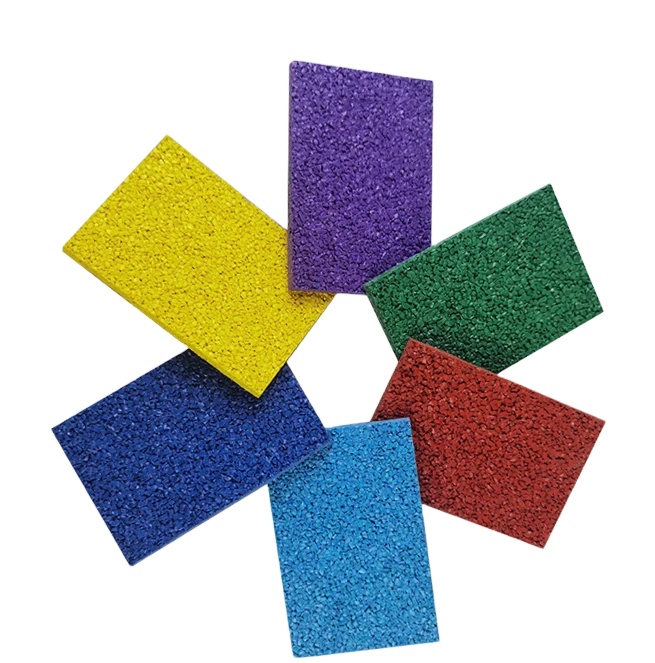
Requesting samples before placing a large order can help buyers assess the actual color and texture.
Color selection is especially important for playgrounds exposed to sunlight.
Ask suppliers for information about the selected EPDM grade, pigment system, and relevant outdoor performance data. Avoid assuming that all colors or formulations provide identical UV resistance.
The appearance of the finished surface will also depend on the binder, mixing process, installation quality, and environmental exposure.
PU binder is responsible for bonding the rubber granules together. An unsuitable binder or incorrect mixing ratio can contribute to poor bonding, surface defects, and reduced durability.
When purchasing materials, confirm that the binder is compatible with the chosen EPDM granules and intended installation conditions.
Buyers should also review the product's storage requirements, shelf life, packaging, curing behavior, and application instructions.
A reliable supplier should be able to provide consistent material quality, clear product specifications, and practical technical support.
For large playground projects, it is useful to confirm production capacity, batch consistency, packaging options, lead times, and the availability of samples.
If the project has specific safety or regulatory requirements, request supporting documentation before finalizing the purchase.
Different playground materials offer different benefits. The best option depends on the project design, budget, safety requirements, maintenance plan, and local environment.
| Flooring material | Main characteristics | Important considerations |
|---|---|---|
| Poured-in-place EPDM rubber | Seamless appearance, customizable colors, flexible design | Requires skilled installation and compatible binder |
| Rubber tiles | Modular construction and potential for localized replacement | Joints, edge details, and tile stability need attention |
| Artificial grass | Natural grass-like appearance | Underlay and impact attenuation must suit the application |
| Natural grass | Natural appearance and relatively low initial material cost | Requires ongoing maintenance and may wear in high-traffic areas |
| Sand or loose-fill materials | Can provide impact attenuation when properly specified | Requires depth control, replenishment, and routine maintenance |
For projects that prioritize colorful designs and a continuous surface, poured-in-place EPDM rubber flooring may be a suitable choice.
However, no material is automatically the best for every playground. Buyers should compare tested safety performance, accessibility, drainage, installation cost, maintenance requirements, and expected service life before making a decision.
Even good-quality materials can produce poor results if installation conditions are unsuitable.
Loose or shedding granules: Possible causes include an incorrect binder ratio, incomplete mixing, incompatible materials, or insufficient curing. Follow the supplier's mixing and installation instructions.
Blistering or delamination: These problems may be associated with substrate contamination, unsuitable moisture conditions, trapped moisture, or poor adhesion between layers. Inspect and prepare the base carefully.
Uneven colors: Differences in material batches, inconsistent mixing, or installation variations can affect the final appearance. Keep batches organized and use a consistent installation process.
Cracking or surface deterioration: Potential causes include substrate movement, unsuitable system design, environmental exposure, or inadequate installation. Confirm that the system is suitable for the project and local climate.
Water accumulation: Poor grading, blocked drainage, or an unsuitable base can lead to standing water. Confirm drainage requirements during the design and substrate preparation stages.
Preventive planning, compatible materials, trained installers, and routine inspection are key to maintaining playground flooring performance.
Yes. EPDM rubber granules are commonly used in outdoor playground surfacing systems. The finished system should be selected for the local climate, intended use, drainage conditions, and applicable safety requirements.
A properly designed and installed playground system can provide a suitable play surface. However, safety depends on factors such as impact attenuation, critical fall height, material quality, installation thickness, surface condition, and compliance with relevant standards. Buyers should request appropriate test documentation for the complete system.
There is no single thickness suitable for every playground. The required thickness depends on the equipment's critical fall height, the performance of the complete flooring system, the substrate, and the applicable standards. Follow the tested system specification rather than selecting thickness based only on appearance or cost.
The ratio varies by product and application. Some wearing-layer systems use a granule-to-binder ratio of approximately 5:1 by weight, but the manufacturer's technical data sheet must determine the actual ratio for the selected materials.
Curing time depends on the binder formulation, temperature, humidity, and installation conditions. Follow the manufacturer's instructions and keep the playground closed until the surface is sufficiently cured and approved for use.
Yes. Different EPDM colors can be combined to create custom patterns and decorative surfaces. For consistent results, installers should plan the design in advance and manage the material batches carefully.
Yes. Contractors and manufacturers can purchase EPDM rubber granules and compatible PU binder as raw materials for on-site installation. The materials should be selected together to ensure compatibility with the intended flooring system.
EPDM rubber flooring for playgrounds offers a versatile solution for projects that require colorful designs, a continuous surface, and a resilient underfoot feel. It can be used in kindergartens, schools, public parks, residential communities, and commercial recreation facilities.
Successful installation depends on more than choosing the right granules. Substrate preparation, system design, compatible PU binder, correct mixing, controlled curing, and appropriate safety verification all contribute to the finished surface's performance.
For contractors, distributors, and project developers, choosing reliable EPDM granules and polyurethane binder is an important step toward consistent installation quality.
Baoli Technology supplies sports surface materials, including EPDM rubber granules and PU binder, for professional playground and sports flooring applications. Contact our team to discuss your project requirements, material specifications, color options, and customized supply needs.


