

Views: 0 Author: Site Editor Publish Time: 2026-10-05 Origin: Site
When choosing rubber granules for a running track, playground, sports court, or other elastic flooring system, buyers often compare EPDM vs SBR.
Both EPDM rubber granules and SBR rubber granules are widely used in rubber flooring. They can be combined with polyurethane binder to create resilient surfaces with impact absorption, elasticity, and slip resistance.
However, they are not interchangeable in every application.
Their differences in rubber composition, color, weather resistance, appearance, cost, and typical applications can affect the performance and long-term appearance of the finished surface.
For contractors, distributors, and project developers, the important question is not simply which material is better. The better approach is to understand the requirements of the project and then select the rubber granule that matches those requirements.
This guide compares EPDM vs SBR rubber granules and explains where each material may be appropriate.
EPDM and SBR are different types of synthetic rubber with different performance characteristics.
EPDM granules are commonly selected for exposed surface layers where color, weather resistance, and UV exposure are important.
SBR granules are often used for cost-sensitive applications and shock-absorbing base layers.
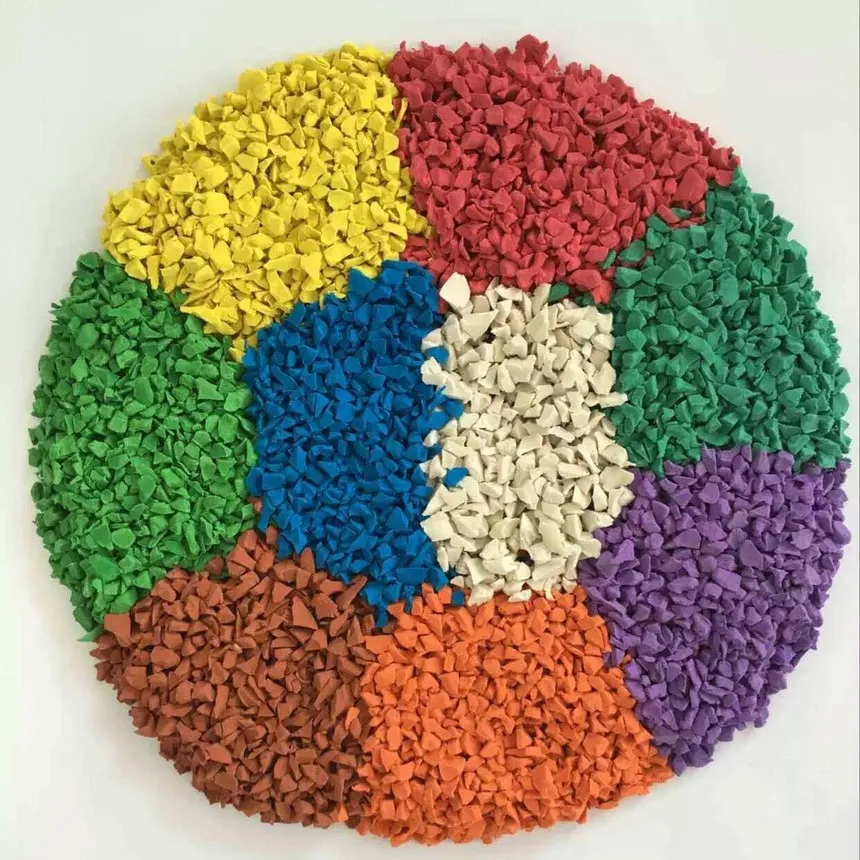
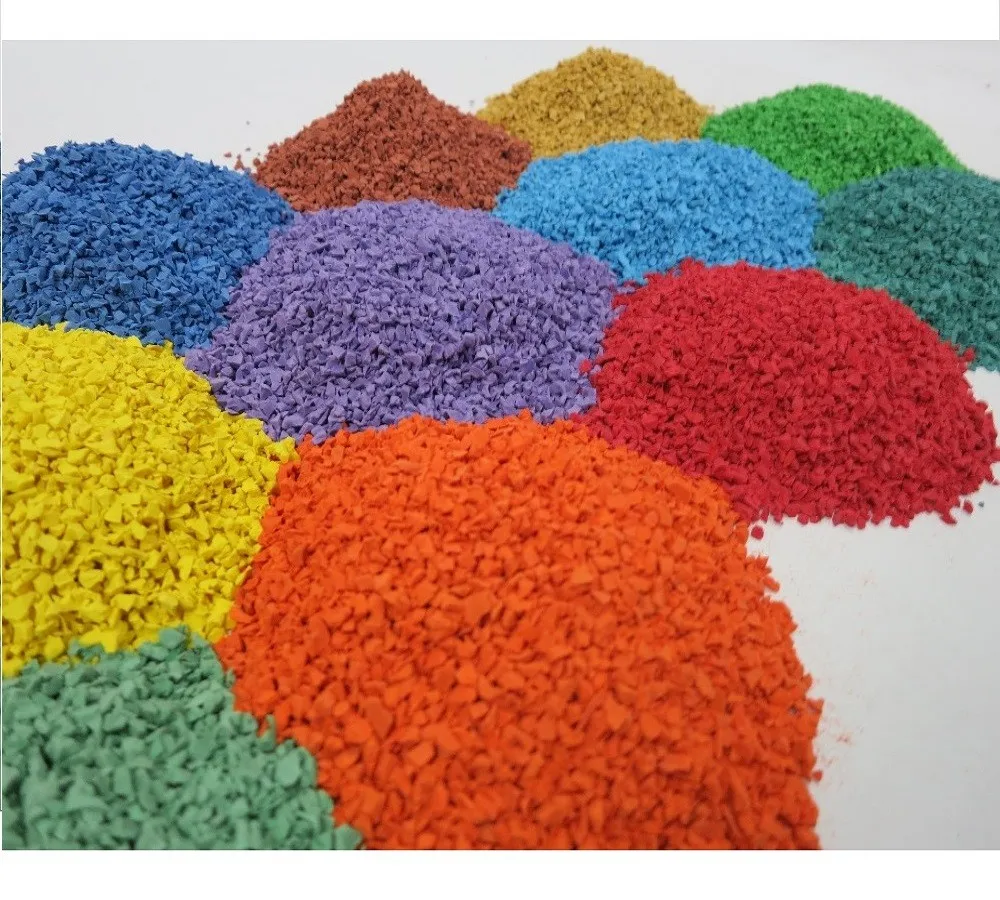
EPDM is available in a wide range of bright and customized colors.
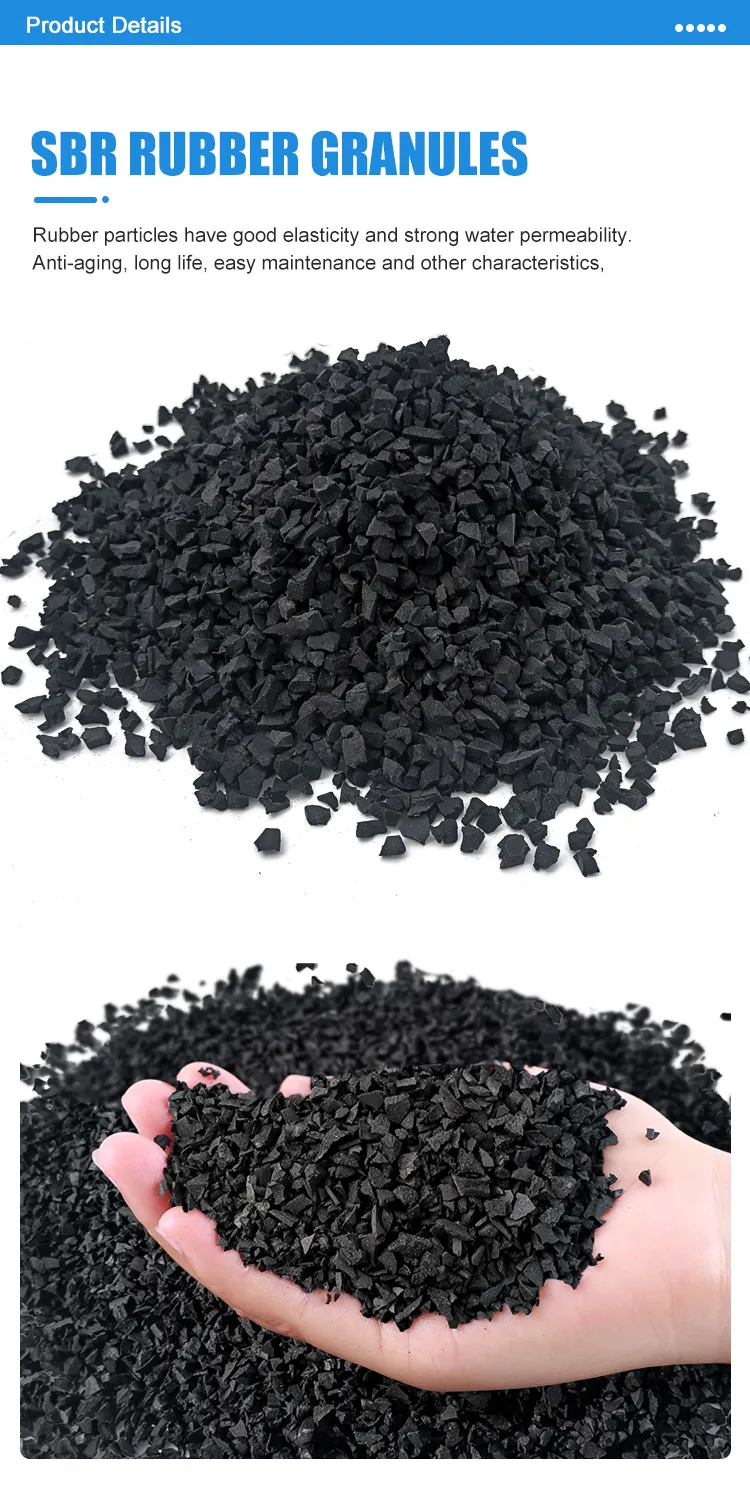
SBR is commonly available in black and is often made from recycled rubber.
The final flooring performance depends on more than the rubber granules alone. Binder type, mixing ratio, installation quality, substrate preparation, and drainage also matter.
Many rubber flooring systems use SBR for the base layer and EPDM for the visible surface layer.
The correct choice depends on application, budget, appearance requirements, outdoor exposure, and project specifications.
EPDM stands for ethylene propylene diene monomer. It is a synthetic rubber known for its resistance to weathering, ozone, and outdoor environmental exposure.
EPDM rubber can be manufactured in different colors and particle sizes, making it particularly useful for decorative and performance-oriented rubber flooring applications.
In sports and recreational surfaces, EPDM granules are commonly used for:
Running tracks
Children's playgrounds
Outdoor sports courts
Walkways
Recreational areas
Wet-pour rubber surfaces
Decorative rubber flooring
One of the main reasons contractors choose EPDM is its combination of outdoor durability and color flexibility.
Bright colors can be used to create patterns, logos, safety zones, and customized playground designs.
SBR stands for styrene-butadiene rubber.
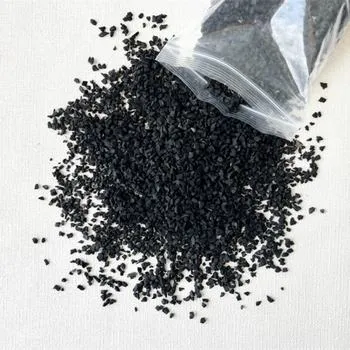
SBR is a synthetic rubber that has been widely used in tires and other rubber products. Recycled tire rubber is also a common source of black SBR granules.
In rubber flooring, SBR granules are often used for shock-absorbing layers because they can provide elasticity while helping control material costs.
Typical applications include:
Running track base layers
Playground shock pads
Gym flooring
Rubber flooring systems
Sports surfaces
Underlayment systems
Impact-absorbing layers
SBR is commonly black, although colored or specially processed SBR products can also be produced.
The most important differences can be summarized as follows:
| Property | EPDM Rubber Granules | SBR Rubber Granules |
|---|---|---|
| Rubber type | Ethylene propylene diene monomer | Styrene-butadiene rubber |
| Typical color | Multiple colors available | Commonly black |
| UV resistance | Generally high | Generally lower than EPDM |
| Weather resistance | Generally high | Moderate to high depending on formulation |
| Color customization | Excellent | More limited |
| Outdoor appearance | Suitable for exposed surfaces | Often used where appearance is less important |
| Cost | Generally higher | Generally more economical |
| Recycled material | Can be produced from virgin or recycled sources depending on product | Frequently available from recycled tire rubber |
| Common flooring role | Surface layer / visible finish | Base layer / shock-absorbing layer |
| Playground applications | Common | Common, especially as base material |
| Running track applications | Common for surface layer | Common for base layer |
These are general characteristics. The actual performance of a specific product depends on its formulation, raw material source, particle quality, processing method, and installation system.
Outdoor flooring is exposed to conditions that indoor flooring may not experience.
These can include:
Direct sunlight
UV radiation
Rain
Temperature changes
Humidity
Freeze-thaw cycles in some climates
Continuous foot traffic
Mechanical abrasion
EPDM is often considered for exposed surface applications because of its resistance to weathering and UV exposure.
This is particularly useful when the surface contains bright colors.
For example, a playground using red, blue, green, and yellow rubber granules needs the surface to maintain its intended appearance over time.
SBR can also be used outdoors, particularly in base layers where it is covered by another surface layer or where color stability is not a primary requirement.
Therefore, the question should not be whether SBR can be used outdoors. It can be.
The more useful question is whether its characteristics match the specific location and surface requirements.
Running tracks are one of the most common applications where EPDM and SBR can appear in the same flooring system.
A multi-layer running track may use different materials for different functions.
For example:
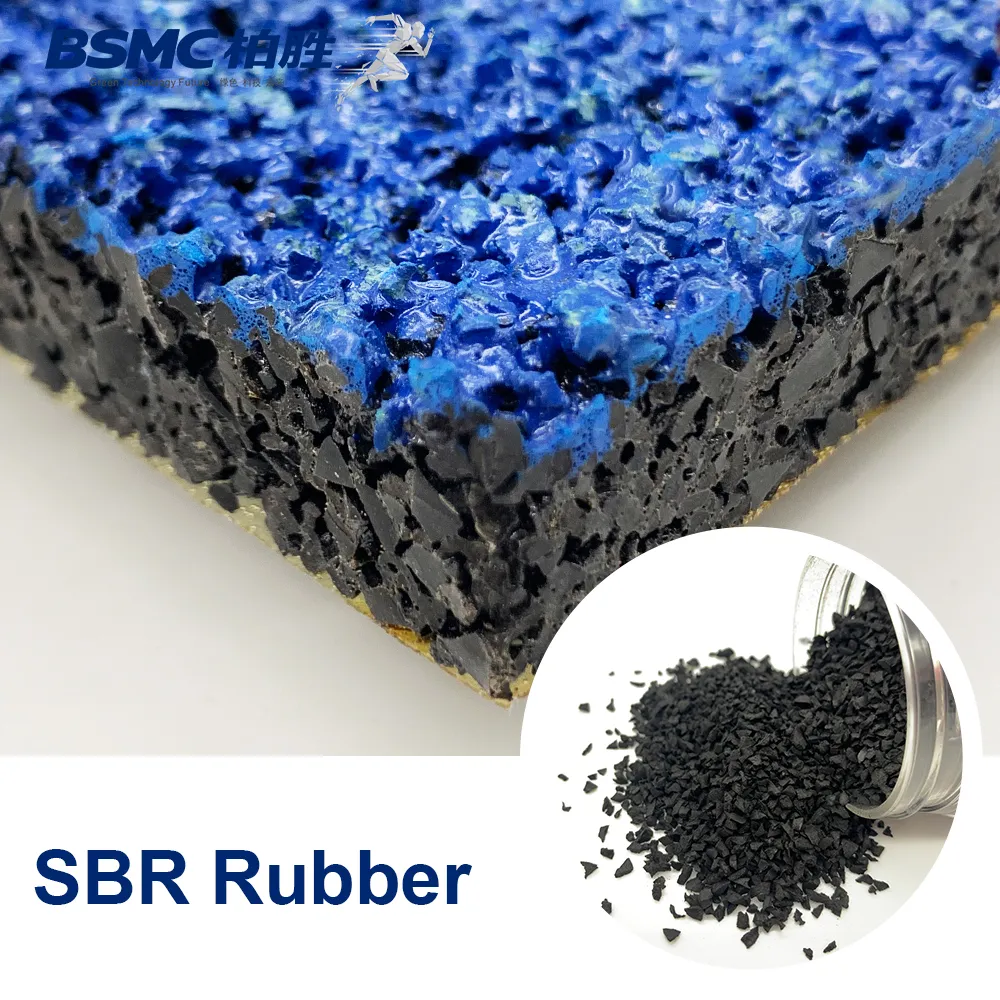
Base layer: SBR granules + PU binder
Surface layer: EPDM granules + PU binder
The SBR base layer can provide a resilient foundation, while the EPDM top layer provides the visible wearing surface.
This approach allows contractors to balance performance, appearance, and material cost.
However, the exact construction depends on the track system, design thickness, local standards, substrate conditions, and project requirements.
For a project where the entire visible surface must be made from colored EPDM, the material requirement will naturally be different from a system using black SBR underneath and EPDM on top.
Playground flooring has two major considerations: impact protection and surface usability.
SBR is frequently used in shock-absorbing layers because it can provide a resilient base while helping reduce material costs.
EPDM is commonly used as the visible surface because it is available in many colors and can create attractive playground designs.
A typical wet-pour playground system may therefore use:
SBR base layer → PU binder → EPDM surface layer → PU binder
This is only an example of a construction concept. The actual thickness and material ratio should be determined according to the required impact attenuation and project specifications.
For playground contractors, material selection should therefore consider both the safety requirements and the visual design.
Color is one of the most visible differences between EPDM and SBR.
SBR granules are commonly black, especially when produced from recycled tire rubber.
EPDM granules can be produced in many colors, including:
Red
Green
Blue
Yellow
Orange
Grey
Beige
Purple
Custom colors
This makes EPDM particularly useful for projects where appearance is part of the design.
For example, a school playground may use several EPDM colors to divide different activity zones.
A running track may use a red or terracotta-colored surface.
A recreational area may use customized colors to match a brand, school, sports club, or landscape design.
There is no single answer based only on the rubber type.
Durability depends on several factors, including:
Rubber formulation
Raw material quality
Granule size
Binder quality
Binder-to-rubber ratio
Surface construction
Installation quality
UV exposure
Traffic intensity
Drainage
Maintenance
EPDM is generally selected for applications where weathering resistance and surface color are important.
SBR can provide good performance in many applications, particularly when used as a shock-absorbing base layer.
Therefore, comparing EPDM and SBR only by the word “durability” can be misleading.
The complete flooring system should be evaluated instead.
One major reason is cost efficiency.
A sports flooring system does not necessarily need the same material throughout its entire thickness.
The base layer mainly contributes to resilience, shock absorption, and system thickness.
Using SBR for this layer can reduce the amount of more expensive colored EPDM required.
The visible surface can then use EPDM to provide the desired color and appearance.
This creates a practical balance between functional performance and material cost.
For large projects such as running tracks and playgrounds, this difference can have a significant effect on total material consumption.
EPDM may be worth considering when the project requires:
Bright or customized colors
Good outdoor weather resistance
UV exposure resistance
A decorative surface
Long-term appearance requirements
A visible wearing layer
Multiple color combinations
Typical applications include colored running tracks, playground surfaces, outdoor recreational areas, and visible sports flooring.
SBR may be suitable when:
Cost efficiency is important
Black rubber is acceptable
A shock-absorbing base layer is required
The rubber will be covered by another surface
Color stability is not a major concern
Recycled rubber is preferred or specified
For many projects, SBR does not have to compete directly with EPDM.
Instead, the two materials can perform different functions within the same flooring system.
Yes.
In fact, combining EPDM and SBR is a common approach in multi-layer rubber flooring systems.
A typical concept is:
SBR + PU binder → elastic base layer
EPDM + PU binder → colored surface layer
The SBR provides the base material, while EPDM creates the visible finish.
This combination can help contractors balance material cost, surface appearance, and functional requirements.
However, the appropriate particle size, binder type, mixing ratio, layer thickness, and installation method should be determined according to the specific project.
The cheapest granule is not necessarily the most economical option for the entire project.
A lower material price may become less attractive if the material does not meet the required appearance, weathering, particle size, or performance requirements.
SBR may be appropriate for a base layer but may not provide the desired appearance for a colorful playground or sports surface.
EPDM offers advantages for visible surfaces, but using premium colored EPDM throughout a thick flooring system may increase material costs unnecessarily.
Particle size affects surface texture, appearance, material consumption, and installation behavior.
Rubber granules need to work with the selected PU binder.
The granules, binder, mixing ratio, and installation method should be evaluated as one system.
Before purchasing rubber granules, professional buyers should confirm several technical details.
Material type:
Is the product EPDM, virgin SBR, or recycled SBR?
Particle size:
What particle size range is available?
Color:
Is the color standard or customized?
Application:
Is the product intended for running tracks, playgrounds, sports courts, or another application?
Raw material source:
Is the material virgin rubber, recycled rubber, or a combination?
Weather resistance:
What information is available regarding outdoor exposure?
Binder compatibility:
Which PU binder is recommended?
Packaging:
What are the standard bag weight and pallet configuration?
Samples:
Can samples be provided for color, particle size, and installation testing?
For large projects, buyers should test the actual granules and binder combination before full-scale installation.
A practical selection process can start with four questions.
If the material will be directly visible, appearance becomes more important.
Outdoor UV exposure should be considered when selecting the surface material.
If the project requires bright colors or customized patterns, EPDM may be more suitable for the visible layer.
If the rubber will mainly provide resilience beneath another surface, SBR may provide a cost-effective solution.
This approach helps contractors avoid treating EPDM and SBR as direct substitutes in every application.
Neither material is universally better. EPDM and SBR have different characteristics and are often selected for different functions within a flooring system.
EPDM is generally more expensive than standard black SBR, although the actual price depends on material quality, color, particle size, order quantity, and supplier.
Yes. SBR is commonly used in running track systems, particularly in base or shock-absorbing layers.
Yes. EPDM granules are widely used for visible playground surfaces because they are available in many colors and are suitable for outdoor applications.
They can be used together in some flooring systems, but the appropriate formulation and construction should be confirmed with the material supplier and project requirements.
The answer depends on the role of the material. EPDM is often selected for exposed, colored surfaces, while SBR can be practical for base layers and cost-sensitive applications.
Recycled SBR can be used in many sports flooring systems, particularly where it meets the required material and project specifications. The quality and source of the recycled rubber should be evaluated before purchasing.


