

However, having good-quality materials is not enough. The mixing process is equally important. An incorrect mixing ratio, insufficient mixing, or improper installation conditions can lead to problems such as loose granules, poor bonding, uneven surfaces, color differences, or surface failure.
So, how do you mix EPDM granules with PU binder correctly?
This guide explains the basic mixing process, recommended equipment, material ratio, common mistakes, and practical tips for contractors, installers, distributors, and project developers.
Before discussing the mixing process, it is important to understand the function of each material.
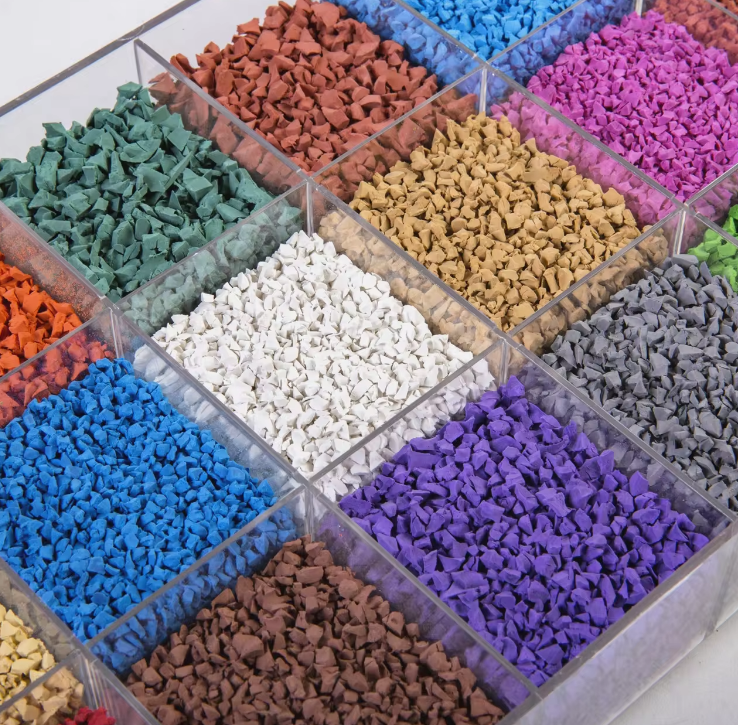
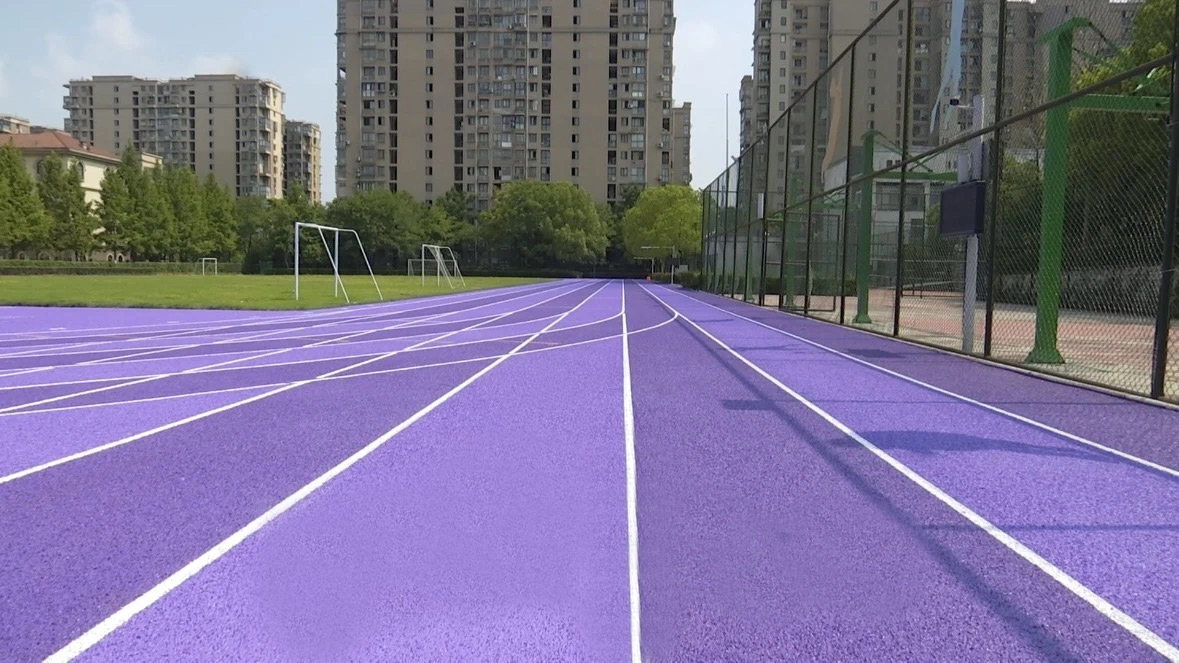
EPDM granules are colored rubber particles commonly used for the surface layer of running tracks, playgrounds, sports courts, and other elastic flooring systems.
They provide:
Elasticity
Impact absorption
Comfortable foot feel
Color options
UV and weather resistance
Decorative surface effects
PU binder, also called polyurethane binder, is an adhesive material used to bond rubber granules together.
The binder surrounds the EPDM granules and creates a flexible, durable rubber surface after curing.
In a typical installation, EPDM granules and PU binder are mixed together before the mixture is spread and compacted onto the prepared substrate.
One of the most important questions during installation is the mixing ratio.
A commonly used starting point for EPDM surface mixtures is approximately:
EPDM Granules : PU Binder = 5 : 1
For example:
5 kg EPDM granules + 1 kg PU binder
25 kg EPDM granules + 5 kg PU binder
100 kg EPDM granules + 20 kg PU binder
However, the actual ratio should not be treated as a universal fixed formula.
The required amount of PU binder can vary depending on:
EPDM particle size
Particle shape
Rubber density
Surface thickness
Installation method
Weather conditions
Desired bonding strength
Specific PU binder formulation
Project requirements
For this reason, contractors should always confirm the recommended ratio with the PU binder manufacturer before large-scale installation.
Proper equipment can significantly improve mixing consistency.
For professional projects, a forced-action mixer or suitable industrial rubber flooring mixer is generally preferred.
Basic equipment may include:
Forced-action mixer
Electronic weighing scale
Clean material containers
Measuring tools
Shovel or material scoop
Rubber flooring rake
Trowel
Roller
Protective equipment
A forced-action mixer is particularly useful because it can distribute the PU binder more evenly throughout the rubber granules.
For small repair jobs, smaller mixing equipment may be sufficient. For large sports flooring projects, professional mixing equipment is strongly recommended.
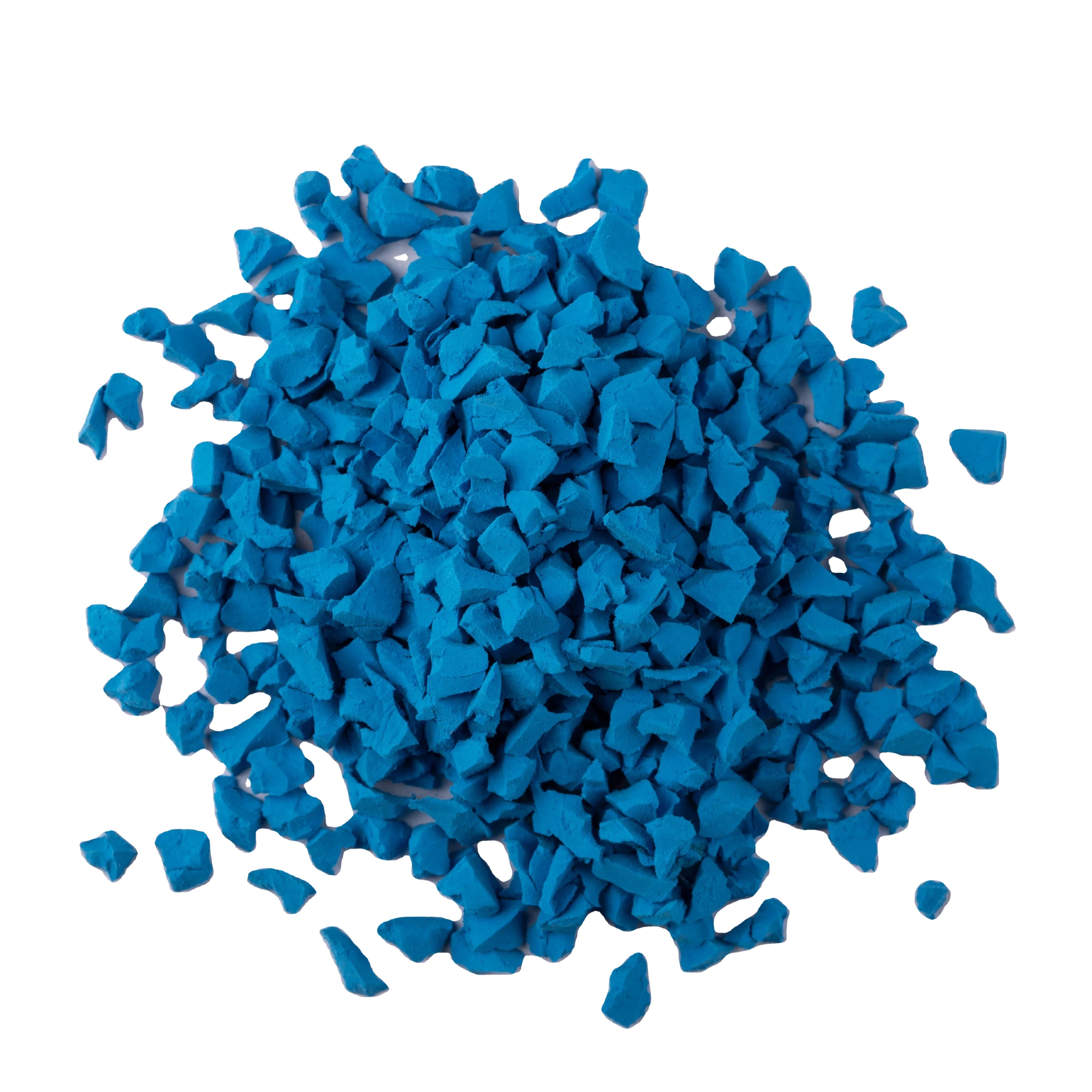
Before mixing, inspect the EPDM granules.
The granules should be:
Clean
Dry
Free from excessive dust
Consistent in particle size
Free from foreign materials
Moisture is particularly important.
If the EPDM granules contain excessive moisture, it may affect the bonding process and curing performance of the PU binder.
Store the granules in a dry and protected environment before installation.
If different colors or particle sizes are being used, prepare them according to the installation design before starting the mixing process.
Accurate weighing is essential.
Do not estimate the amount of EPDM granules and PU binder by eye.
For example, if the project uses a 5:1 starting ratio, you can prepare:
25 kg EPDM granules + 5 kg PU binder
The same ratio can then be scaled according to mixer capacity.
Accurate weighing helps maintain consistent bonding performance and surface quality throughout the project.
Too little binder may result in weak bonding and loose particles.
Too much binder may increase material consumption, change the surface appearance, and affect the texture of the finished flooring.
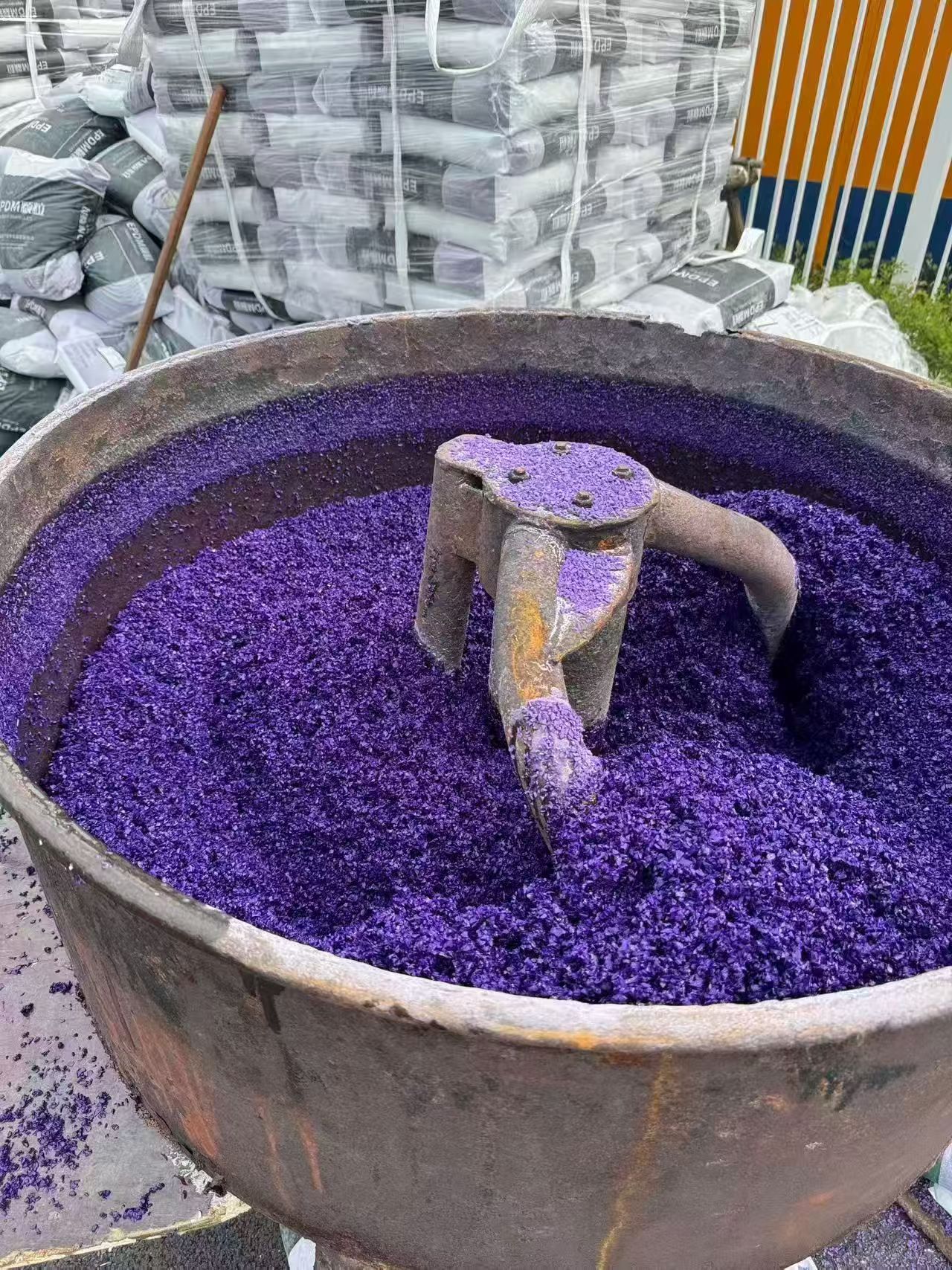
First, place the measured EPDM granules into the mixer.
If multiple colors or particle sizes are being used, make sure they are distributed according to the project design.
Start the mixer and allow the rubber granules to move evenly before gradually adding the PU binder.
This helps reduce the risk of creating areas with excessive binder concentration.
Add the measured PU binder gradually into the moving EPDM granules.
Avoid pouring a large amount of binder into one location.
The objective is to allow the PU binder to spread across the entire batch.
Continue mixing until the binder has coated the EPDM granules relatively evenly.
A properly mixed batch should not contain large areas of dry granules or excessive pools of binder.
Mixing time depends on the mixer, batch size, material temperature, particle characteristics, and PU binder formulation.
The goal is not simply to mix for a fixed number of minutes.
Instead, inspect the material during mixing.
The EPDM granules should be evenly coated with PU binder.
There should be:
No large dry areas
No visible pools of binder
No large clumps
No significant color concentration
No unmixed material at the bottom of the mixer
Over-mixing should also be avoided because it may affect the working time of the mixture depending on the binder system.
Once mixing is complete, the material should be transported to the installation area promptly.
PU binder begins its curing process after mixing, so the working time is limited.
Spread the EPDM and PU mixture evenly across the prepared surface.
Depending on the flooring system, installers may use:
Rakes
Trowels
Screeds
Rollers
Specialized rubber flooring tools
The mixture should be distributed according to the required thickness.
After spreading, the surface may need to be compacted or finished according to the specific installation system.
The objective is to create:
Consistent thickness
Even texture
Strong particle bonding
Smooth transitions
Proper surface appearance
Avoid excessive pressure during finishing because it can change the surface texture and density.
The correct installation method depends on the specific EPDM flooring system and project specifications.
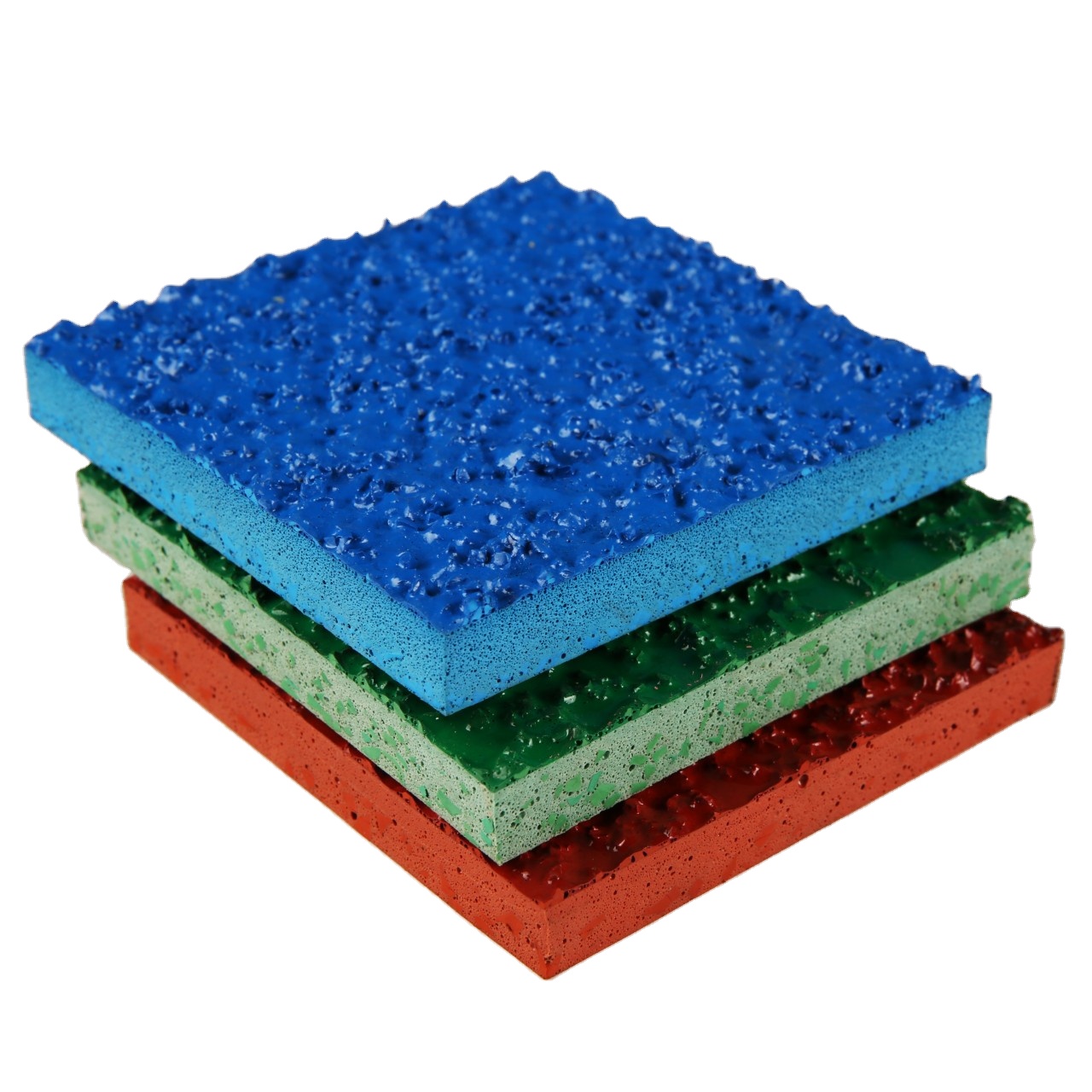
Several mistakes can reduce the quality of the finished surface.
Insufficient PU binder may leave some EPDM granules poorly bonded.
This can eventually cause particle shedding or weak surface areas.
Excessive binder increases cost and may change the appearance and texture of the surface.
It can also make the mixture more difficult to handle.
Small variations in the ratio may accumulate across a large project.
Always use a reliable weighing scale.
If the binder is not distributed evenly, some areas may have excessive adhesive while others may remain dry.
This can create inconsistent bonding performance.
Moisture can interfere with the bonding and curing process.
Keep EPDM granules dry before mixing.
The batch size should match the capacity of the mixer and the installation team's working speed.
Preparing excessively large batches can create problems if the material begins curing before it is installed.
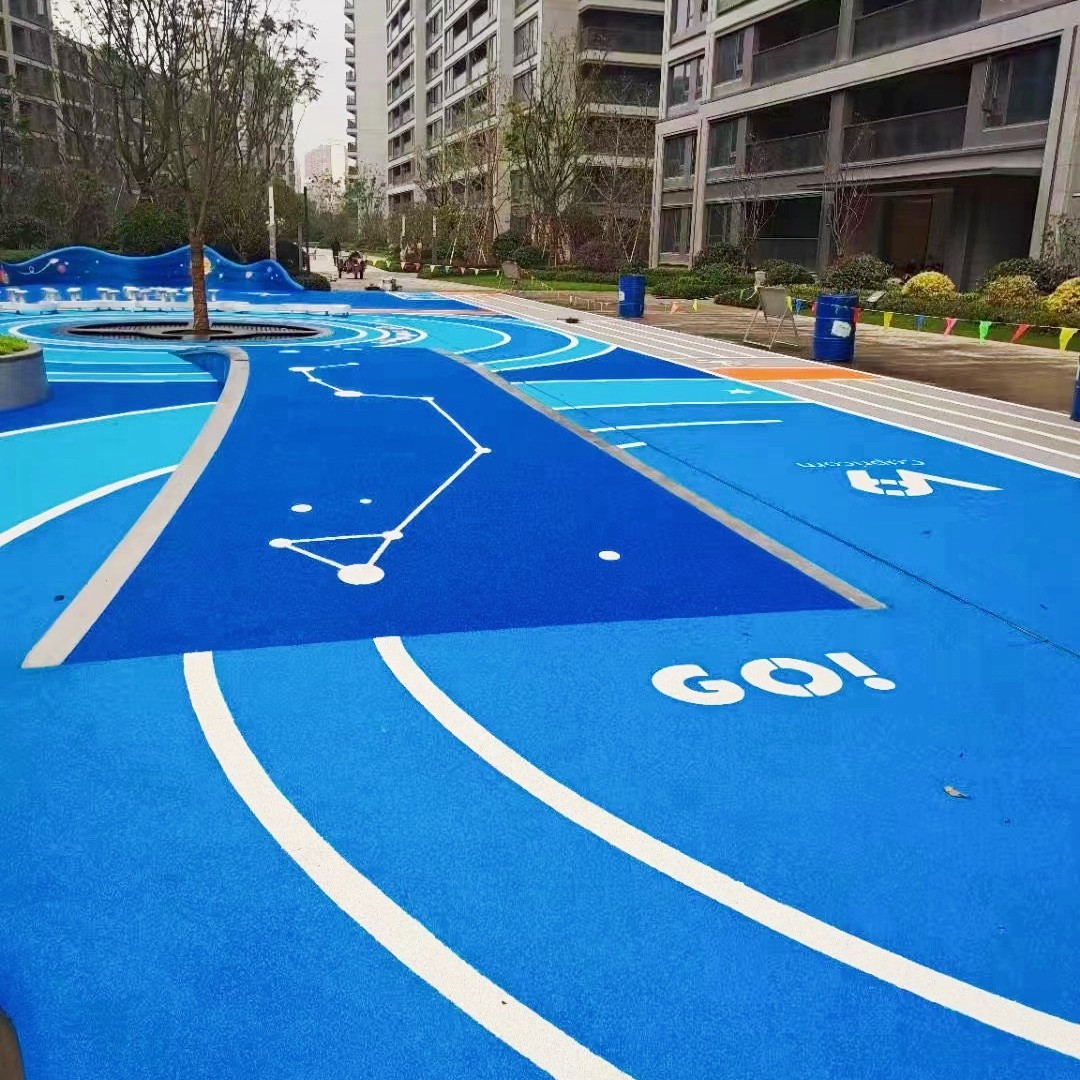
Temperature can have a significant effect on PU binder.
In hot weather, the reaction and curing process may become faster, reducing the available working time.
In colder conditions, the binder may become more viscous and curing may take longer.
For this reason, installation teams should consider:
Ambient temperature
Material temperature
Humidity
Surface temperature
Direct sunlight
Rain conditions
Avoid installation during unsuitable weather conditions.
The manufacturer's technical data sheet should always be checked for the recommended application temperature and working conditions.
For large commercial projects, consistency is more important than simply completing the mixing process quickly.
Consider the following practices:
Use the Same Mixing Procedure
Keep the sequence of adding materials consistent throughout the project.
Control Each Batch
Use the same weighing method and batch size whenever possible.
Check Material Quality
EPDM particle size, density, cleanliness, and moisture can influence binder consumption.
Use Appropriate Equipment
A suitable forced-action mixer can help improve the consistency of the mixture.
Prepare Materials in Advance
Organize EPDM granules and PU binder before starting each batch.
Follow the Binder Manufacturer's Instructions
Different PU binders can have different curing speeds, viscosity, recommended ratios, and application conditions.
Material calculation should be based on the actual project area and required surface thickness.
A basic calculation is:
EPDM Granules Required = Area × Thickness × Material Density
Then calculate the PU binder according to the recommended mixing ratio.
For example, if a project requires:
Area: 1,000 m²
EPDM layer thickness: 3 mm
EPDM bulk density: 600 kg/m³
The theoretical EPDM requirement is:
1,000 × 0.003 × 600 = 1,800 kg
If the starting EPDM-to-PU ratio is 5:1:
1,800 ÷ 5 = 360 kg PU binder
Therefore, the theoretical material requirement would be approximately:
1,800 kg EPDM granules + 360 kg PU binder
Actual consumption should include reasonable installation loss and should be confirmed according to the specific flooring system.
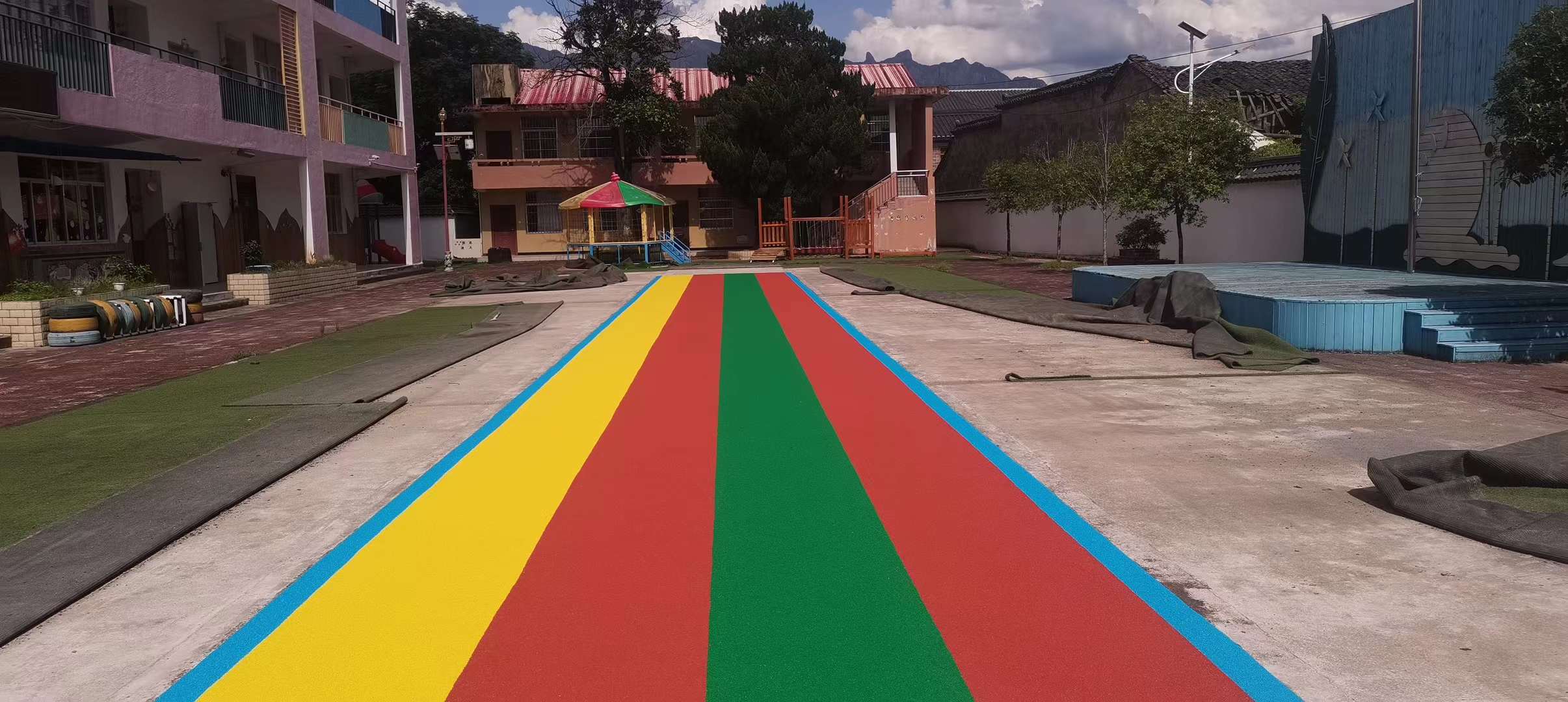
The quality of the finished surface depends on both materials.
When purchasing EPDM granules, consider:
Particle size
Particle shape
Color consistency
UV resistance
Weather resistance
Density
Cleanliness
Batch consistency
When purchasing PU binder, consider:
Bonding strength
Elasticity
Curing time
Viscosity
Weather resistance
UV resistance
Anti-yellowing performance
Compatibility with EPDM granules
Most importantly, the EPDM granules and PU binder should be tested together rather than evaluated independently.
Mixing EPDM granules with PU binder is a relatively straightforward process, but material ratio, weighing accuracy, mixing consistency, moisture control, temperature, and installation speed can all affect the final result.
A commonly used starting ratio is 5 parts EPDM granules to 1 part PU binder, but the actual ratio should always be adjusted according to the specific product, particle characteristics, flooring structure, and manufacturer's technical recommendations.
For contractors and project developers, choosing consistent EPDM granules and a compatible PU binder is just as important as using the correct mixing procedure.
A properly controlled mixing process can help create a strong, elastic, durable, and visually consistent sports flooring surface for running tracks, playgrounds, sports courts, and other rubber flooring applications.


