

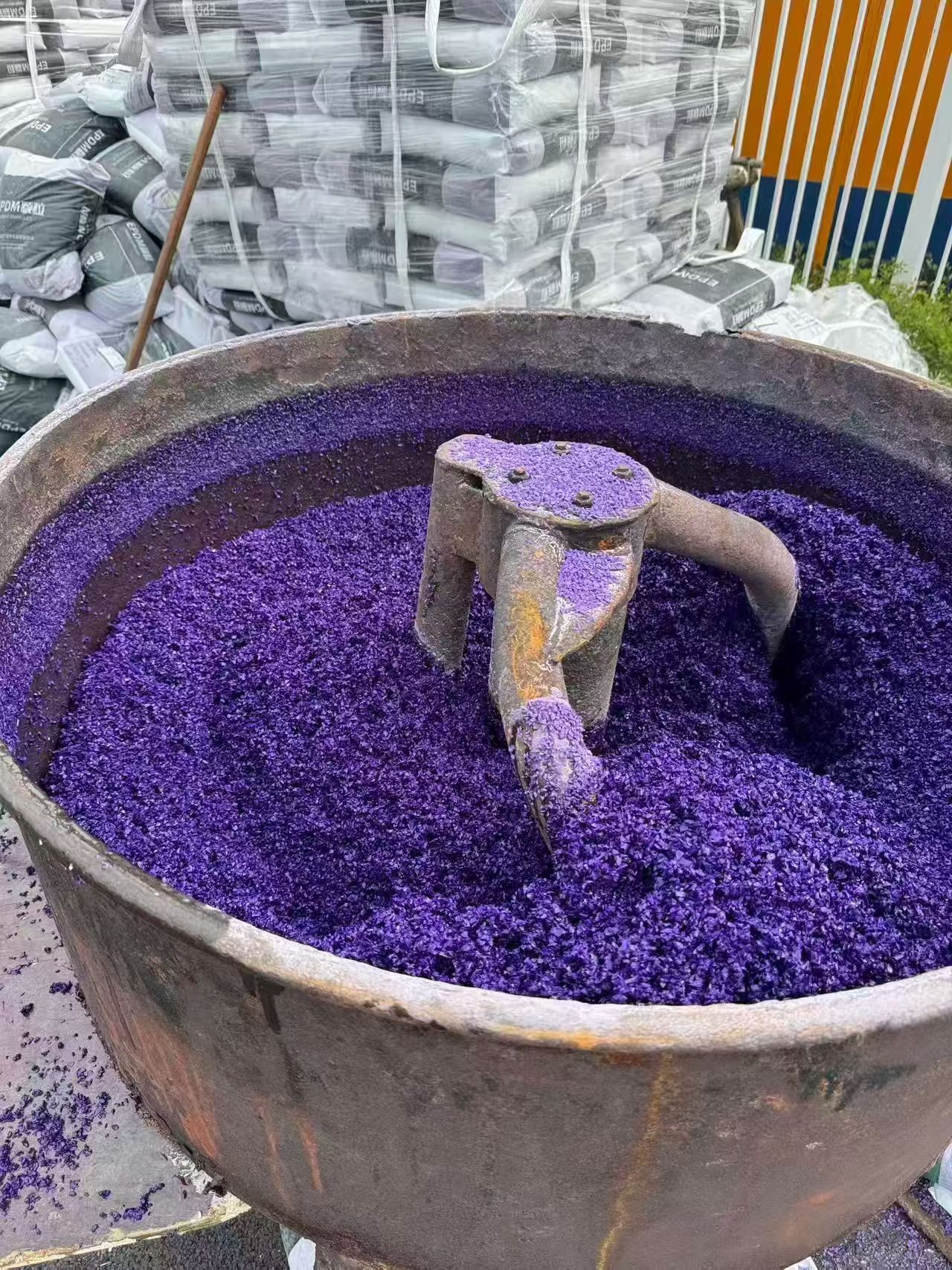
When installing EPDM rubber flooring for playgrounds, running tracks, sports courts, and recreational areas, the quality of the final surface depends not only on the rubber granules and polyurethane binder, but also on how well these materials are mixed
.
A forced-action mixer is one of the most important pieces of equipment for professional EPDM flooring installation. Unlike a conventional drum mixer, a forced-action mixer actively moves and blends the materials inside the mixing pan, helping polyurethane binder coat the rubber granules more evenly.
For contractors and sports flooring installers, choosing the right mixer can improve mixing consistency, installation efficiency, material utilization, and overall surface quality.
A forced-action mixer is a mechanical mixing machine designed to actively blend materials using rotating mixing paddles or blades.
For EPDM flooring applications, the typical materials include:
EPDM rubber granules
SBR rubber granules
Polyurethane binder
Other rubber aggregates used in sports flooring systems
During the mixing process, the rotating blades continuously move the rubber particles through the binder. The objective is to achieve a uniform coating of PU binder on the rubber granules before the mixture is transferred to the installation area.
EPDM flooring installation guides commonly recommend forced-action mixers or suitable low-speed mechanical mixers for blending rubber granules with polyurethane binder.
This is particularly important for playground and sports flooring because uneven mixing can result in areas with insufficient binder, excessive binder, loose granules, color
inconsistency, or differences in surface strength.
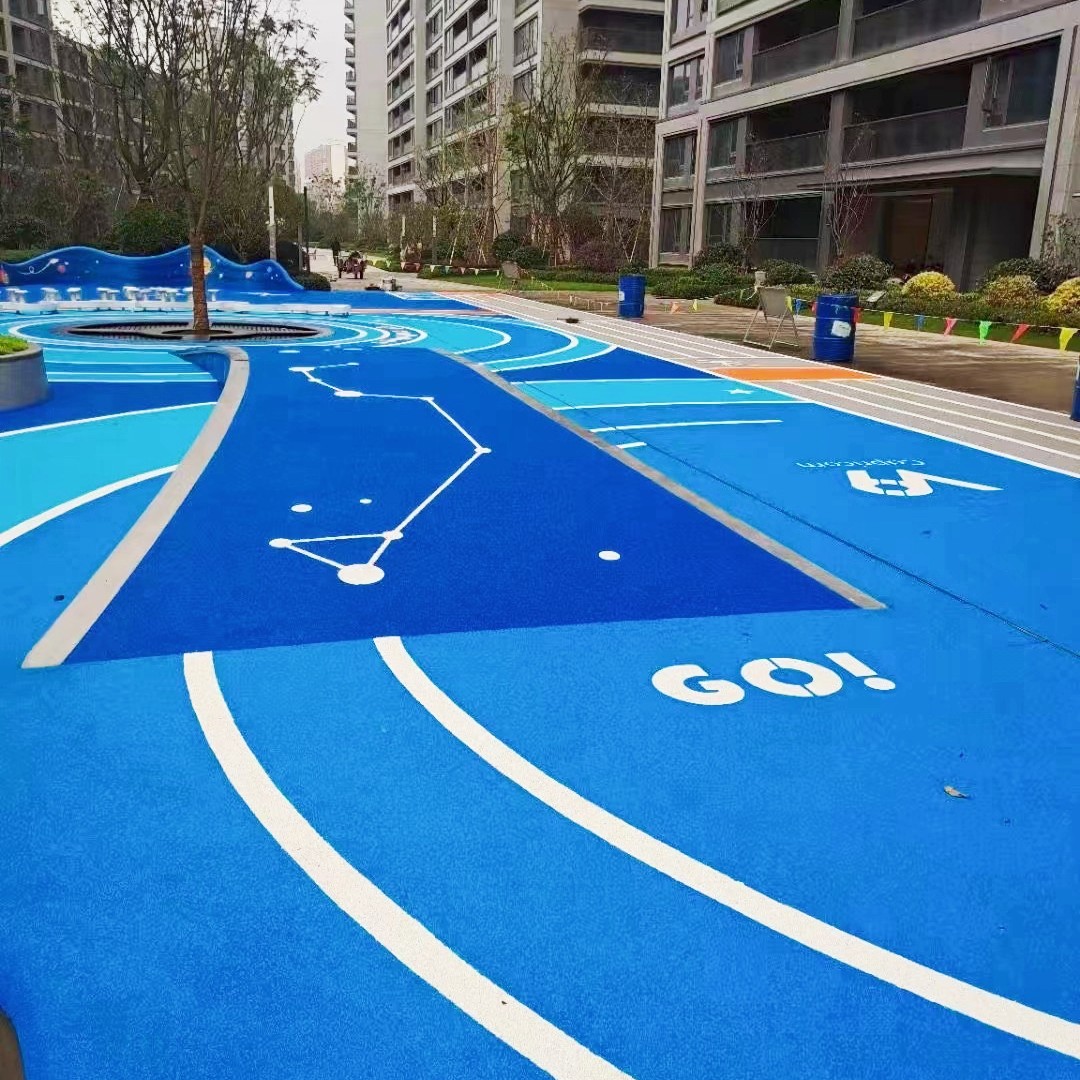
The most important advantage is mixing consistency.
EPDM granules have irregular shapes and different particle sizes. When polyurethane binder is added, the binder needs to reach and coat the individual particles rather than simply remain concentrated in certain areas.
A suitable forced-action mixer can provide several benefits.
The rotating mixing mechanism forces the granules and binder to move continuously through the mixing chamber.
This helps create a more homogeneous mixture and reduces the possibility of dry or poorly coated granules.
The quality of the mixed material directly affects the finished surface.
A properly mixed EPDM compound is easier to spread and compact, helping installers achieve a more consistent surface appearance and thickness.
Professional forced-action mixers are designed for repeated batches and construction-site use.
Some manufacturers specifically position forced-action mixers as suitable for resin and aggregate applications because they can provide consistent mixing while reducing manual labor.
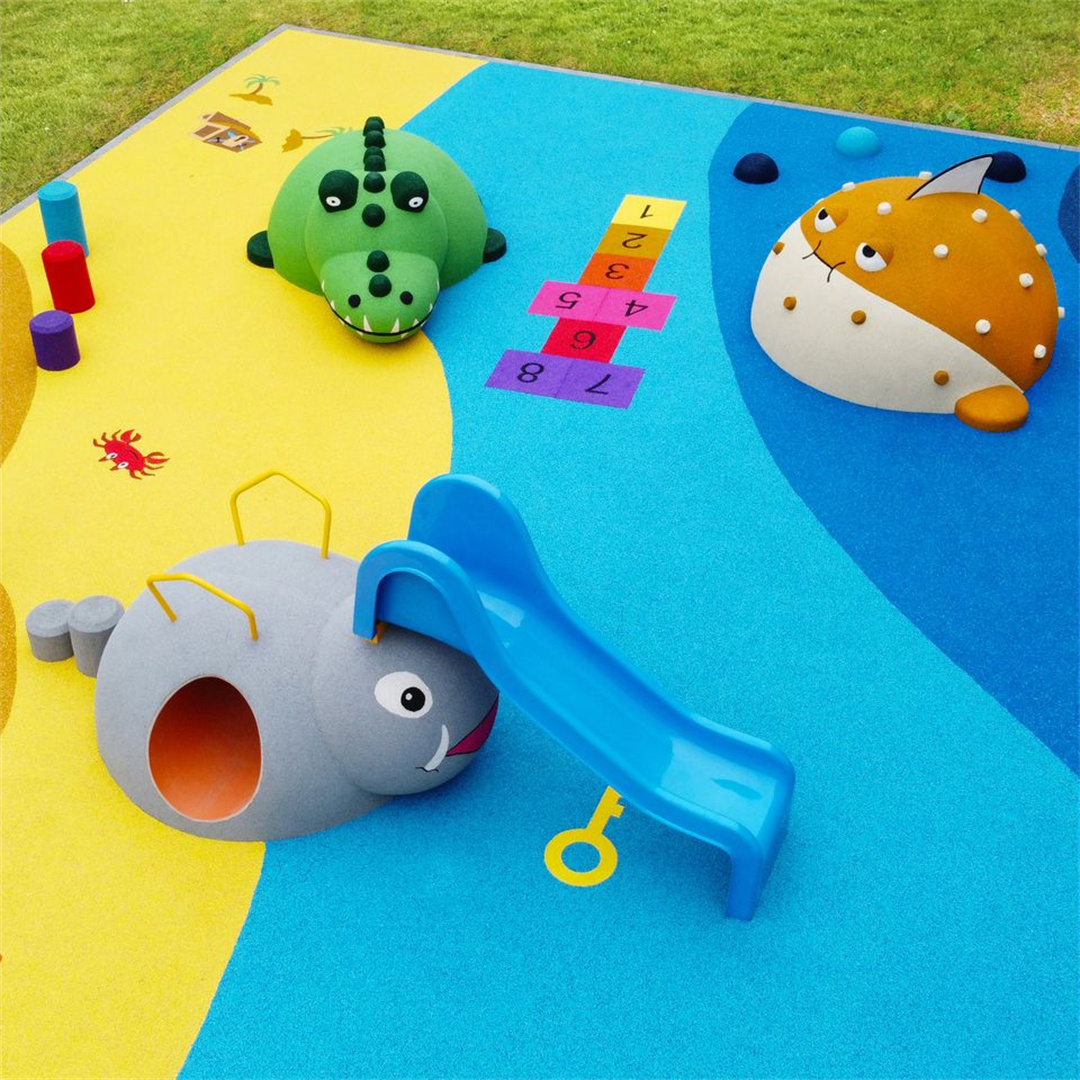
EPDM playground projects often involve multiple colors and relatively small working areas.
A mixer with an appropriate batch capacity allows installers to prepare manageable quantities instead of mixing excessive material at one time.
This is especially useful when installing decorative patterns, logos, borders, or different color zones.

One of the most common questions from new installers is:
Can a normal concrete drum mixer be used for EPDM rubber granules?
Technically, different mixers can be used for different materials, but they do not necessarily provide the same mixing performance.
A traditional drum mixer primarily rotates the drum and allows the material to tumble.
A forced-action mixer uses rotating paddles or blades to actively move the material.
For rubber granules and PU binder, active mixing is generally preferred because the objective is not simply to move the material around—it is to achieve consistent coating of the rubber particles.
This distinction becomes increasingly important when working with colored EPDM granules where appearance, uniformity, and surface quality are important.
There is no single mixer that is ideal for every project. Contractors should consider several factors before purchasing.
Capacity is one of the first specifications to check.
For example, Baron currently offers forced-action mixers ranging from smaller models to larger units, with models such as the F80, F120, F200 and F300 covering different working capacities.
A smaller mixer may be suitable for:
Small playgrounds
Repair projects
Decorative EPDM areas
Small contractors
Multiple-color installations
A larger mixer may be more appropriate for:
Large playground projects
Running tracks
Sports facilities
High-volume contractors
Continuous daily installation
Do not simply choose the largest mixer available.
An oversized mixer can make small batches inefficient, while an undersized mixer can increase the number of batches and reduce productivity.
Motor power should be considered together with mixing capacity.
EPDM granules are relatively lightweight, but once polyurethane binder is added, the material becomes heavier and more cohesive.
A mixer needs sufficient power to move the material continuously without excessive strain.
For example, Baron lists 2.0 kW motors on some smaller models and higher-power configurations on larger F-series models.
When comparing machines, look at:
Motor power + usable mixing capacity + gearbox design
rather than judging performance only by motor wattage.
The mixing blades are extremely important.
A good mixer should be able to move EPDM granules effectively without excessively damaging the rubber particles.
The mixing action should help distribute PU binder throughout the batch while avoiding excessive dead zones inside the pan.
When purchasing, ask the supplier:
What type of mixing paddles are included?
Are the paddles replaceable?
Are different paddle configurations available?
Are spare wear parts available?
Is the machine specifically suitable for rubber granules and resin?
These questions can be more useful than simply comparing machine prices.
This is often underestimated.
Polyurethane binder can become difficult to remove after curing. If material is left inside the mixer, it can accumulate around the paddles, mixing pan, and other components.
A mixer used for EPDM flooring should therefore be easy to:
Empty
Clean
Inspect
Maintain
Replace wear parts
Professional manufacturers emphasize ease of cleaning and maintenance as important construction-site features.
Clean the mixer promptly after each batch according to the equipment and binder manufacturer's instructions.
EPDM flooring installation frequently takes place at construction sites rather than inside factories.
Therefore, wheels, handles, lifting points, machine dimensions, and overall weight are important.
A portable mixer can be particularly useful when contractors need to move between different areas of a playground or sports facility.
The exact procedure should always follow the EPDM and PU binder manufacturer's technical data sheet. However, a typical workflow is as follows.
Before mixing, prepare:
EPDM granules + PU binder + weighing equipment + mixer + installation tools
Make sure the granules are clean and dry.
Moisture, dust, or contamination can negatively affect the bonding process.
Do not estimate the ratio by eye.
Use an accurate scale to measure the EPDM granules and PU binder according to the system supplier's recommended formulation.
There is no universal EPDM-to-binder ratio because the required amount can vary according to particle size, layer structure, binder formulation, installation method, and project requirements.
Load the materials according to the equipment and binder manufacturer's recommended sequence.
A common approach is to introduce the rubber granules into the mixer and then add the polyurethane binder while the mixing system distributes the material.
The exact loading sequence should follow the binder supplier's instructions.
Allow the forced-action mixer to distribute the binder throughout the EPDM granules.
The target is not simply a certain mixing time. The more important indicator is whether the granules are uniformly coated.
Some EPDM installation guidance recommends mixing for only a few minutes and immediately applying the mixture, while other systems specify different mixing conditions.
Therefore, installers should always follow the specific technical data sheet instead of applying one fixed mixing time to every binder.
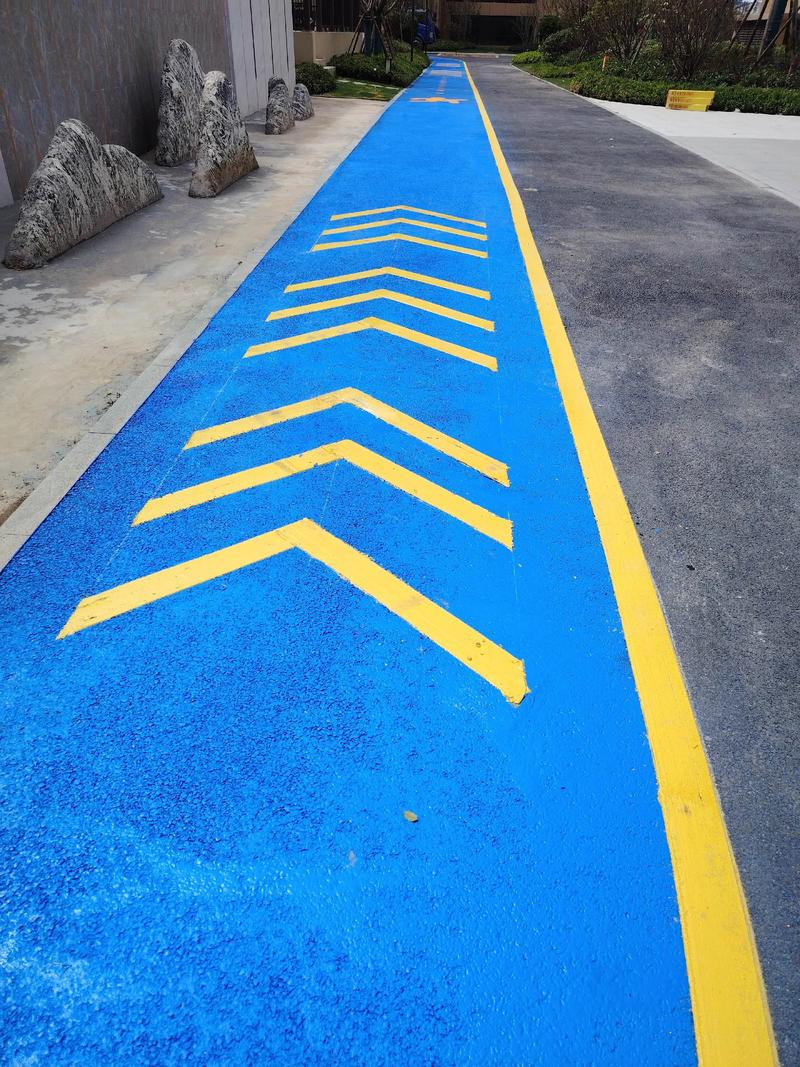
Once the mixture reaches the required consistency, transfer it to the prepared surface.
The material is normally spread and leveled using rakes, screed bars, trowels, or other suitable installation tools.
The mixed material should not be left sitting in the mixer longer than necessary because polyurethane binders begin reacting and curing after mixing.
After completing the batch, clean the mixer according to the manufacturer's instructions.
This is especially important when using PU binder because cured material can become difficult to remove and may affect the performance of subsequent batches.
Several brands are well known in the professional mixing-equipment market.
Baron is a Danish manufacturer specializing in forced-action mixers and conveyors. Its product range includes F-series and E-series machines, with models covering different capacities and electrical configurations. The company states that its mixers are designed for demanding construction applications and resin-related mixing.
Collomix is another established manufacturer of professional mixing equipment.
Its XM series forced-action mixers are designed for demanding materials and are available with different mixing configurations and capacities. The XM 2-650, for example, uses a 65-liter mixing bucket and planetary gearbox.
Depending on the country, contractors may also find specialized mixers from local construction-equipment manufacturers.
For EPDM flooring projects, the most important factor is not simply the brand name. Buyers should verify whether the machine has been successfully used for rubber granules + polyurethane binder, whether suitable spare parts are available, and whether the machine's capacity matches their normal batch size.
There are also manufacturers offering mixers specifically marketed for EPDM rubber granules and PU binder, including specialized pan-mixer configurations.
Before purchasing a forced-action mixer for EPDM flooring, contractors can use the following checklist:
✓ Suitable for EPDM/SBR rubber granules
✓ Compatible with polyurethane binder
✓ Appropriate batch capacity
✓ Sufficient motor power
✓ Effective forced-action mixing system
✓ Replaceable mixing paddles and wear parts
✓ Easy cleaning and maintenance
✓ Portable construction-site design
✓ Suitable electrical voltage for the project country
✓ Reliable after-sales service
✓ Spare parts availability
✓ Manufacturer documentation and safety certifications
For international contractors, electrical compatibility is particularly important. For example, professional mixer ranges may be offered in different voltage and phase configurations, including 110 V, 240 V and three-phase 380 V options.
A forced-action mixer is more than just a construction tool—it is an important part of the EPDM flooring installation system.
High-quality EPDM granules and polyurethane binder still require proper mixing to achieve a consistent finished surface. The right mixer can help installers achieve better material distribution, improve productivity, reduce manual work, and maintain more consistent installation quality.
When selecting equipment, contractors should focus on mixing capacity, motor power, paddle design, portability, cleaning, spare parts, electrical compatibility, and proven suitability for EPDM granules and PU binder.
Most importantly, equipment selection should be matched with the specific EPDM granule size, PU binder formulation, mixing ratio, environmental conditions, and installation requirements. A machine that works well for one flooring system may not automatically be the best choice for another.
For playgrounds, running tracks, sports courts, and other poured-in-place rubber surfaces, the combination of the right EPDM granules, compatible PU binder, correct mixing process, and suitable forced-action mixer is essential for achieving a durable and professional result.


